Home/Pain & Injury/Back Pain/ Do I Really Need Imaging for My Back and Why It Might Not Explain Your Pain
Do I Really Need Imaging for My Back and Why It Might Not Explain Your Pain
Do I Really Need Imaging for My Back and Why It Might Not Explain Your Pain
A Physiotherapist’s Perspective from Avenue Physio in Downtown Calgary
Back pain can be frustrating. One of the very first questions most people ask is:
“Should I get an X-ray or MRI to find out what’s wrong?”
Many people do eventually have imaging ordered through their family doctor or a specialist. And just as often, they’re told:
“Everything looks normal.” or “You’ve got some wear and tear.”
Yet the pain is still very real. And this is often the most confusing part. If the scan looks “okay,” why does it still hurt? And what are you supposed to do next?
At Avenue Physio, we see this situation every day. And here’s the most important thing we want you to know right from the start:
Back pain isn’t always a simple reflection of what shows up on a scan.
Let’s unpack what that really means and when imaging actually helps.
Myth #1: If My Back Hurts, Something Must Be Damaged
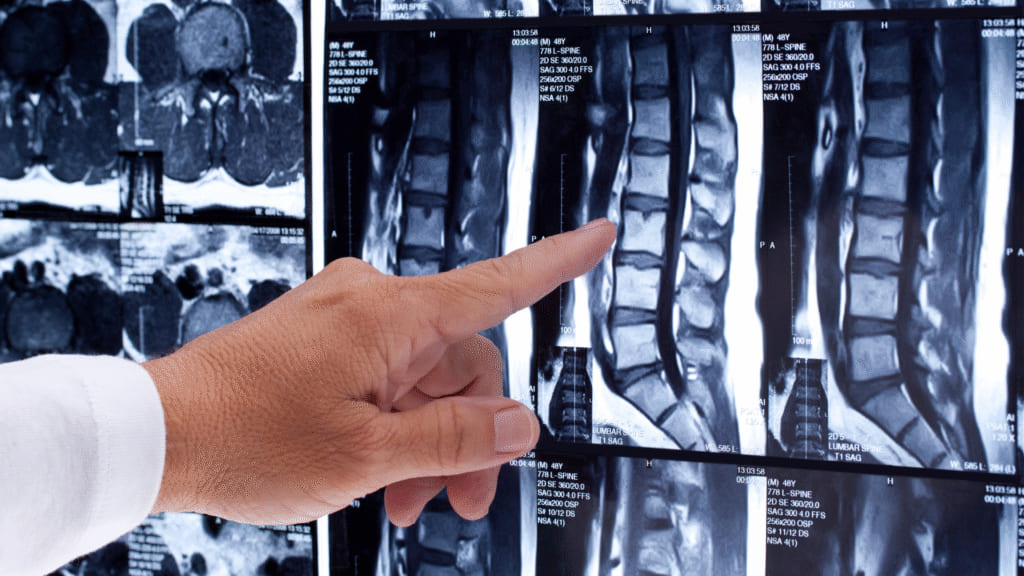
This is one of the strongest beliefs people carry. But large imaging studies show a very different story.
Up to 80 to 90 percent of people with no back pain at all have disc bulges, disc degeneration, or joint wear and tear visible on MRI.
At the same time, many people with significant back pain show no serious structural damage on scans.
These so-called abnormalities are often normal, age-related changes, not the direct cause of pain.
Pain is not a direct measure of tissue damage. Pain reflects how sensitive and protective the nervous system has become.
Myth #2: A “Normal” Scan Means My Pain Isn’t Real
This belief causes huge fear, frustration, and self-doubt. But large population studies tell a very different story.
Around 90 to 95 percent of people with low back pain are classified as having non-specific low back pain. This means their pain cannot be confidently pinned to one specific damaged structure or disease on a scan, even though their spinal tissues may still be sensitive.
Many people in this group have scans reported as normal for age or showing only age-related changes, yet they still have real limits in movement, muscle guarding, and nervous system sensitivity.
Pain is a real physiological experience even when a scan does not show one clear cause.
A normal or non-specific scan does not mean:
The pain is imagined
You are exaggerating
Nothing can be done
It means something much more hopeful. There is no serious disease or major structural damage preventing recovery. That allows us to safely focus on the factors that actually change pain over time.
Myth #3: Imaging Will Tell Me Exactly What’s Causing My Pain
This is one of the most persistent myths in healthcare.
Imaging findings explain only about 10 to 15 percent of a person’s pain experience in most cases of non-specific low back pain.
The severity of scan findings correlates poorly with pain intensity, disability, or long-term outcomes.
Fear created by scan language such as degeneration, disc disease, or arthritis is strongly associated with:
Higher pain levels
Greater disability
Slower recovery
Most back pain is influenced by a combination of:
Local tissue sensitivity
Nervous system sensitivity
Guarding and stiffness
Strength and conditioning capacity
Sleep quality
Stress load
Beliefs about damage and fragility
A scan cannot measure any of those.
So When Do You Actually Need Imaging?
In many cases, imaging is not needed early on.
Imaging becomes important when there are red flags such as:
Significant trauma
Progressive neurological weakness
Suspected fracture
Signs of infection or serious disease
Pain that does not behave like typical mechanical back pain
This is why a detailed physical assessment always comes first. It tells us:
Whether imaging is actually necessary
What type would be appropriate
What we are truly looking for on the scan
Why Your Back Can Hurt Long After Tissues Have Healed
In many people with persistent back pain, the issue is not ongoing tissue damage. It is an overprotective nervous system.
This sensitivity can develop after:
An injury
A flare-up
Stress
Long periods of tension
Poor sleep
Fear around bending, twisting, or lifting
Your back may feel:
Fragile
Locked
Easily irritated
Threatened by movement
But this sensitivity is changeable.
What Actually Helps When Imaging Is Normal or Shows “Wear and Tear”
At Avenue Physio, sustainable recovery focuses on three key pillars.
1. Understanding Your Pain
We take time to explain:
Why it hurts
What is being protected
What movements are safe
What scan findings actually mean
For many people, understanding alone begins to calm symptoms.
2. Restoring Confident Movement
We gradually reintroduce:
Bending
Lifting
Rotation
Sitting tolerance
Walking
Daily activity
Movement is medicine when it is specific, guided, and progressive.
3. Rebuilding Strength and Capacity
Long-term change depends on:
Trunk strength
Hip control
Endurance
Load tolerance
Functional movement patterns
This is what breaks the recurring pain cycle.
What About Structured Programs Like GLA.D Back?
For people with persistent or recurring back pain, we also offer the GLA.D Back Program. This is a research-supported education and exercise program designed to:
Reduce fear around movement
Improve strength and confidence
Restore function
Improve long-term outcomes
The Most Important Thing to Know
If your scan is normal or shows age-related changes and your back still hurts, that does not mean:
You are broken
You are weak
You are destined for surgery
You just have to live with it
It means your system needs the right movement guidance, education, and progressive loading, not more fear.
How Avenue Physio Approaches Back Pain
At Avenue Physio in downtown Calgary:
Every session is one on one with a registered physiotherapist
There are no assistants
There is no double booking
You receive clear explanations
Hands-on treatment when needed
Progressive, individualized exercise
Function-focused care
We do not just treat pain. We help you understand it, retrain it, and move past it confidently.
Ready to Take the Next Step?
If you have been wondering whether you need imaging for your back, or you already have a scan and still feel stuck, we are here to help.
Book your one-on-one physiotherapy assessment today.

 Skip to content