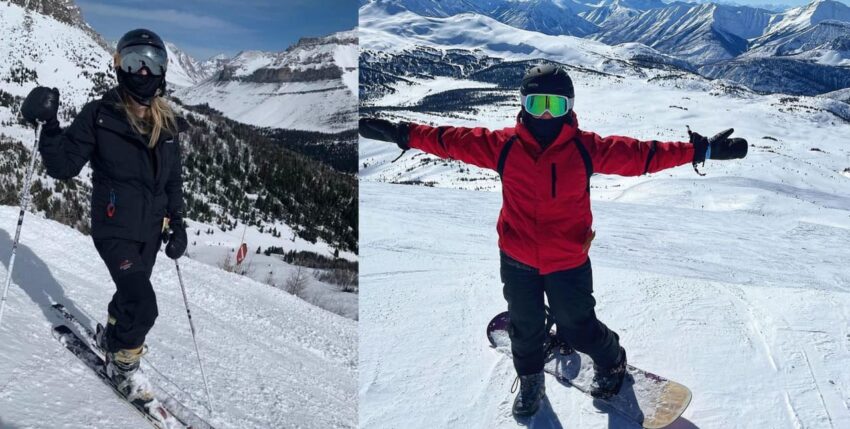
When the snow starts falling in Calgary, you can feel the buzz. Everyone’s talking about weekend trips to Banff, Lake Louise, or Nakiska. Skis and snowboards come out of storage, boots get buckled, and for a lot of us, it’s the best part of the year.
But every winter, we see the same thing at Avenue Physio — people head straight from a desk job to the chairlift. A few runs later, their knees are aching, their backs are tight, or they’re nursing a wrist that lost a battle with the ice.
It’s not about being “out of shape.” Most of our patients are active — they cycle, go to the gym, or walk to work. The problem is that skiing and snowboarding ask for a totally different kind of strength: explosive power, balance, and control under fatigue.
That’s exactly why we built the Avenue Physio Ski & Snowboard Readiness Screen. A quick, research-backed way to see how ready your body really is for the slopes. Think of it as a pre-season tune-up so you can ride longer, recover faster, and avoid sitting the season out.
Across Canada, skiing and snowboarding account for thousands of emergency visits every year. Studies show:
For every thousand days people spend on the slopes, two to four will end with someone getting hurt badly enough to need medical care. In simpler terms, if a ski hill like Sunshine or Lake Louise has 5,000 visitors in a day, roughly 10–20 of them will be injured.
Skiers most often injure their knees (especially the ACL and MCL).
Snowboarders are more likely to hurt their wrists, shoulders, or head from falls.
Nearly half of snowboard injuries happen to beginners in their first season.
Even experienced riders aren’t immune. Fatigue and poor conditioning are behind most late-day wipeouts. The good news? Research shows that targeted preseason training and screening can cut injury risk by up to 40%.
We see a few common patterns:
Weekend warriors: Calgary professionals who sit all week, then hit the slopes hard on Saturday.
You don’t need to be an athlete to get ready. You just need to know where your weak spots are.
The Readiness Screen isn’t about judging fitness — it’s about preventing those small issues that lead to bigger ones.
Research from alpine sport studies consistently shows that better balance, strength symmetry, and endurance lead to fewer ACL tears, falls, and overuse injuries.
So instead of guessing, we measure. Each test in our screen targets something specific: how well you control your knees, how balanced your core is, how evenly your legs share the load, and how fatigue affects your form.
Each test targets a specific skill or risk factor that’s common among skiers and snowboarders.
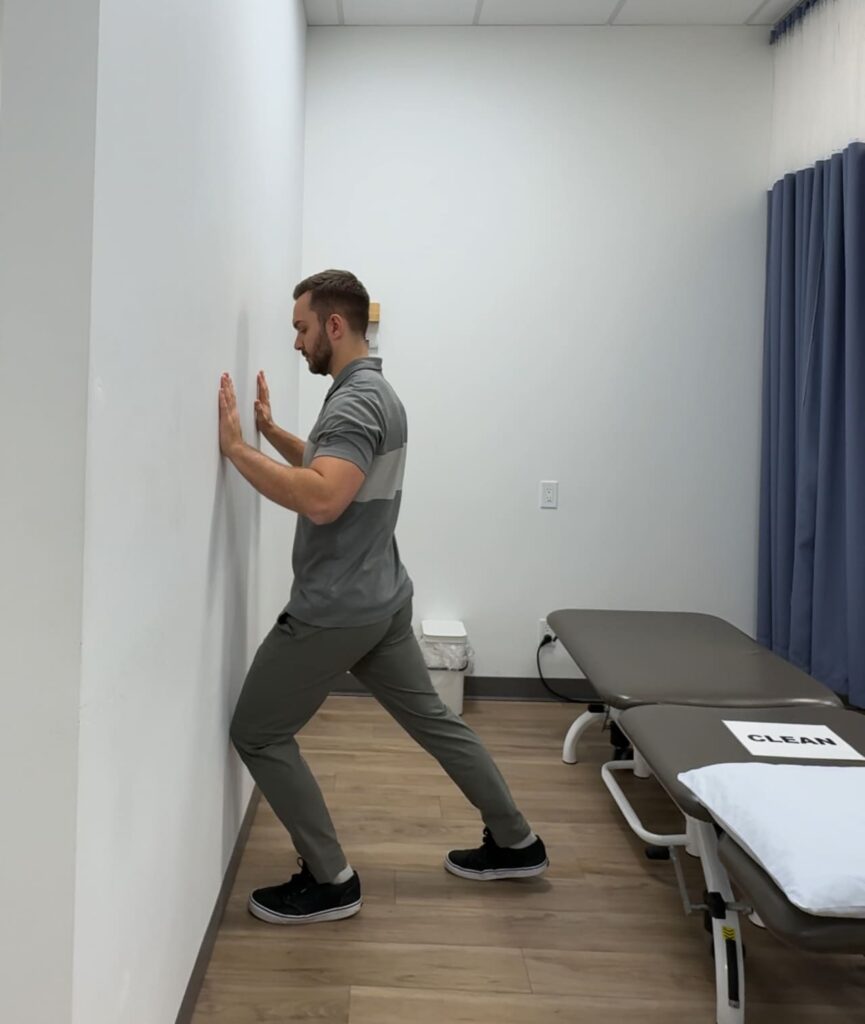
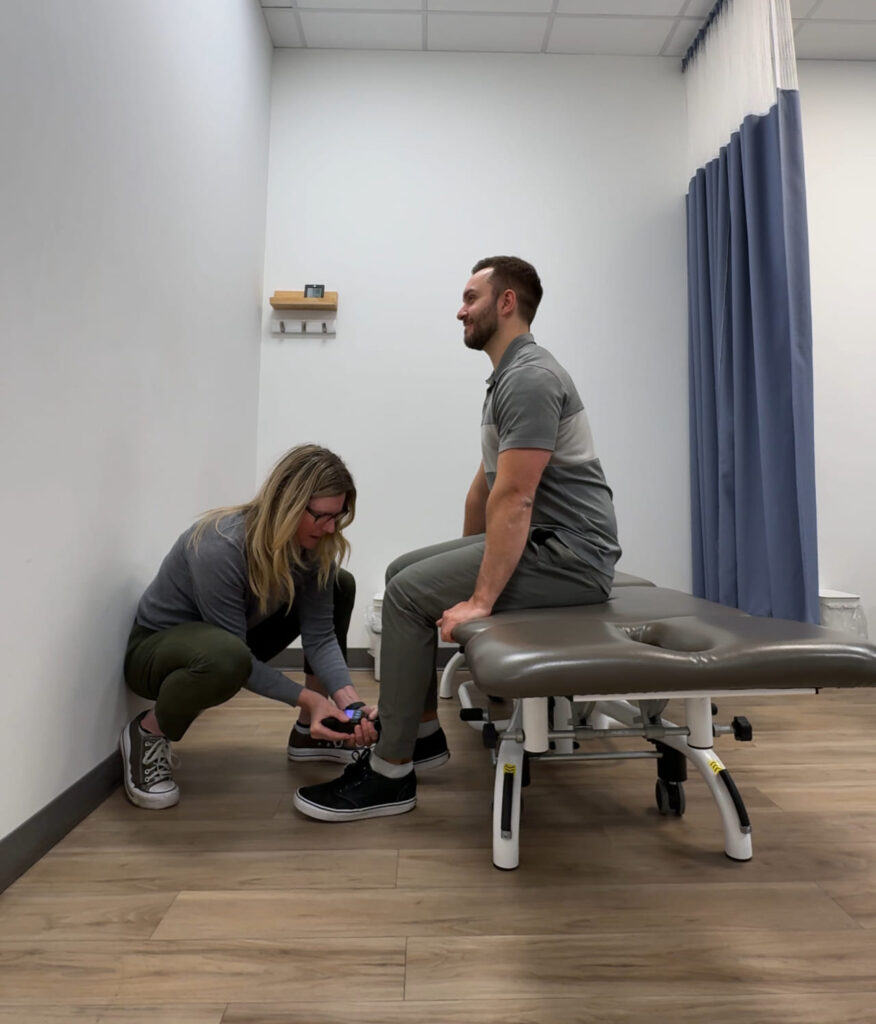
1. Ankle Mobility (Knee-to-Wall Test)
If your ankle can’t bend properly, you can’t flex forward in your boots — your heels lift, your weight shifts back, and your knees work overtime. Limited dorsiflexion also changes how you absorb landings.
Targets: 🟢 ≥ 8 cm | 🔵 ≥ 10 cm | ⚫ ≥ 12 cm
Goal: Smooth motion, no heel lift or rotation.
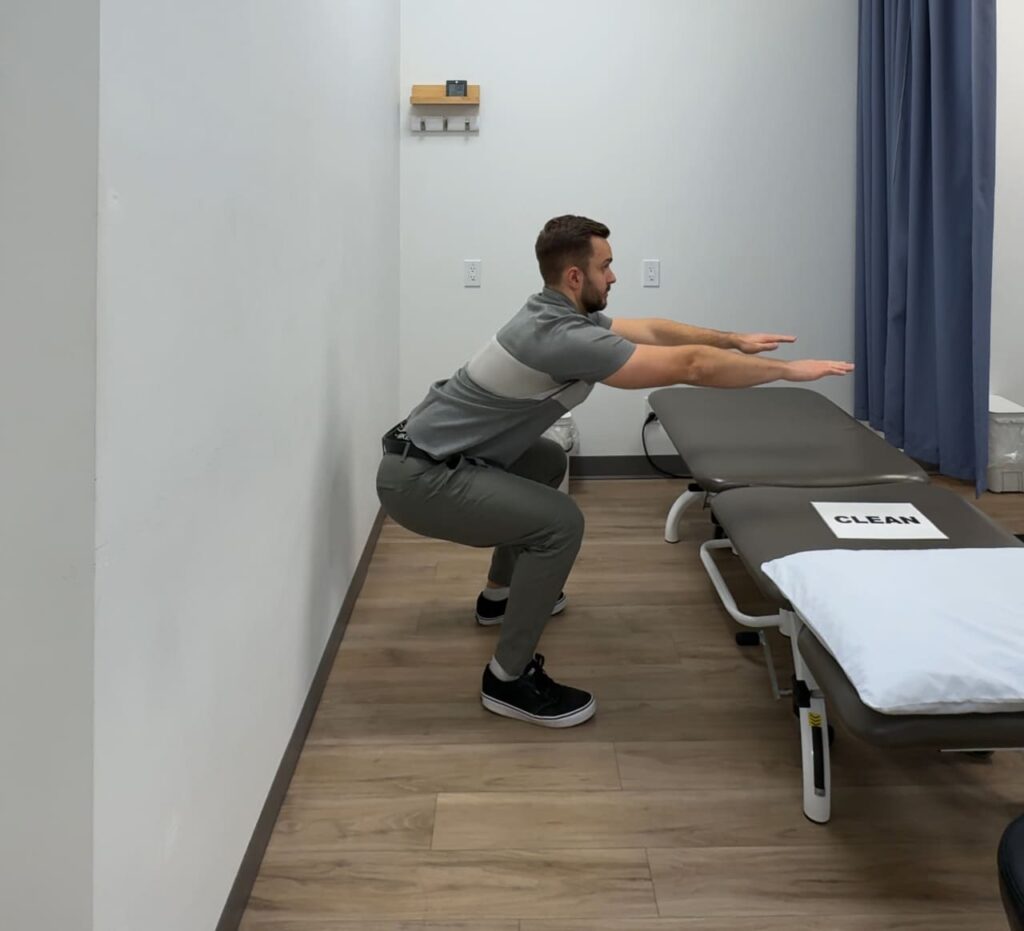
2. Deep Squat
This one tells us a lot. If you can’t squat fully with control, your body compensates — often through your back or knees. That’s a recipe for fatigue and pain mid-run.
Goal: Full depth, heels down, chest upright.
Why it matters: Mimics skiing posture; shows how well your joints and core work together.
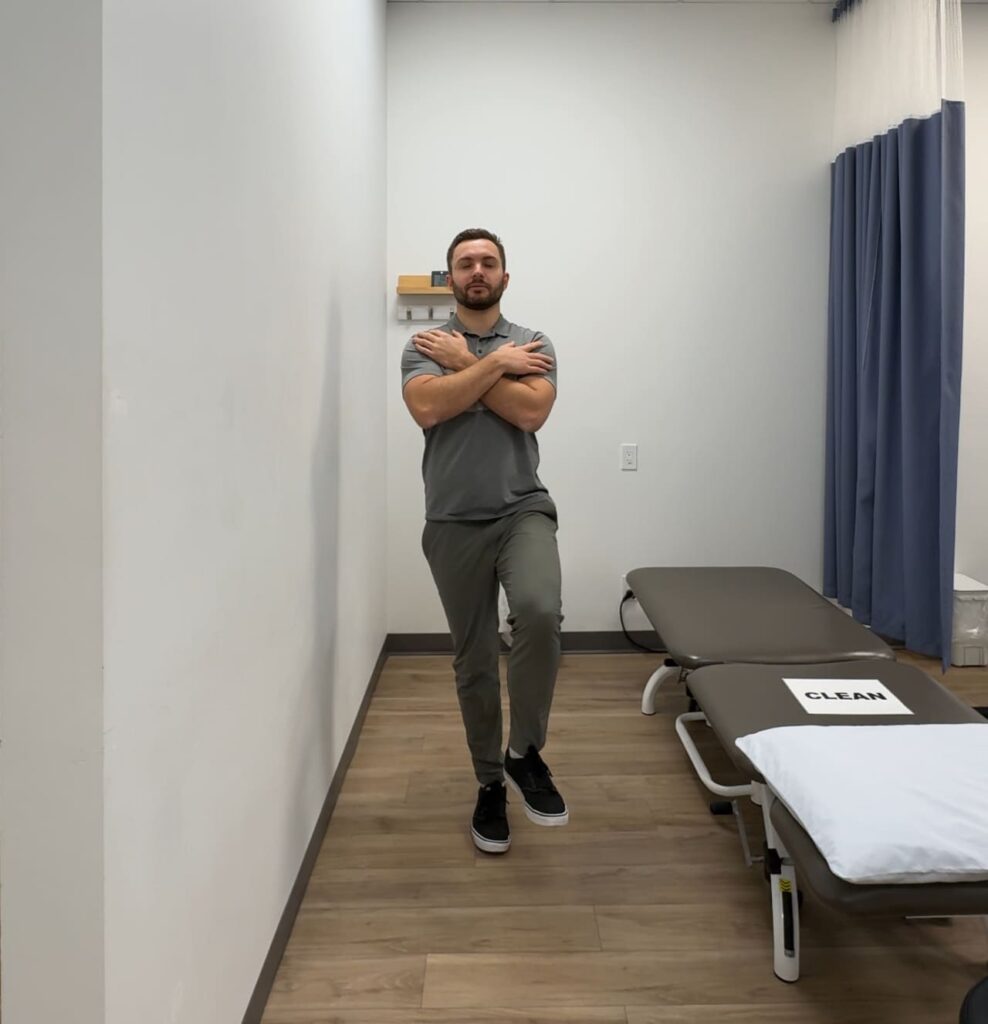
3. Single-Leg Balance
When you turn or land, you’re basically on one leg — so this test is key. It tells us how well your hips, knees, and ankles communicate.
Targets: 🟢 ≥ 20 s (eyes open) | 🔵 ≥ 10 s (eyes closed) | ⚫ ≥ 15 s (unstable surface)
Why it matters: Better balance means fewer falls and smoother edge control.
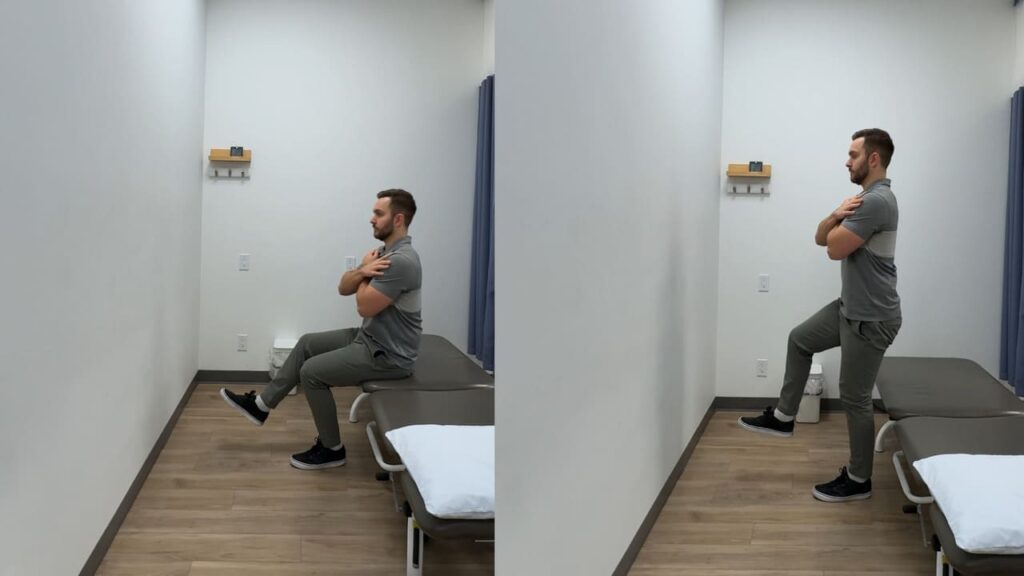
4. Sit-to-Stand – single leg (5×)
Five controlled reps from a 45 cm chair on each leg — tougher than it looks. This test highlights single-leg strength, power, and control, key for carving turns and absorbing uneven terrain.
Targets: 🟢 ≤ 10 s | 🔵 ≤ 8 s | ⚫ ≤ 6 s
Why it matters: Strong, symmetrical legs reduce knee load and improve stability through every turn and landing.
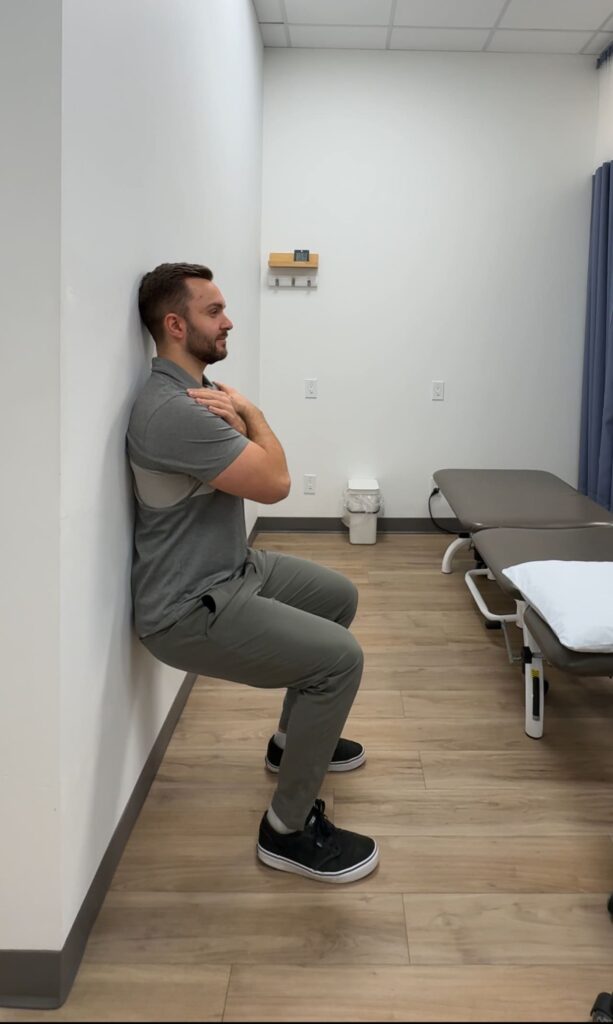
5. Wall-Sit Hold
Wall-sits test endurance under fatigue, which mimics that late-run burn when you’re halfway down a black diamond.
Targets: 🟢 ≥ 30 s | 🔵 45–60 s | ⚫ > 75 s
Why it matters: Builds fatigue resistance for long runs and late-day strength.
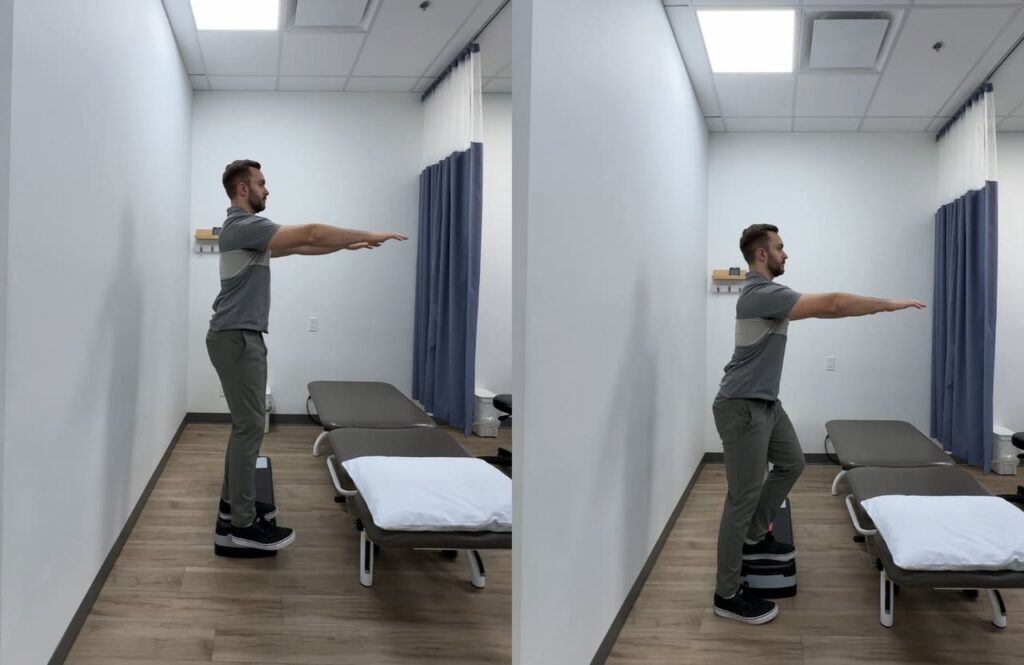
6. Lateral Step-Down (8″)
Stand on a small step, lower one foot down, and control your movement. It’s a great measure of knee stability and hip control.
Targets: 🟢 = supported ok | 🔵 = controlled | Black = weighted × 8 reps, no valgus
Why it matters: Poor control here often predicts ACL strain and knee collapse.
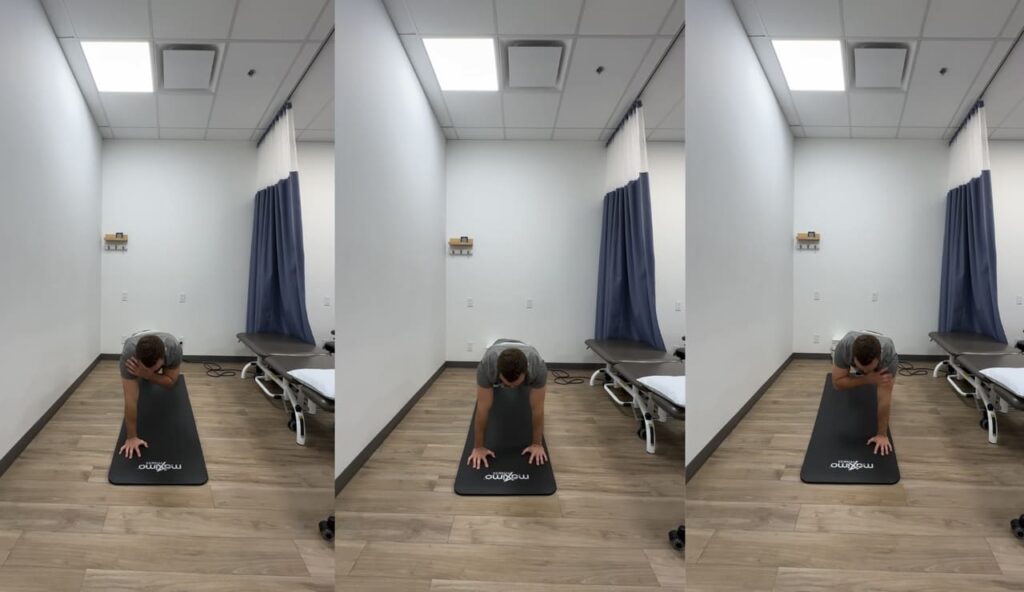
7. Plank (+ Shoulder Tap)
You can’t control your legs if your trunk wobbles. The plank test checks endurance through your spine and shoulders — critical for posture, stability, and absorbing bumps.
Targets: 🟢 ≥ 30 s | 🔵 ≥ 45 s | ⚫ ≥ 60 s (+ taps)
Why it matters: Good core endurance helps prevent low-back strain and poor control.
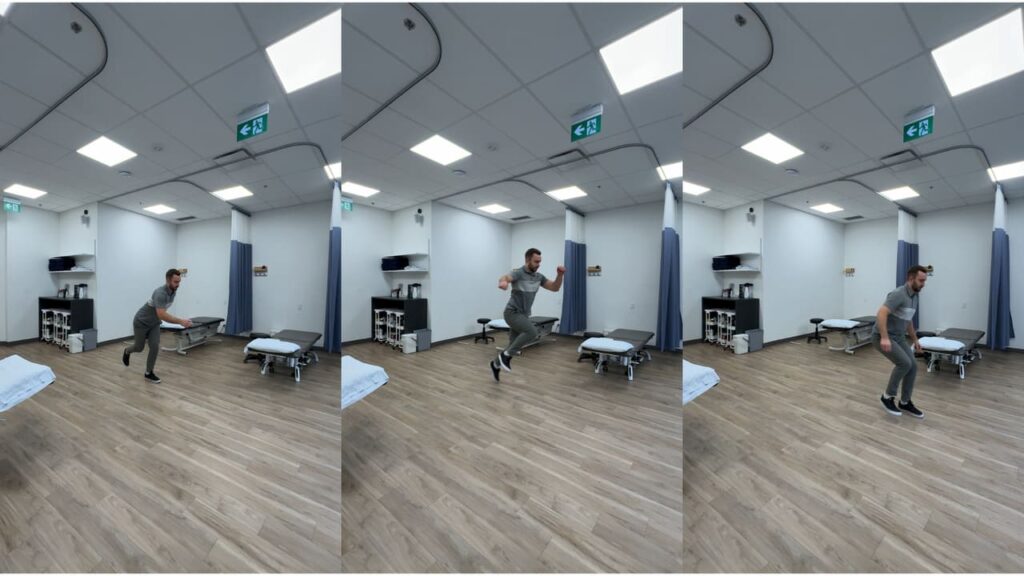
8. Hop Test x 3
We test single-leg hop distance and symmetry. A big difference between legs (>10%) can increase injury risk.
Targets: 🔵 ≥ 90 % symmetry | ⚫ ≥ 95 % symmetry
Why it matters: Measures power, control, and confidence for landings.
9. Isometric Strength (Quads & Hams @ 90°)
Using a handheld dynamometer, we measure leg strength in pounds. It’s not about big numbers — it’s about balance. Your quads and hamstrings should share the load evenly.
Targets:
Quads: 🟢 40–45 % BW (body weight) | 🔵 50–55 % BW | Black 60–65 % BW (≈ 60–120 lbs)
Hams: 🟢 25–30 % BW | 🔵 35–40 % BW | ⚫ 45–50 % BW (≈ 40–90 lbs)
Why it matters: Weak or uneven legs create unstable knees and increase ACL risk.
Each test earns 0–2 points:
✅Meets target = 2 pts
⚠️Near target = 1 pt
🚫Below target = 0 pt
Score % | Category | Recommendation |
≥ 85 % | Ready | Safe to ski / board |
65–84 % | Mild Deficit | 4–6 week strength and balance program |
< 65 % | Needs Training | Not ready; conditioning block recommended |
The score gives you an objective look at how “mountain-ready” you are — and where you can improve before your next trip.
If your test shows any weak spots, the good news is you can fix them quickly.
With 4–6 weeks of focused training, you can move from “needs training” to “ready” by focusing on:
Consistency is key — a little time now means fewer injuries and more fun later.
Downtown Calgary is full of weekend warriors — people who work hard all week and can’t wait to hit the slopes. We get it; our team does the same. But we also know that after months of sitting, your body needs a reminder of how to move dynamically.
A few simple assessments — done in-clinic or at one of our workshops — can help prevent the kind of mid-season injury that derails your winter. It’s not about training like an athlete; it’s about skiing or snowboarding with confidence, control, and enjoyment.
Whether you’re strapping into a board for the first time or fine-tuning your form for another season in the Rockies, a Ski & Snowboard Readiness Screen helps you see exactly where you’re strong — and where to focus before opening day.
Book an appointment with Avenue Physio today. Our team will walk you through each test, interpret your results, and build a plan that fits your body and your goals.