How Common Is Neck Pain?
Up to 70% of adults experience neck pain at some point in their lives. Office and computer workers report the highest prevalence, with research showing 40–60% developing symptoms in a given year. Around one in three people with neck pain will have recurring episodes within the next 12 months.
Long hours at a desk don’t cause pain by themselves, but they can create the perfect storm of stiffness, fatigue, and stress that makes your neck more sensitive.
What About Posture?
Posture has been blamed for years, but the research tells a different story. Large studies show little to no consistent link between sitting posture and who develops neck pain. People with “poor posture” often have no pain at all, while others with great posture do.
It’s not about having the perfect posture—it’s about how long you stay in one position and how much variety your body gets throughout the day.
Your neck isn’t fragile; it’s designed to move. When you stay in one position for too long, muscles fatigue, joints stiffen, and tension builds, especially under stress. Regular movement breaks matter far more than trying to hold a “correct” posture.
Tip: Instead of chasing the perfect posture, think about moving more often. Your neck will thank you.
Common Causes of Neck Pain in Office Workers
- Sustained positions: Sitting for hours with your head slightly forward creates low-grade tension in your neck muscles.
- Muscle imbalance: Weak deep neck flexors and upper-back stabilizers with overactive upper traps and levator scapulae.
- Stress and tension: Emotional stress increases muscle tone around the shoulders and jaw—a common hidden trigger.
- Screen setup: Monitors that are too high or low or using a laptop without an external keyboard can strain your neck.
- Reduced movement variety: Fewer breaks, limited rotation, and less overhead reaching lead to stiffness.
- Sleep factors: How you sleep matters more than what you sleep on. Poor rest or awkward positions can leave your neck sore in the morning.
Is It Your Pillow or the Way You’re Sleeping?
Many people blame their pillow for neck pain, but it’s rarely the full story. A pillow that’s too high or too flat can leave your neck bent overnight, leading to morning stiffness. The best pillow keeps your head and neck in line with your spine—comfort matters more than shape or brand.
Often, it’s not the pillow at all but how well you slept. When you don’t get enough quality rest, your muscles don’t recover, stress hormones stay elevated, and your body becomes more sensitive to pain. Even mild tightness can feel worse the next day.
Tip: Before replacing your pillow, ask yourself if you actually slept well. Sometimes improving your sleep routine makes a bigger difference than buying a new one.
Other Factors We See Often at Avenue Physio
- Jaw tension or clenching (TMJ involvement)
• Old whiplash or shoulder injuries
• Vision strain or progressive lenses that subtly change your head position
• Low overall activity levels that reduce your body’s resilience
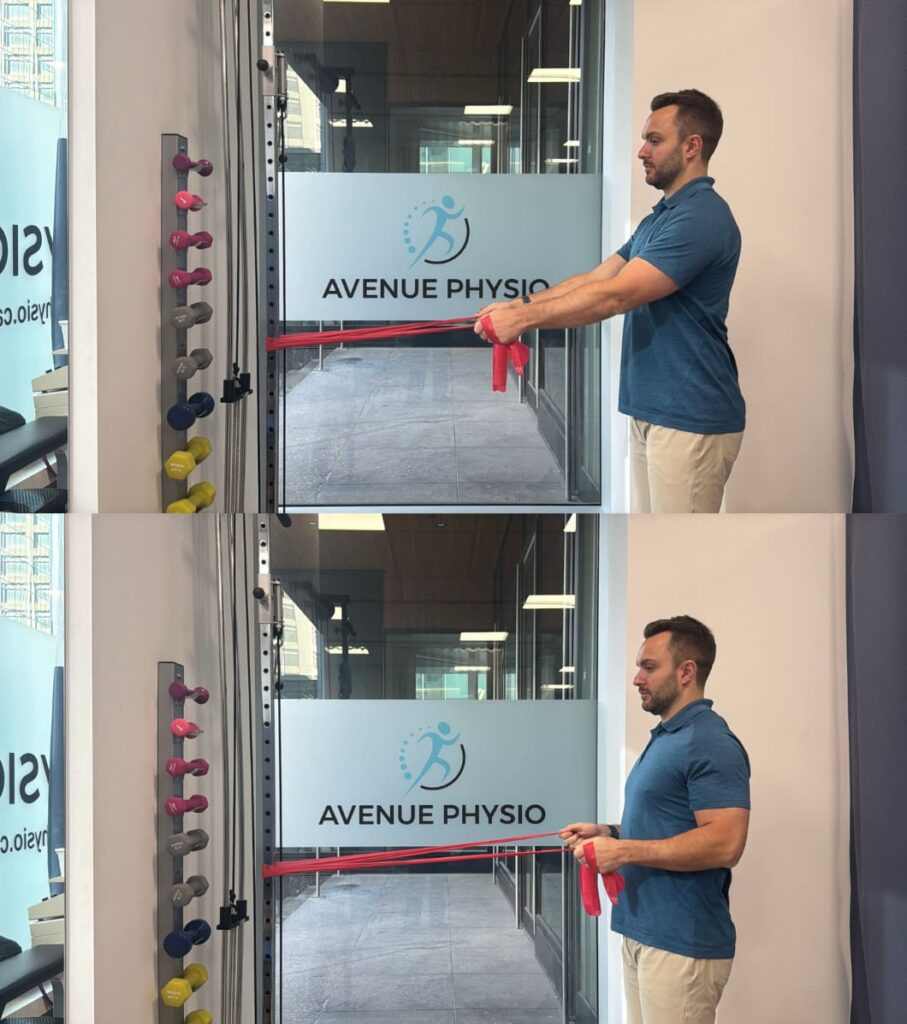
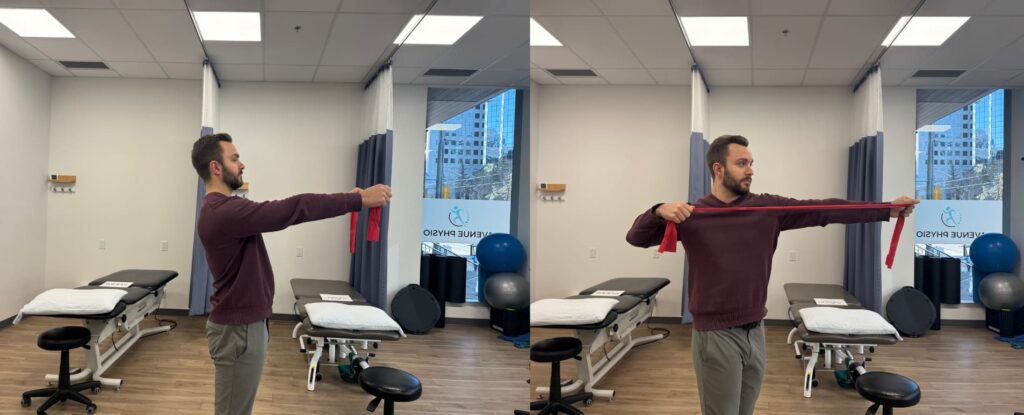
Exercises That Make a Difference
Always pain-free and within your comfort range.
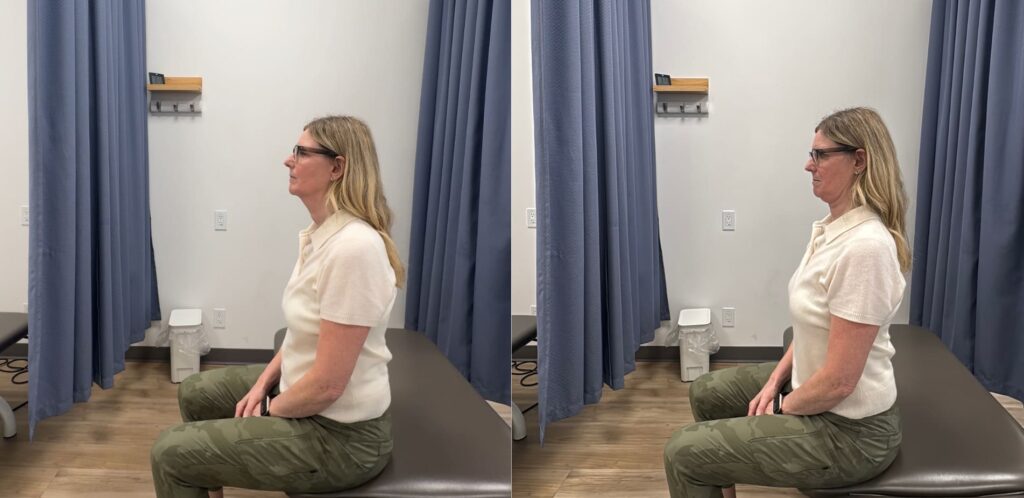
1. Deep Neck Flexors (Chin Tucks)
Sit tall and gently draw your chin straight back, like you’re making a double chin. Hold for three seconds and repeat ten times.
These muscles at the front of your neck act like its “core.” When they’re weak or not well coordinated, the larger surface muscles have to work harder, leading to fatigue and stiffness.
Research shows that retraining these small stabilizers can reduce pain, improve posture, and prevent symptoms from coming back. It’s not about strength; it’s about control and endurance.
Try this: Practice holding a gentle chin tucks a 1 minute every 30minutes – 1 hour, especially if you are sitting for long periods.



 Skip to content