Skip to content

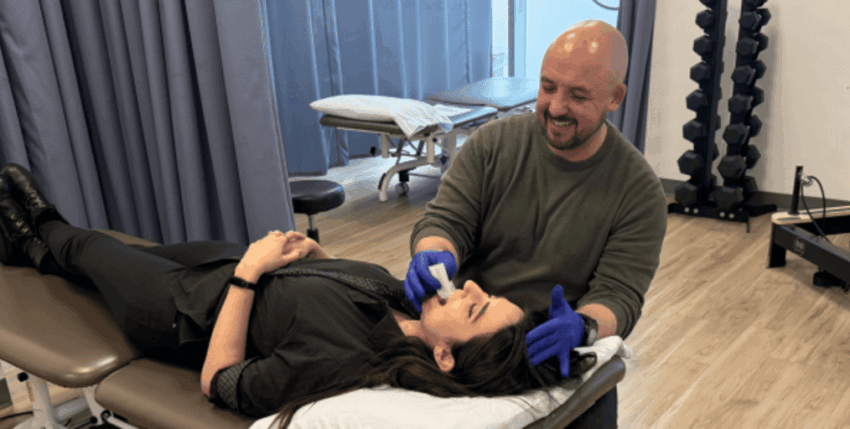
Headaches and neck pain are common, but the jaw is often overlooked as a possible contributor. The temporomandibular joint, or TMJ, sits just in front of the ear and works closely with the muscles of the face, head, and neck.
TMJ-related symptoms are not always felt only in the jaw. Pain from the joint can be felt near the ear, temple, cheek, side of the head, or upper neck. The jaw muscles can also refer pain into similar areas, especially when they are tense, overloaded, or sensitive from clenching, grinding, stress, or prolonged jaw use.
This does not mean every headache or neck ache is caused by the jaw. But when headaches or neck pain come with jaw tension, clenching, grinding, clicking, pain with chewing, or morning jaw stiffness, the TMJ is worth considering.
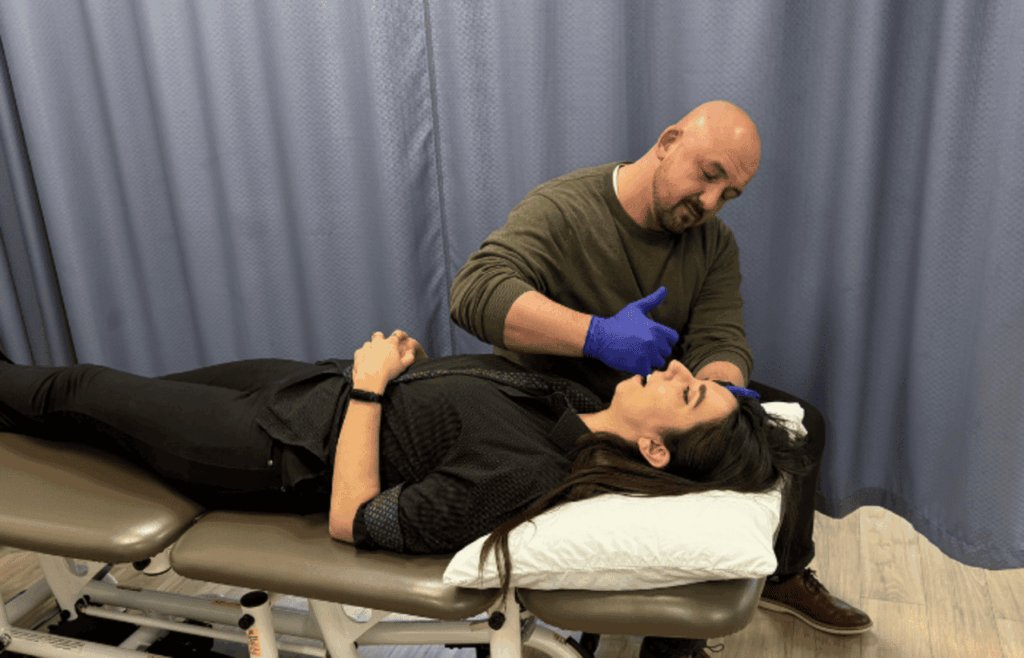
At Avenue Physio, our physiotherapists have additional training and experience in assessing and treating TMJ, jaw, and neck conditions. We look at how the jaw, neck, muscles, and movement patterns work together to better understand what is driving your symptoms.
The TMJ Joint Can Refer Pain
The TMJ is a small but complex joint. It includes the jawbone, the skull, a small articular disc, joint capsule, ligaments, and nearby muscles that help guide movement.
When the joint or disc becomes irritated, pain is not always felt in one exact spot. Some people feel pain directly in front of the ear. Others feel discomfort into the temple, cheek, side of the face, or upper neck.
This is one reason TMJ pain can be confusing. It may feel like an ear problem, a headache, facial pressure, or neck tension, even when the jaw joint is contributing.
The Jaw Muscles Can Refer Pain Too
The muscles around the jaw can also create symptoms away from the exact source.
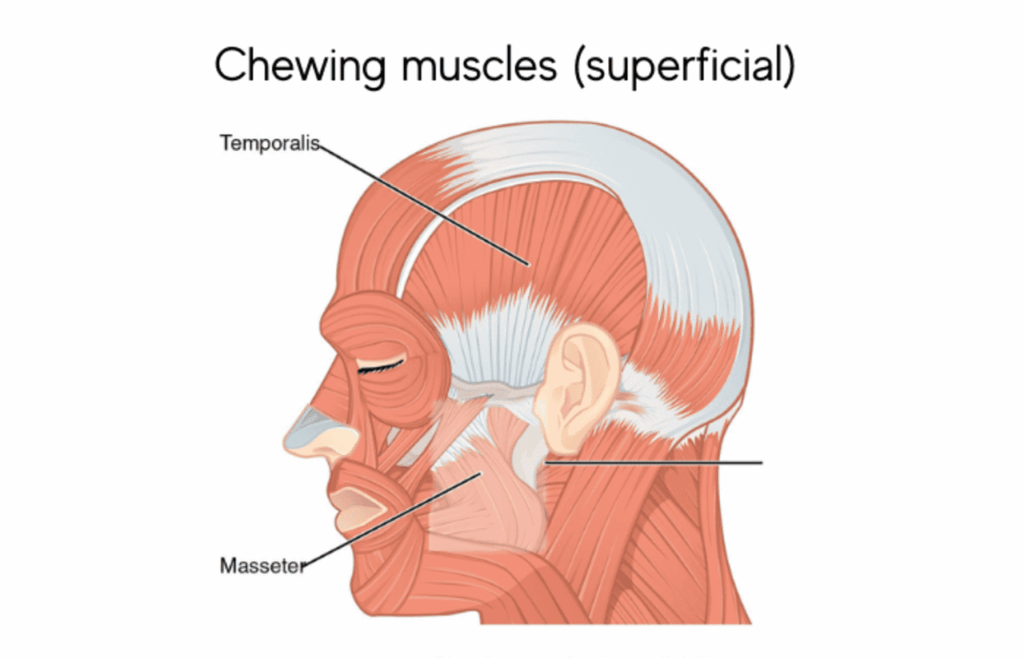
The masseter, one of the main chewing muscles, can refer pain into the cheek, jawline, teeth, and ear region. The temporalis, which sits along the side of the head, can refer pain into the temple, forehead, and even the teeth. Deeper muscles, including the lateral pterygoid, help guide jaw movement and may contribute to pain, clicking, or a feeling of tension around the joint.
This is why jaw muscle pain can sometimes feel like:
- temple headaches
- tooth-like discomfort
- ear pressure
- cheek pain
- facial tightness
- upper neck tension
When these muscles are repeatedly loaded through clenching, grinding, chewing, or stress-related tension, they can become more sensitive and start referring symptoms into nearby areas.
Why Jaw, Head, and Neck Symptoms Can Overlap
The jaw and neck do not just share muscles and movement patterns. They also share nerve connections.
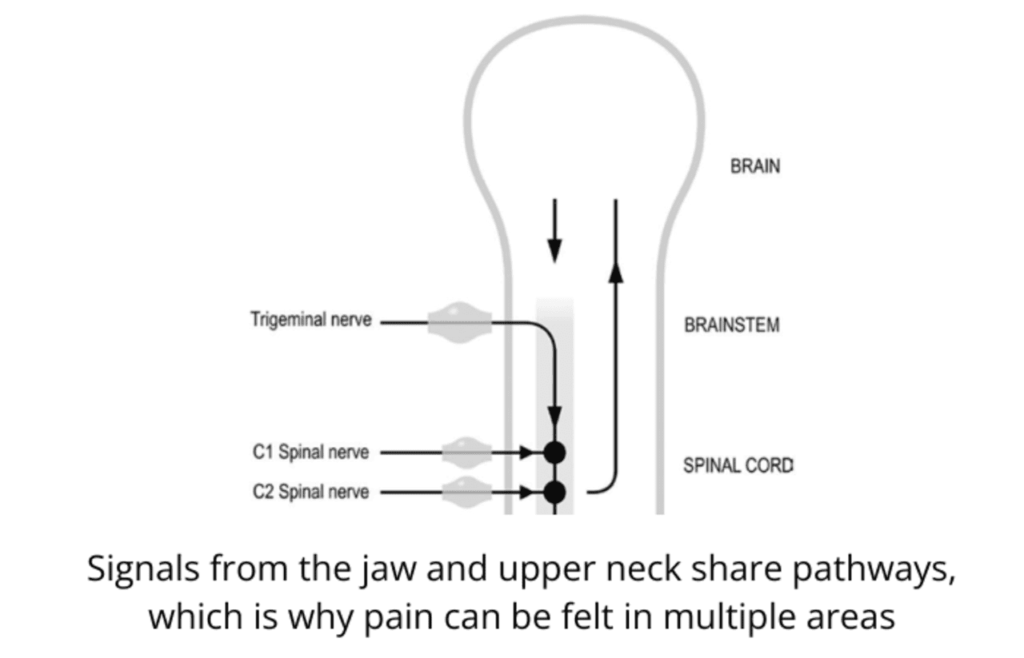
One important area is called the cervicotrigeminal nucleus, where information from the jaw, face, head, and upper neck can overlap.
Think of this area like a busy highway interchange. Signals from the jaw, face, temples, and upper neck all travel through connected nerve pathways. When there is a lot of input from one area, such as jaw clenching, neck tension, or an irritated TMJ, the nervous system may have trouble clearly separating where the signal started.
As a result, pain from the jaw may be felt in the temples, face, ear, or upper neck, and neck irritation may also be felt around the jaw or head.
This is one reason TMJ symptoms can show up as headaches or neck pain, even when the jaw is only part of the problem.
Why Clenching and Grinding Matter
Clenching and grinding can load the jaw system for long periods of time. Unlike chewing, which is usually rhythmic and short-lived, clenching can create sustained muscle contraction. That can irritate the jaw muscles, increase joint sensitivity, and contribute to headache or neck tension.
This does not mean stress is “causing everything.” It simply means the jaw system may be spending too much time under load without enough recovery.
Common signs that clenching or grinding may be involved include:
- waking with jaw tightness
- sore teeth or facial tension in the morning
- headaches around the temples
- tiredness in the jaw after talking or eating
- increased symptoms during stressful periods
- neck tension that seems to flare with jaw symptoms
Why the Neck Can Be Part of the Problem
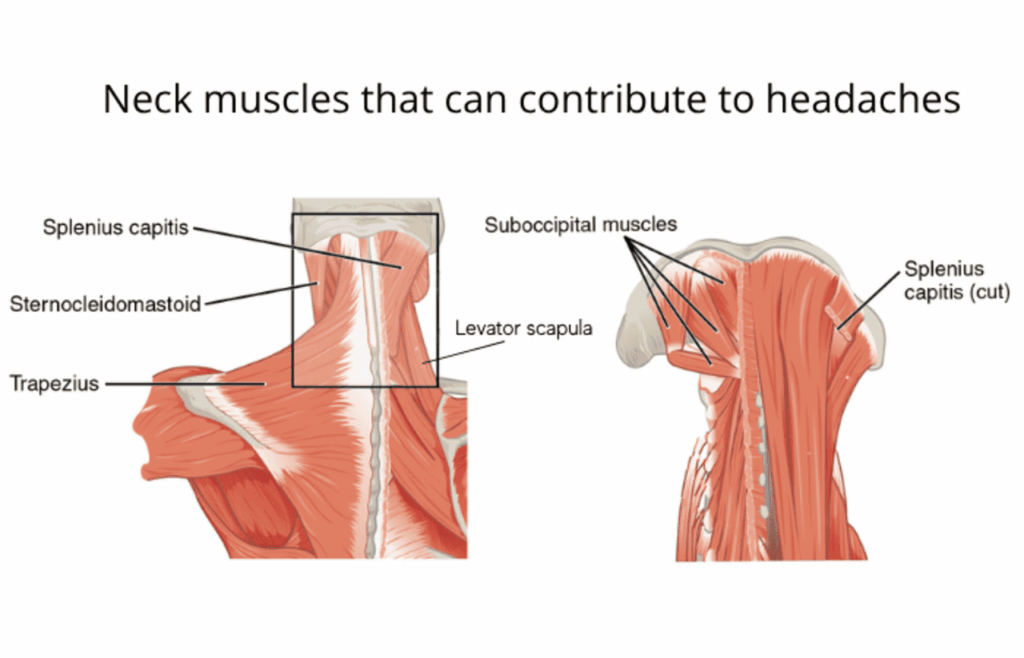
The upper neck and jaw share a close relationship. The upper cervical spine helps control head position, and head position can influence how the jaw opens and closes.
The deep muscles at the front of the neck help provide stability and control for the head and neck. When this system is not providing enough stability, the jaw, throat, and larger neck muscles may start working harder than they need to. Over time, this can create a pattern where the jaw and neck keep feeding into each other.
This is especially common in people who spend long hours sitting, working at a computer, driving, or carrying tension through the jaw, shoulders, and neck during stressful periods.
Neck involvement may be more likely if you notice:
- headaches at the base of the skull
- upper neck stiffness
- symptoms worse with prolonged sitting
- tension through the shoulders
- headaches that build through the day
- jaw symptoms that flare when the neck is sore
A good TMJ assessment should include the neck, not just the jaw.
Is It Always TMJ?
No. Headaches and neck pain can have many causes. TMJ can be one contributor, but it is not the only possible explanation.
Headaches may also be influenced by migraine, upper neck irritation, vision issues, sinus problems, sleep disruption, stress, medication factors, illness, or other medical conditions. Neck pain may also come from the joints, muscles, nerves, or other structures in the neck itself.
The more useful question is whether the jaw is contributing to the overall picture. Looking at patterns, such as clenching, chewing pain, morning stiffness, clicking, or symptoms that flare with neck tension, can help guide the assessment.
TMJ is more likely to be relevant when headaches or neck pain occur alongside jaw symptoms such as pain with chewing, clenching, grinding, clicking, locking, or morning jaw stiffness.
When Should You Get Assessed?
It is worth getting assessed if:
- headaches happen with jaw pain or stiffness
- you wake with jaw tension or morning headaches
- chewing, talking, or yawning increases symptoms
- your jaw clicks, catches, or locks
- neck pain and jaw pain flare together
- symptoms are becoming more frequent
- symptoms are not settling
A proper assessment can help determine whether your symptoms are mainly coming from the jaw, the neck, the muscles, or a combination of factors.
Seek medical care promptly if a headache is sudden, severe, unusual for you, associated with neurological symptoms, fever, trauma, vision changes, or significant medical changes.
How Physiotherapy Can Help
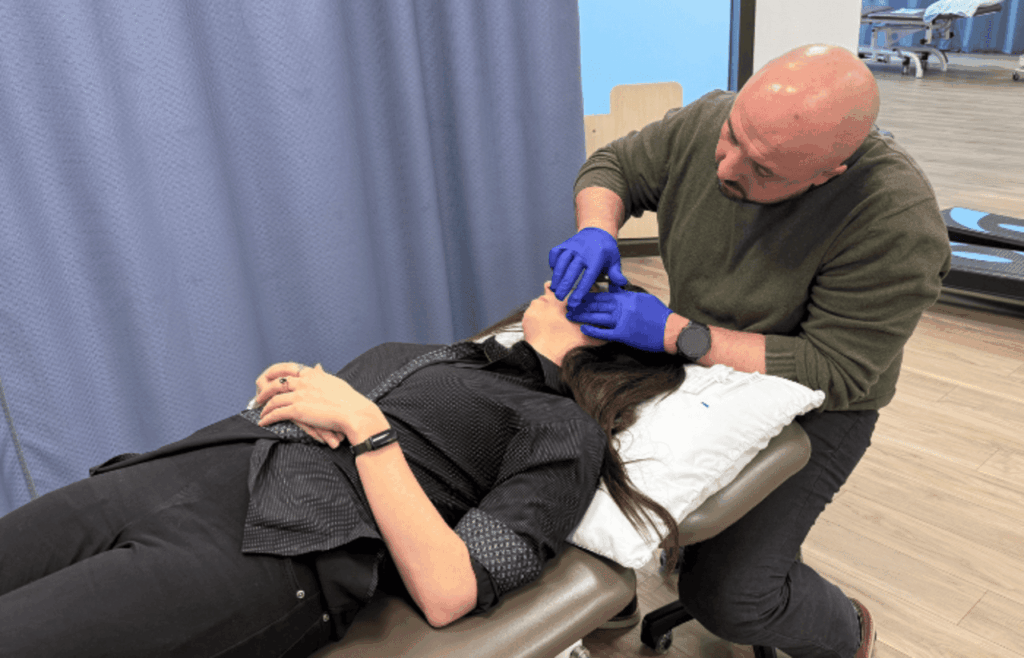
Physiotherapy for TMJ-related headaches and neck pain looks at how the jaw and neck are working together.
A good assessment may include:
- jaw opening and closing mechanics
- TMJ mobility
- jaw muscle tenderness
- neck mobility
- upper cervical control
- posture and breathing patterns
- clenching or grinding habits
- headache triggers and daily aggravating factors
Treatment may include:
- improving jaw movement and coordination
- reducing jaw, face, and neck muscle tension
- improving neck and upper back mobility
- retraining jaw and neck control
- education around clenching and flare-up management
- exercises to improve strength, mobility, and confidence
The goal is to understand what is driving your symptoms and help the jaw and neck work more comfortably together.
The Bottom Line
TMJ can contribute to headaches and neck pain, especially when symptoms are linked with jaw tension, clenching, chewing, clicking, morning stiffness, or facial pressure.
The jaw and neck are closely connected, but not every headache or neck ache is caused by TMJ. A good assessment helps sort out whether the jaw, the neck, the muscles, or a combination of factors is contributing.
Need Help With TMJ, Headaches, or Neck Pain?
At Avenue Physio, we take a whole-system approach to TMJ care. That means looking at the jaw, the muscles, the neck, and the movement patterns that may be contributing to your symptoms.
Book your TMJ assessment to get a clear plan and start moving, chewing, and living with more comfort.