Reduce thumb pain, restore grip strength, and return to daily activities with confidence.
At Avenue Physio in downtown Calgary, we provide one on one physiotherapy for De Quervain’s tenosynovitis, a common condition causing pain on the thumb side of the wrist. Our treatment focuses on reducing tendon irritation, restoring strength, and helping you safely return to gripping, lifting, and everyday hand use.
De Quervain’s tendon pain can make simple tasks such as lifting a child, gripping objects, texting, or opening jars uncomfortable. With the right rehabilitation approach, most people improve significantly without injections or surgery.
What Is De Quervain’s Tenosynovitis
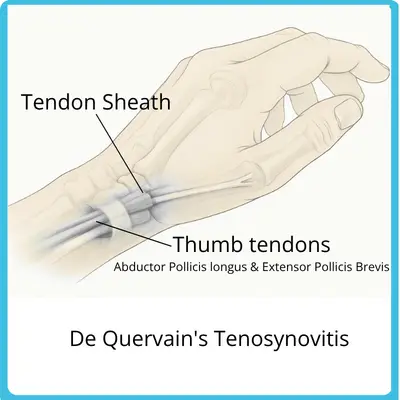
De Quervain’s tenosynovitis involves irritation of two tendons that control thumb movement as they pass along the thumb side of the wrist.
These tendons help move the thumb away from the hand and stabilize the thumb during gripping and lifting activities.
When the tendons become overloaded or irritated, movement through this narrow tendon tunnel can become painful. This may cause discomfort with thumb movement, gripping, lifting, or twisting motions.
This condition often develops when the tendons are exposed to more repetitive gripping or thumb use than they are currently prepared to tolerate, rather than from a single injury.
Common Symptoms of De Quervain’s
Pain along the thumb side of the wrist
Pain when gripping, lifting, or twisting the wrist
Discomfort when lifting a child or holding objects
Pain with texting, typing, or repetitive thumb use
Tenderness near the base of the thumb
Swelling or thickening along the tendon area
Symptoms may develop gradually and often become more noticeable with repeated hand use or gripping activities.
De Quervain’s vs Thumb Arthritis
Pain near the base of the thumb can sometimes be confused with thumb arthritis (CMC joint arthritis) because both conditions can cause discomfort during gripping or lifting.
De Quervain’s involves irritation of the tendons on the thumb side of the wrist, while thumb arthritis affects the joint at the base of the thumb.
Although the symptoms can feel similar, the underlying structures and treatment approaches are different. A physiotherapy assessment can help determine which structure is contributing to your symptoms and guide the most appropriate treatment plan.
Why De Quervain’s Tendon Pain Happens
De Quervain’s often develops when the load placed on the thumb tendons exceeds what they are currently prepared to tolerate.
Common contributing factors include:
Increased gripping or lifting demands
Repetitive thumb movements such as texting or scrolling
New activities requiring frequent hand use
Carrying infants or lifting with the thumb extended
Sudden increases in work or activity load
Tendons are living tissues that adapt to load. When the right strengthening program is introduced, the tendons can gradually become stronger and more tolerant to activity.
How Physiotherapy Helps De Quervain’s
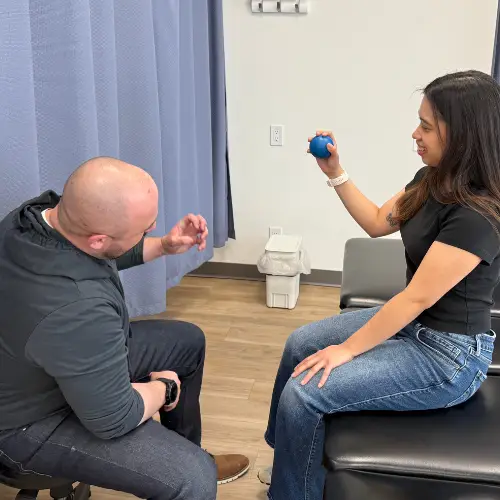
At Avenue Physio, every appointment is one-on-one with your physiotherapist and focused entirely on you.
Your treatment plan may include:
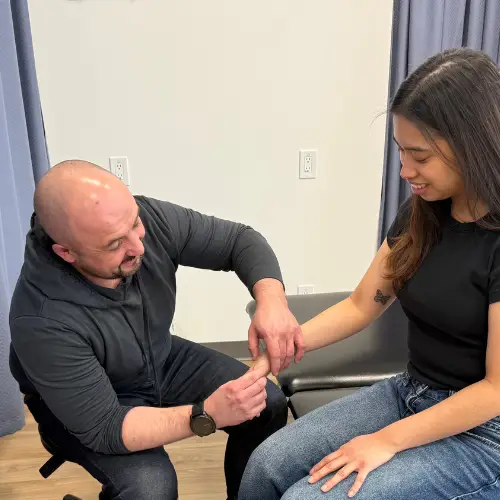
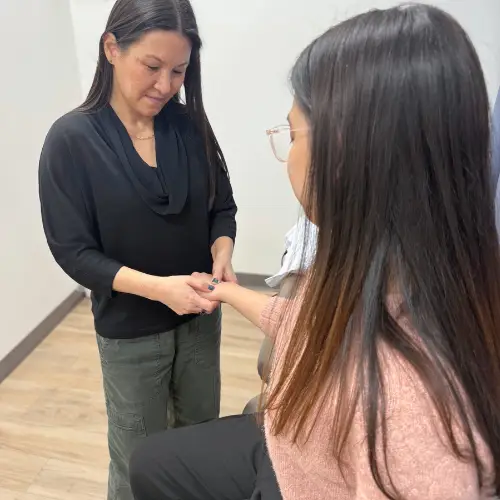
Detailed assessment of the thumb, wrist, and forearm
Education on reducing tendon irritation during daily tasks
Progressive strengthening for the thumb and forearm muscles
Gradual return to gripping and lifting activities
Movement strategies to reduce tendon overload
Hands-on care to improve comfort and mobility
Temporary activity modification may be helpful early on, but long term recovery depends on restoring strength and tolerance to load.
Do I Need a Brace, Injection, or Surgery
Some people benefit from temporary use of a thumb support or brace to reduce tendon irritation during the early stages of recovery.
Corticosteroid injections may sometimes be recommended in persistent cases. However, many people improve with activity modification, strengthening, and physiotherapy.
Surgery is rarely required and is typically considered only if symptoms remain severe despite appropriate conservative care.
How Long Does RecoveryTake
Most people notice improvement within several weeks once the tendon load is reduced and strengthening begins.
Tendon recovery takes time, and consistent rehabilitation is important to rebuild tendon capacity and prevent symptoms from returning.
Gradually restoring gripping strength and thumb movement helps people return to normal hand use safely.

 Skip to content