Restore strength, control, and confidence in your shoulder with one-on-one expert care at Avenue Physio.
The rotator cuff is not the main muscle that lifts your arm, but it plays an important role in keeping the shoulder stable and moving smoothly during reaching, lifting, and overhead activity.
Rotator cuff pain is very common and often develops when the shoulder is exposed to more load than it is prepared to handle. Strong research consistently shows that most people improve with progressive, exercise-based physiotherapy.
At Avenue Physio in downtown Calgary, we provide a detailed one-on-one assessment and structured rehabilitation focused on restoring shoulder strength, coordination, and long-term resilience.
The shoulder is a shallow ball-and-socket joint. The socket is relatively small and flat, more like a golf tee than a deep cup.
Because of this, your shoulder depends heavily on muscle coordination for stability.
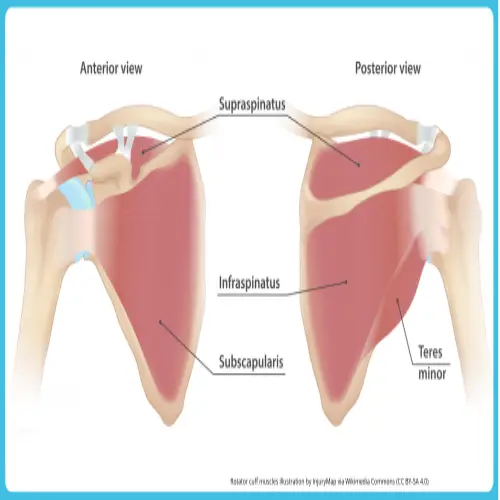
The rotator cuff is made up of four muscles:
Its primary role is to gently “suck” the ball of your shoulder into the socket and guide rotation, keeping movement smooth, centered, and controlled.
When you lift your arm, the larger deltoid pulls upward. At the same time, the rotator cuff pulls the ball slightly downward and into the socket to keep it aligned.
When this centering system becomes overloaded or fatigued, pain can develop.
Not all rotator cuff tears are the same.
There is an important difference between degenerative age-related tears and acute traumatic tears.
These develop gradually over time.
They are:
Research shows many degenerative tears respond just as well to structured rehabilitation as surgical intervention in the long term.
Pain improves because:
Imaging findings alone do not determine recovery.
These occur suddenly, often after:
Acute tears are more likely to cause:
These cases may require earlier imaging and surgical consultation, particularly in younger or highly active individuals.
Early assessment helps determine the most appropriate next step.
An accurate diagnosis early makes recovery easier.
If you are unsure whether your shoulder pain is tendon overload, a degenerative tear, or an acute injury, a detailed one-on-one assessment can clarify the next step.
You may notice:
A detailed assessment determines whether your pain reflects:
We assess the entire upper body, not just the painful area.
Shoulder pain usually develops when the load exceeds what the tendon can tolerate.
Common contributors include:
Avoiding movement for too long can reduce tolerance. Guided loading builds resilience.
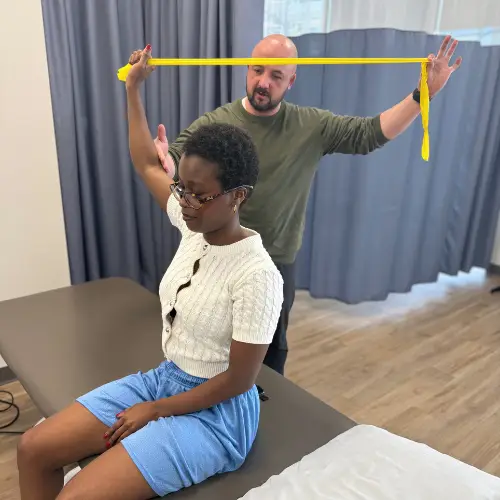
Your personalized treatment plan may include:
The early phase focuses on calming irritation and restoring movement.
Mid-phase builds tendon capacity.
Late phase restores power, endurance, and confidence.
Our goal is not just pain reduction. It is a shoulder that feels strong, stable, and reliable.
Not usually. A thorough physiotherapy assessment often provides more useful information than early imaging.
If imaging is appropriate, we typically recommend diagnostic ultrasound first, as it is highly effective for assessing rotator cuff tendons.
Imaging may be considered if:
• There was significant trauma
• There is marked weakness
• Symptoms are not improving as expected
Mild tendinopathy may improve within 6 to 8 weeks.
Persistent tendon pain often takes 3 to 6 months to fully restore strength and tolerance.
Strength restoration after a tear may take several months.
Tendons heal gradually but respond very well to progressive loading.

No. Gentle, guided movement supports recovery.
Your physiotherapist will show you:
What to continue
What to modify
What to temporarily avoid
How to progress safely
Same-day appointments & Direct billing available.
Avenue Physio
Changing Lives with Movement
Contact us
Closed weekends
About Us