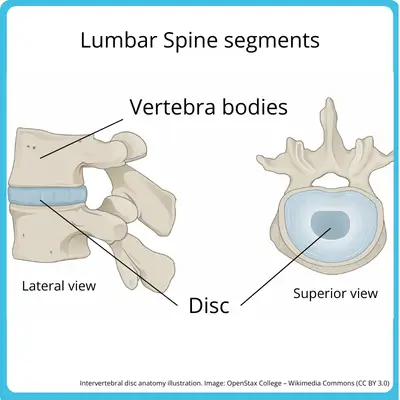
Despite its name, degenerative disc disease is not actually a disease. It refers to normal, age-related changes in the discs of your spine, the strong, flexible cushions between each vertebra.
These changes are incredibly common.
By age 40, more than half of people have disc “degeneration” on imaging, even if they have no pain.
As we age, discs naturally lose some hydration and height, similar to greying hair or skin wrinkles. For some people, these normal changes can become sensitive, leading to back stiffness or discomfort. But they do not mean your spine is damaged, fragile, or wearing out.
At Avenue Physio in downtown Calgary, our physiotherapists help people understand their imaging, reduce pain, regain mobility, and build confidence in movement through individualized, evidence-based care.
Disc changes are normal
They appear in most adults and are often seen in people with no pain.
Imaging does not predict pain
Many people with significant disc changes have no symptoms at all.
Your spine remains strong and adaptable
Discs respond positively to movement, strengthening, and load.
Pain reflects sensitivity, not damage
Sleep, stress, activity levels, and nervous-system responses all influence how your back feels.
Physiotherapy helps calm irritated tissues, reduce nervous-system sensitivity, improve mobility, and increase your confidence in movement. At Avenue Physio, every session is one-on-one with a registered physiotherapist.
The goal is to help your back move well, feel good, and handle the demands of your life.
Yes. Physiotherapy can significantly reduce pain and stiffness and improve mobility and daily function. Imaging findings do not determine how much you can improve. What matters most is how your back moves, adapts, and responds to treatment.
No. These movements are safe and important for a healthy, adaptable spine. You may temporarily change how you do them during a flare-up, but the long-term goal is always to restore comfortable, confident bending, lifting, and twisting.
No. Degenerative disc changes are extremely common on imaging and often unrelated to pain. Your physiotherapist will only suggest imaging if there are specific clinical reasons to do so.
Avenue Physio
Changing Lives with Movement
Contact us
Closed weekends
About Us