Reduce deep buttock pain, improve tendon capacity, and return to sitting, running, and training with confidence.
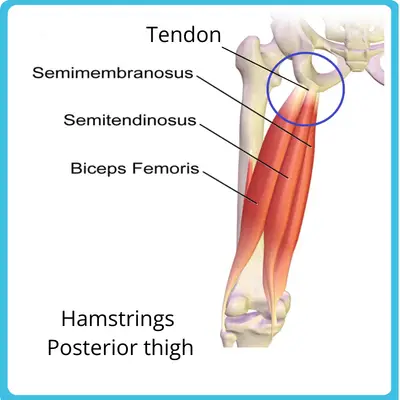
At Avenue Physio in downtown Calgary, we provide one-on-one physiotherapy for proximal hamstring tendinopathy, a condition involving irritation of the hamstring tendon where it attaches near the ischial tuberosity (sit bone) deep in the buttock region.
This condition commonly causes pain with sitting, running, sprinting, hinging, deadlifting, or prolonged stretching. Symptoms often develop gradually when the amount of load placed on the tendon exceeds what it can currently tolerate.
Our approach focuses on progressive strengthening, load management, and helping you return to movement with confidence.
The goal is not simply to stretch the hamstring. The goal is to improve the tendon’s ability to tolerate load comfortably again.
What Is Proximal Hamstring Tendinopathy
Proximal hamstring tendinopathy involves irritation and reduced load tolerance of the hamstring
tendon where it attaches at the ischial tuberosity deep in the buttock region.
The hamstrings help control hip extension and knee movement during:
Walking
Running
Sprinting
Lifting
Hinging movements
Climbing stairs
Bending forward
The tendon experiences both tensile load and compression, especially during prolonged sitting, deep hip flexion, aggressive stretching, or repeated hinging movements.
When the tendon is exposed to more load than it can currently tolerate, it can become painful and sensitive.
Pain is often more related to tendon sensitivity and reduced load tolerance than significant
tissue damage.
Common Symptoms Of Proximal Hamstring
Tendinopathy
People with proximal hamstring tendinopathy often notice:
Deep pain near the sit bone
Pain with prolonged sitting or driving
Pain during running or sprinting
Symptoms with lunges, squats, or deadlifts
Pain during hills or acceleration
Tightness high in the hamstring
Morning stiffness or soreness after activity
Pain with aggressive hamstring stretching
Symptoms often fluctuate depending on sitting time, activity levels, training load, and recovery.
Why Proximal Hamstring Tendinopathy Develops
The hamstring tendon needs gradual and progressive loading to remain healthy and resilient.
Symptoms often develop when:
Training volume increases too quickly
Sprinting or hill running increases suddenly
Heavy gym loading exceeds tendon capacity
Prolonged sitting repeatedly compresses the tendon
Recovery between activities is insufficient
Hip and trunk muscles are not sharing the load efficiently
Contributing factors may include:
Reduced gluteal strength or endurance
Poor lumbopelvic control
Sudden changes in activity or training intensity
Aggressive stretching into hip flexion
Long periods of sitting
Returning to sport too quickly after injury
Modern tendon rehabilitation focuses on gradual loading rather than complete rest.
Avoiding movement completely can reduce tendon capacity further over time.
Important Facts About Hamstring Tendon Pain
Tendon pain does not always mean the tendon is torn or severely damaged.
Imaging findings such as tendon thickening or degeneration are common and do not always correlate with pain levels.
Tendon sensitivity
Load tolerance
Recovery capacity
Nervous system sensitivity
Training progression
Progressive strengthening and gradual exposure to movement are some of the most effective ways to improve tendon capacity and reduce symptoms over time.
Complete rest is usually not the answer.
How Physiotherapy Helps Proximal Hamstring
Tendinopathy
Physiotherapy focuses on improving tendon capacity, reducing irritation, and restoring
confidence with movement.
At Avenue Physio every appointment is one on one and focused entirely on you.
Your treatment plan may include:
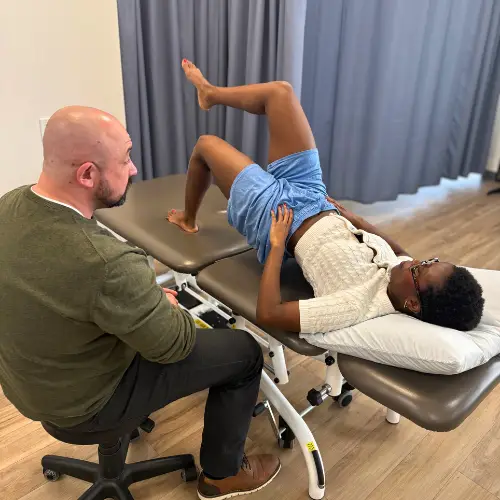
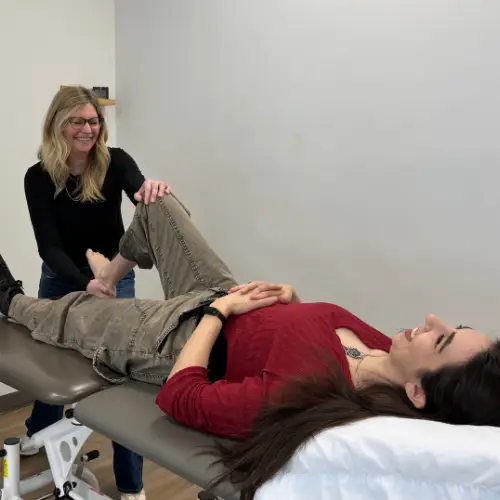
A detailed assessment of the hip, pelvis, hamstring, and lower back
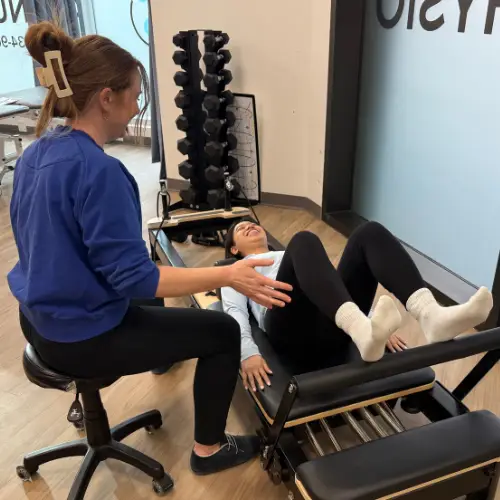
Progressive hamstring strengthening and tendon loading
Gluteal and trunk strengthening
Running and movement assessment
Strategies to reduce sitting irritation and tendon compression
Gradual return to running, lifting, and sport
Movement coaching for gym activities and daily life
IMS or dry needling when muscle sensitivity is contributing
Education around tendon loading and flare-up management
Treatment is individualized based on your symptoms, goals, irritability, and activity level.
With the right progression, most people improve significantly and return to comfortable activity
Pain high in the hamstring or buttock region is sometimes mistaken for sciatica.
While symptoms can overlap, proximal hamstring tendinopathy more commonly involves:
Pain directly near the sit bone
Pain with sitting
Pain during loading or stretching of the hamstring
Local tenderness near the tendon
Symptoms during running or hinging
Sciatica originating from the lower back more commonly involves:
Lower back pain
Symptoms traveling below the knee
Numbness or tingling
Symptoms change with spinal movement
Clear nerve tension findings
Because several conditions can refer pain into the buttock and upper hamstring region, a proper assessment should evaluate:
The lower back
The hip joint
The hamstring tendon
The sciatic nerve
Deep gluteal structures
Lumbopelvic control
This helps identify what is truly driving your symptoms and allows treatment to be more precise.
How Long Does Recovery Take
Recovery from proximal hamstring tendinopathy usually occurs gradually as tendon capacity improves and irritation settles.
Common experiences after an accident may include:
Aggravating loads are modified
Progressive strengthening begins
Sitting compression is reduced appropriately
Training loads are managed more effectively
Long standing symptoms or highly irritable tendons may take longer to fully settle.
Recovery is often measured in months rather than days, especially for runners and active individuals returning to higher-level loading.
A structured rehabilitation plan helps guide safe progression and reduce the likelihood of
symptoms returning.
When Should You See A Physiotherapist
You should consider an assessment if:
Sitting causes deep buttock pain
Running or sprinting aggravates symptoms
Hamstring pain keeps returning
Stretching makes symptoms worse
Symptoms interfere with training or daily activities
You are unsure whether the activity is safe
Early guidance often helps reduce ongoing irritation and prevents the tendon from becoming more sensitive over time.
How to Get Started
If deep buttock pain or upper hamstring pain is limiting your sitting, running, lifting, or exercise,
we are here to help you find a clear plan forward.
Same week appointments available
– Direct billing offered
Located in Stephen Avenue Place, connected to Calgary’s Plus-15 network
Downtown Calgary | 100% One-on-One Care | Trusted since 1984

 Skip to content