Your neck is designed to protect the spinal cord while allowing nerves to exit the spine and travel into the shoulders, arms, and hands. These nerves help control strength, sensation, and coordination in the upper limb.
When a nerve in the neck becomes irritated or sensitive, a condition often called cervical radiculopathy, it can cause pain, tingling, numbness, or weakness that travels from the neck into the arm or hand.
At Avenue Physio, our experienced downtown Calgary physiotherapists help people recover from neck and arm nerve pain through evidence-based treatment, education, and progressive movement strategies that restore confidence and control.
Neck and arm nerve pain can be very painful and limiting. A one-on-one physiotherapy assessment can help identify what is contributing and guide effective treatment.
Understanding Neck & Arm Nerve Pain
Neck related nerve pain occurs when a nerve root becomes irritated as it exits the cervical spine. This irritation may be influenced by disc changes, joint stiffness swelling muscle tension or sustained postures that increase pressure or sensitivity around the nerve.
Nerve irritation can develop suddenly, such as after an awkward movement or strain, or gradually over time due to repetitive loading, reduced movement variety or prolonged positions. Even when symptoms feel intense, it is important to know that nerve pain does not automatically mean nerve damage.
Nerves are sensitive structures, but they are also adaptable. With time, appropriate movement and reduced irritation, nerve symptoms often settle and function improves.
Common symptoms of neck and arm nerve pain may include:
Pain radiating from the neck into the shoulder, arm, or hand
Tingling pins and needles or numbness
Arm or hand weakness or heaviness
Symptoms worsened by certain neck positions
Relief with specific postures or movements for some people
Neck and arm nerve pain can overlap with other conditions such as degenerative neck pain cervicogenic headache or shoulder dysfunction. A detailed physiotherapy assessment helps determine whether nerve irritation is the primary driver of symptoms and guides the most effective treatment.
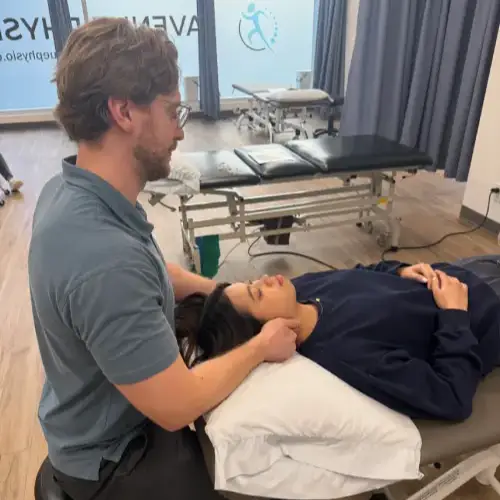
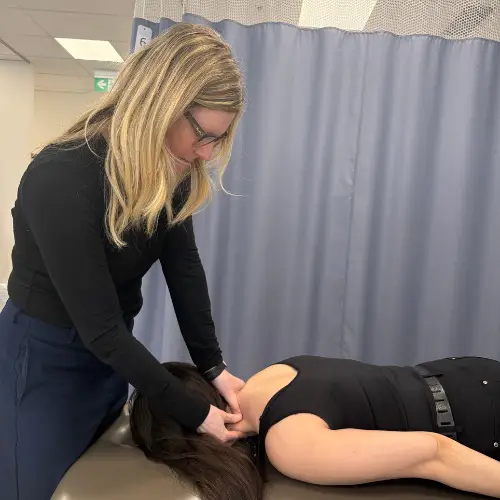
Your physiotherapist will perform a thorough one-on-one assessment to understand how your neck and arm move, which positions provoke or relieve symptoms, and whether nerve tension, joint stiffness, or muscle guarding are contributing.
Your personalized treatment plan may include:
Education to help you understand nerve pain and reduce fear
Gentle progressive exercises to reduce nerve sensitivity
Manual therapy or mobility work to improve neck and upper back movement
Postural and movement strategies to reduce nerve irritation
Gradual strengthening of the neck, shoulders, and upper limbs
Guidance on modifying work, sleep, and daily activities
Physiotherapy helps calm nerve sensitivity, restore normal movement patterns, and retrain the nervous system, key steps in long-term recovery.
Ready to Start Moving with Confidence Again
If neck and arm nerve pain is limiting your comfort sleep work or daily activities our downtown Calgary physiotherapists are here to help you find a clear plan forward.
Your first step is a detailed one on one physiotherapy assessment to identify what is contributing to your nerve symptoms and create a clear plan forward.
Move with confidence, reduce nerve sensitivity and regain control of your movement.
Located in Stephen Avenue Place, connected to Calgary’s Plus-15 network
Downtown Calgary | 100% One-on-One Care | Trusted since 1984

 Skip to content