Reduce thumb pain, restore grip strength, and return to comfortable hand use.
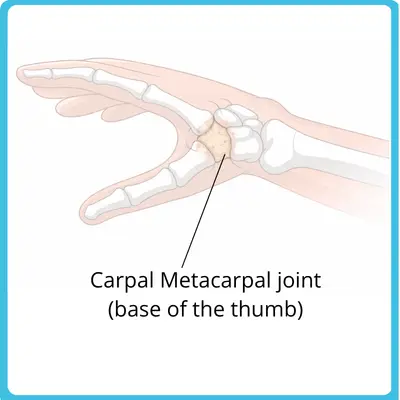
At Avenue Physio in downtown Calgary, we provide one-on-one physiotherapy for thumb arthritis of the carpometacarpal (CMC) joint, the joint at the base of the thumb. Our approach focuses on improving joint support, restoring strength, and helping you return to gripping, lifting, and everyday hand activities.
Thumb arthritis can make tasks such as opening jars, turning keys, gripping tools, or texting uncomfortable. With the right rehabilitation plan, many people improve their hand function and continue to use their hands confidently.
What Is Thumb CMC Arthritis
Thumb arthritis affects the carpometacarpal (CMC) joint at the base of the thumb, where the thumb meets the wrist.
This joint allows the thumb to move in multiple directions, making it essential for gripping, pinching, and fine hand control.
Gradual joint changes in this area are common with age and do not always determine how much pain someone experiences.
Pain is influenced not only by the joint itself but also by muscle strength, joint stability, load tolerance, and overall hand function.
Even when arthritis is present, the thumb joint remains a living structure that can adapt to strengthening and movement.
Why Thumb Arthritis Becomes Painful
Thumb arthritis pain often develops when the load placed on the joint exceeds what it currently tolerates comfortably.
Common contributing factors include:
Reduced strength of the muscles supporting the thumb
Increased gripping or pinching demands
Repetitive hand use at work or during hobbies
Reduced joint stability during gripping tasks
Changes in hand mechanics over time
The thumb relies heavily on surrounding muscles for support. When these muscles become weaker or fatigued, the joint may become more sensitive.
Strengthening the muscles that support the thumb can help improve joint stability and reduce irritation.
Common Symptoms of Thumb Arthritis
Pain at the base of the thumb
Pain when gripping or pinching objects
Difficulty opening jars or turning keys
Reduced grip or pinch strength
Swelling or tenderness near the thumb joint
Discomfort when pushing through the hand
Stiffness after periods of rest
Symptoms often fluctuate depending on activity levels and how the hand is being used.
Thumb Arthritis vs De Quervain’s
Pain on the thumb side of the wrist can sometimes be confused with De Quervain’s tenosynovitis, which affects the tendons that move the thumb.
Thumb arthritis involves the joint at the base of the thumb, while De Quervain’s involves tendon irritation along the thumb side of the wrist.
A physiotherapy assessment can help determine which structure is contributing to symptoms and guide the most appropriate treatment plan.
How Physiotherapy Helps Thumb Arthritis
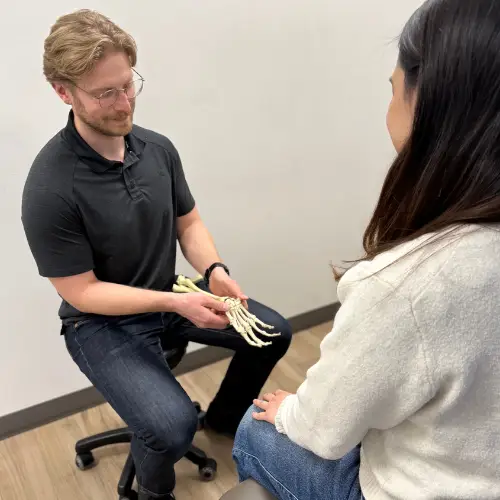
At Avenue Physio, every appointment is one-on-one with your physiotherapist and focused entirely on you.
Your treatment plan may include:
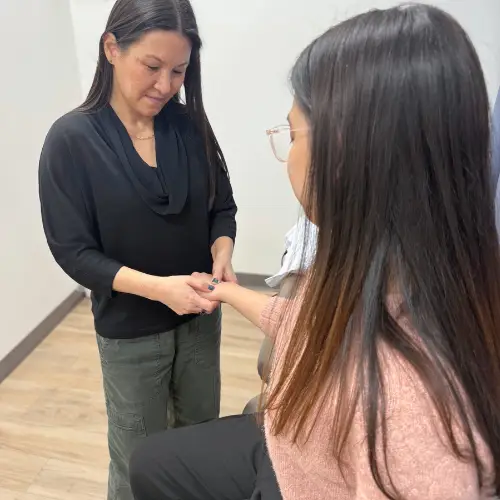
Detailed assessment of thumb, wrist, and hand mechanics
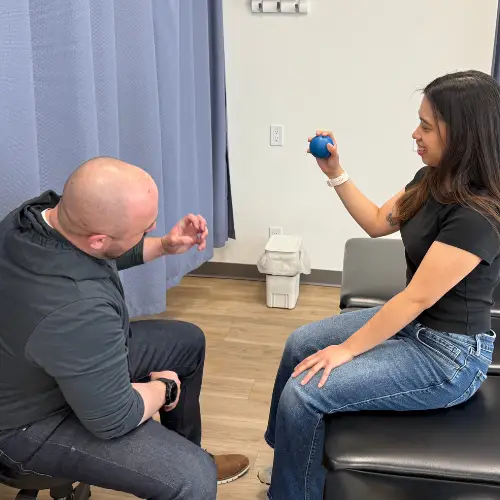
Strengthening exercises for the muscles that support the thumb joint
Strategies to improve grip mechanics and reduce joint stress
Movement exercises to maintain joint mobility
Gradual return to gripping and lifting activities
Education to help you manage the load through the thumb joint
Improving how the hand distributes load during gripping can help reduce irritation and support long term function.
Do I Need a Brace, Injection, or Surgery
Some people benefit from temporary use of a thumb support brace during activities that aggravate symptoms.
Corticosteroid injections may sometimes be recommended for persistent symptoms. However, many people improve with strengthening, activity modification, and physiotherapy.
Surgery is typically considered only when symptoms remain severe and significantly limit hand function despite conservative care.
Physiotherapy can also play an important role before or after surgery to restore movement and strength.
How Long Does Improvement Take
Many people notice improvement within several weeks once strengthening and load management strategies begin.
Because arthritis develops gradually, rebuilding strength and joint tolerance also takes time. Consistent rehabilitation helps support long term improvement.

 Skip to content