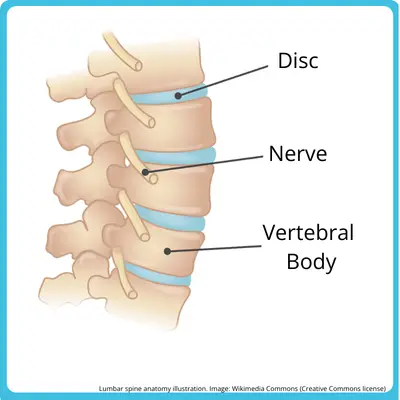
Your spine is strong, adaptable, and built to move. Each vertebra is separated by a disc — a tough, flexible cushion that helps absorb load and keep you moving smoothly. When a disc becomes irritated or injured, it can cause localized back pain or nerve-related symptoms such as tingling, weakness, or shooting pain into the leg.
At Avenue Physio, our experienced Calgary physiotherapists help people recover from disc injuries through evidence-based treatment, education, and progressive movement strategies that restore confidence and control.
Disc-related back pain can be intense but is often manageable with the right approach. A one-on-one physiotherapy assessment can help clarify what is driving your symptoms and guide recovery.
Understanding Disc Injuries
Disc irritation or herniation can happen suddenly, such as with a heavy lift, or develop gradually over time due to repetitive strain, awkward postures, or deconditioning.
Even when pain is severe, it’s important to remember that discs are strong, living tissues capable of healing. They can become sensitive when overloaded, stressed, or inflamed — but they are remarkably resilient.
The term herniation simply means that part of the disc’s inner material has moved slightly outward. In most cases, this does not mean permanent damage. With time and the right movement approach, inflammation can settle and the disc can recover its normal function.
Common symptoms of disc irritation may include:
Localized low back pain or stiffness
Pain, tingling, or numbness radiating into the buttock or leg
Increased discomfort with sitting, bending, or coughing
Symptoms that may ease with standing or walking for some people
Disc irritation is just one possible source of low back pain. Other contributors include sciatica and nerve sensitivity or sacroiliac (SI) joint dysfunction, which can present in similar ways. A detailed physiotherapy assessment helps clarify the true source and guide the most effective treatment.
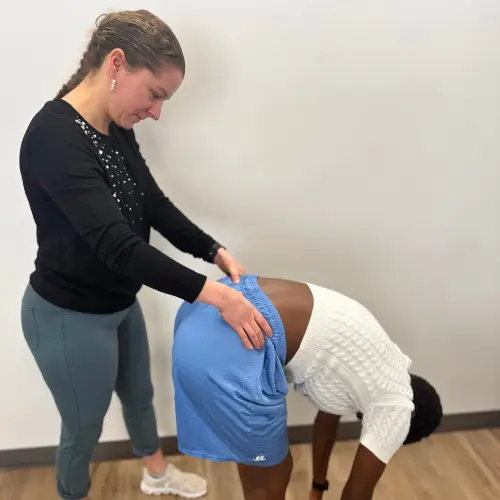
Your physiotherapist will perform a thorough one-on-one assessment to understand how your spine moves, which positions ease or aggravate your symptoms, and whether nerve irritation is contributing to your pain.
Your personalized treatment plan may include:
Education about how discs heal and why movement supports recovery
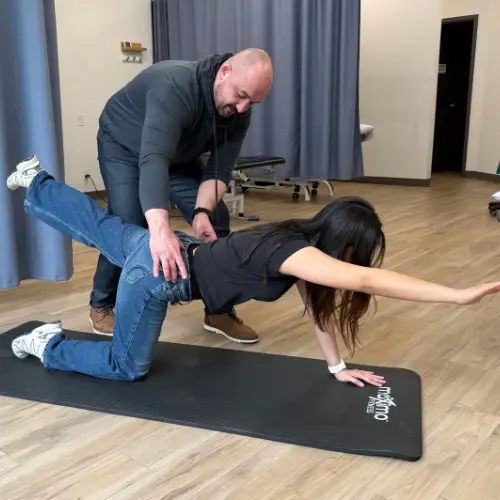
Gentle, progressive exercises to reduce pain and restore confidence
Manual therapy or mobility work to ease stiffness and improve movement
Gradual strengthening for spinal stability and long-term resilience
Coaching on posture, load management, and recovery strategies
Physiotherapy helps reduce inflammation over time, restore normal movement patterns, and retrain your nervous system to decrease pain sensitivity — all key steps in lasting recovery.
Ready to Start Moving with Confidence Again?
If disc pain is limiting how you sit, work, or stay active, our downtown Calgary physiotherapists are here to help you find a clear plan forward.
Disc injuries are common — and most improve without surgery.
Research shows that most herniations naturally decrease in size over time as inflammation settles and movement improves (Brinjikji et al., Spine, 2015).
Pain does not always mean damage.
MRI scans often show disc changes in people without pain, especially as we age. What matters most is function, not the image (Brinjikji et al., AJNR, 2015).
Discs can heal and adapt.
They respond positively to gradual loading, movement, and progressive strength training.
Staying active supports recovery.
Prolonged rest can increase stiffness and sensitivity, while guided movement builds confidence and resilience.
Most people recover fully.
With time, education, and physiotherapy, most people regain normal movement and activity levels — even after significant pain episodes.
Not usually. Imaging is only needed if symptoms suggest significant nerve involvement or if you’re not improving as expected. Your physiotherapist will assess and refer you if necessary.
Recovery varies. Some people improve within a few weeks, while others may take a few months to fully regain strength and confidence. Physiotherapy helps you progress safely and steadily.
Surgery is rarely required. Most disc injuries improve with conservative care. Surgery is considered only when there is significant or worsening nerve compression (such as progressive weakness, numbness, or bladder changes) that doesn’t respond to treatment. Even then, long-term outcomes are often similar to those managed without surgery (Weinstein et al., NEJM, 2006).
Not when guided correctly. Your physiotherapist will teach you movements that feel safe and help your body regain trust and strength without aggravation.
If you experience progressive leg weakness, loss of bladder or bowel control, or numbness in the groin region, seek urgent medical care immediately.
Our Additional Expertise
Our team has extensive experience in assessing and treating spinal and nerve-related conditions, including disc herniations, sciatica, and chronic low back pain.
We use evidence-based treatment plans focused on education, progressive exercise, and self-management so you can take back control of your movement and recovery.
Your first step is a detailed one-on-one physiotherapy assessment to identify the cause of your symptoms and create a clear plan that helps you move comfortably again.
Same-day appointments & Direct billing available.
Move with confidence, rebuild strength, and rediscover what your back is capable of.
Located in Stephen Avenue Place, connected to Calgary’s Plus-15 network
Downtown Calgary | 100% One-on-One Care | Trusted since 1984

 Skip to content