Restore comfortable movement and confidence in your shoulder with one-on-one expert care at Avenue Physio in downtown Calgary.
Frozen shoulder, also called adhesive capsulitis, is a painful condition where the shoulder gradually becomes stiff and difficult to move. It may begin after an injury, surgery, flare-up, or period of reduced use, though it can also develop without a clear cause.
Frozen shoulder is commonly misdiagnosed in the early stages. What makes it different is that the joint capsule becomes inflamed and tight, leading to progressive loss of movement.
The good news is that frozen shoulder almost always improves with time and the right treatment approach.
At Avenue Physio in downtown Calgary, we provide detailed one-on-one assessments, structured rehabilitation, and medical coordination when appropriate to help reduce pain and restore movement safely.
What Is Frozen Shoulder
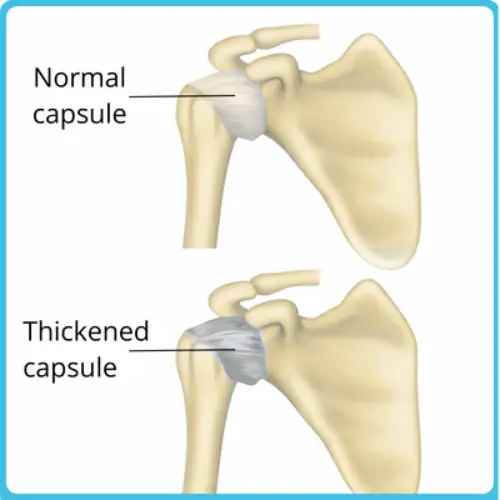
Frozen shoulder affects the capsule surrounding the shoulder joint.
The capsule is a flexible envelope of tissue around the ball and socket. In frozen shoulder, it becomes inflamed, thickened, and tight.
As this happens, movement becomes restricted in multiple directions, especially:
External rotation
Reaching overhead
Reaching behind your back
This differs from rotator cuff pain.
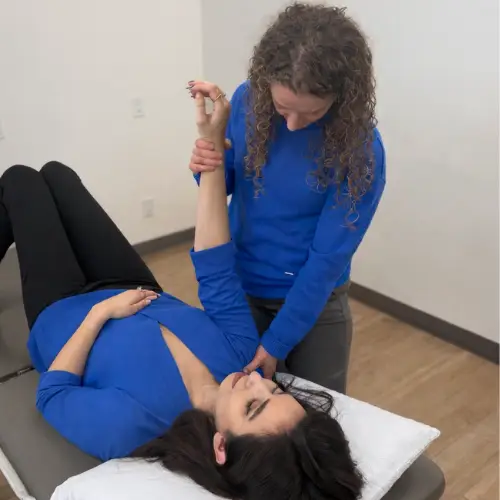
With frozen shoulder, the joint itself becomes stiff. Even when someone else moves your arm, motion is restricted.
Loss of passive motion is a key diagnostic feature we assess carefully at Avenue Physio.
The Three Stages of Frozen Shoulder
Frozen shoulder progresses through predictable phases.
Stage One Freezing Phase
Increasing pain
Night pain
Gradual loss of motion
Shoulder feels reactive
This stage may last several months.
Aggressive stretching can worsen symptoms. The focus is calming pain and maintaining controlled movement.
Stage Two Frozen Phase
Pain may ease slightly
Pain may ease slightly
Stiffness becomes dominant
Movement is clearly limited
Daily tasks are difficult
Treatment focuses on gradual mobility restoration within tolerance.
Stage Three Thawing Phase
Pain continues to reduce
Motion slowly improves
Strength begins returning
Recovery may take 12 to 24 months, though most people regain functional movement sooner.
Not Sure Which Stage You’re In?
An accurate diagnosis early makes recovery easier.
If you are unsure whether your shoulder stiffness is frozen shoulder or another condition, a one-on-one assessment can clarify your stage and guide the right next step.
Why Frozen Shoulder Happens and How It Differs from Rotator Cuff Pain
The exact cause of frozen shoulder is not fully understood.
It is more common in:
Adults between 40 and 60
Women
People with diabetes
After a shoulder injury or surgery
After immobilization
It may follow a tendon flare-up or painful shoulder episode. Sometimes there is no clear trigger.
Frozen shoulder involves capsule stiffness.
Rotator cuff pain involves tendon sensitivity and load intolerance.
With rotator cuff pain, movement is painful but possible.
With frozen shoulder, motion is restricted even when someone else moves the arm.
Accurate diagnosis is essential to determine whether you need frozen shoulder treatment or rotator cuff physiotherapy in Calgary.
Do I Need Imaging or an Injection
Frozen shoulder is primarily diagnosed clinically.
When we strongly suspect it, we often recommend an early ultrasound and X-ray. Ultrasound assesses the rotator cuff and surrounding tissues, while X-ray rules out arthritis or structural causes of stiffness.
In the early freezing stage, a corticosteroid injection can significantly reduce pain and may shorten the most painful phase. Research shows injections are most effective when given early.
If appropriate, we can facilitate timely referral for imaging and image-guided injection in collaboration with qualified providers who hold imaging privileges. This supports coordinated care and reduces delays for patients in Calgary seeking frozen shoulder treatment.
An injection does not stop the full course of frozen shoulder, but it can improve comfort and make rehabilitation more manageable.
Physiotherapy remains essential for restoring mobility, rebuilding strength, and supporting long-term recovery.
How Physiotherapy Helps Frozen Shoulder
Early diagnosis and correct staging are key.
If frozen shoulder is suspected, we confirm the stage quickly and coordinate imaging and referral when indicated.
The vast majority of frozen shoulder cases improve without surgery. Structured physiotherapy, stage-appropriate rehabilitation, and early injection when indicated lead to excellent outcomes for most people.

 Skip to content