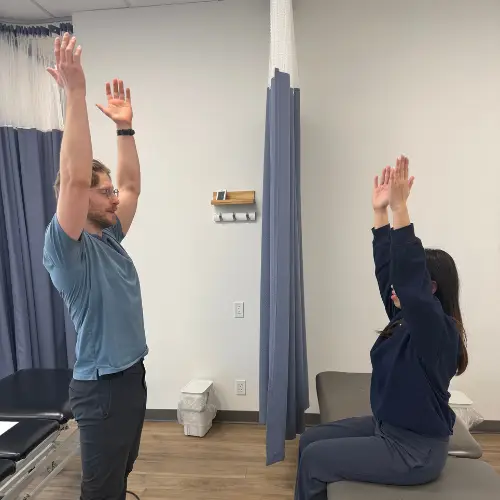
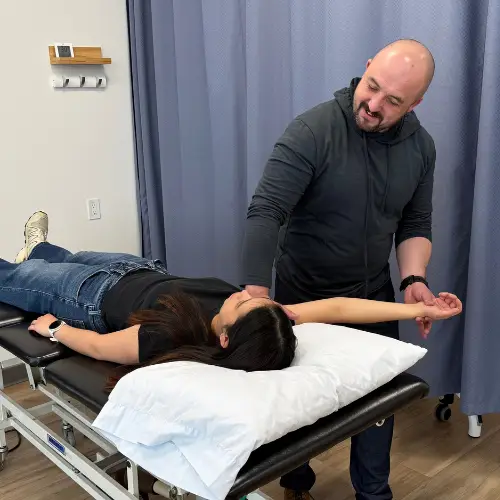
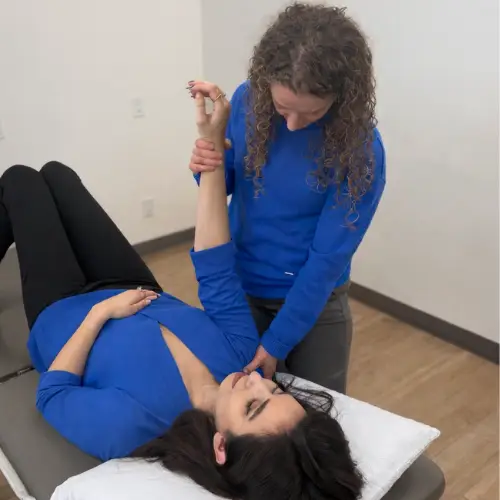
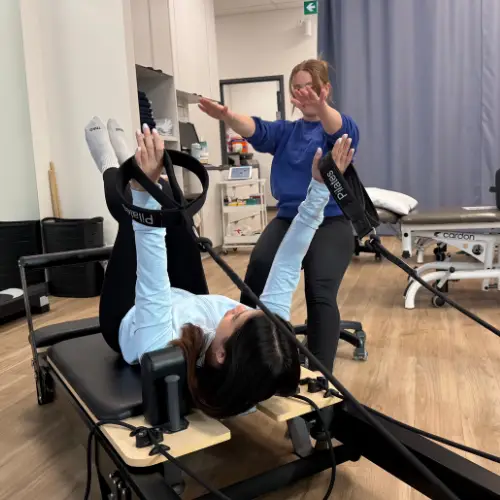
Restore movement, strength, and confidence in your shoulder with one-on-one expert care at Avenue Physio.
Your shoulder is one of the most mobile and complex joints in your body. When pain or stiffness develops, everyday tasks like reaching, lifting, carrying, or even sleeping can become difficult.
At Avenue Physio, we take the time to understand what is driving your symptoms so we can restore comfort, control, and freedom of movement — not just relieve pain temporarily.
Understanding Shoulder Pain
Shoulder pain often develops in one of two main ways.
In some cases, pain starts suddenly after a fall, impact, or forceful movement. This may involve a strain, tear, or joint irritation and often feels sharp, sudden, or clearly linked to an injury. These cases benefit from early assessment to guide safe movement and recovery.
More commonly, shoulder pain develops gradually over time without a single injury. In these cases, pain is often related to sensitivity or reduced load tolerance rather than tissue damage.
Common patterns include:
Sensitivity or irritation When the rotator cuff, biceps tendon, or surrounding tissues are overloaded or fatigued, they can become sensitive and uncomfortable with certain movements.
Protective muscle tension The nervous system may increase muscle guarding to protect the area, which can limit comfortable movement, especially overhead or behind the back.
Reduced strength, endurance, or coordination If the shoulder or shoulder blade muscles are not currently strong or coordinated enough to meet daily or sport demands, pain may appear during reaching, lifting, or repetitive activity.
These patterns often occur together, and most respond extremely well to progressive strengthening, mobility training, and movement confidence coaching.
The shoulder also works closely with the neck and upper back, so stiffness or irritation in those areas can influence how the shoulder moves and feels. That is why our assessment always considers the whole upper body, not just the painful area.
Fast Facts About Shoulder Pain
Shoulder pain is extremely common and often improves with physiotherapy
Pain does not always mean structural damage, especially when symptoms develop gradually
MRI and ultrasound findings often show age-related changes even in people without symptoms
Strength, load tolerance, and movement confidence play a major role in recovery
Most people improve without injections or surgery
Common Shoulder Conditions We Treat
A thorough physiotherapy assessment helps identify the primary contributors to your shoulder pain and guides an effective treatment plan.
Shoulder pain is rarely caused by a single issue. It often develops when the load placed on the shoulder exceeds what the tissues are currently able to tolerate.
The shoulder relies on coordinated muscle and tendon control, especially during reaching, lifting, and overhead activity. When load increases faster than the shoulder can tolerate, tissues may become sensitive and painful without being structurally damaged.
Common contributing factors include:
Sudden increases in lifting or overhead activity
Repetitive shoulder use without enough recovery
Reduced strength or endurance of the rotator cuff or shoulder blade muscles
Changes in workload, exercise, or sport
Contribution from the neck or upper back
Nervous system sensitivity
Overall health also influences how shoulder tissues respond. Poor sleep, stress, hormonal changes, including menopause, smoking, and certain health conditions, can increase sensitivity without causing permanent damage.
Understanding which factors matter most for you allows physiotherapy to focus on restoring load tolerance, strength, and confident movement.
How Physiotherapy Helps Shoulder Pain
Your personalized treatment plan may include:
Manual therapy and joint mobilization to restore movement
Targeted strengthening for the rotator cuff and shoulder blade
Mobility exercises for overhead, behind-the-back, and rotational movements
Movement retraining to improve control and confidence
Education on pacing, recovery, and flare-up management
Home strategies to support progress between sessions
Screening for neck or nerve-related contributors
Our goal is to reduce short-term discomfort while building long-term strength, resilience, and confidence in your shoulder.
Our Advanced Training in Shoulder Rehabilitation
At Avenue Physio, our physiotherapists complete extensive post-graduate training, including:
Manual therapy and manipulative physiotherapy (FCAMPT-level)
Progressive strengthening and shoulder load management
Rotator cuff and overhead athlete rehabilitation
Pain science and strategies for reducing sensitivity
IMS and dry needling for neuromuscular irritation
Acupuncture for pain modulation
Guidance following minor shoulder procedures when appropriate
These advanced skills allow us to assess your shoulder thoroughly and create a precise, personalized plan for recovery.
Most people do not need imaging. A thorough physiotherapy assessment usually provides more useful information. If imaging is recommended, we will guide you.
Mild cases may feel better within a few weeks. Tendon-related or stiffness-related conditions often take several months. With structured rehab, most people regain comfortable, confident movement.
Gentle, comfortable motion is usually helpful. Movements that cause sharp pain or make symptoms worse should be modified. Your physiotherapist will show you what to continue, what to adjust, and when rest is appropriate.
Shoulder pain often develops from accumulated load, reduced strength, repetitive tasks, or stiffness in the neck and upper back. Stress and sleep can also influence sensitivity.
Many degenerative rotator cuff tears improve without surgery. Strength and function can improve even if the tear is still visible on imaging. Traumatic tears may require imaging or surgical consultation depending on function.
Ready to Get Started
If shoulder pain is limiting how you move, work, sleep, or stay active, we are here to help you find a clear plan forward.
Same-day appointments & Direct billing available.
Located in Stephen Avenue Place, connected to Calgary’s Plus-15 network
Downtown Calgary | 100% One-on-One Care | Trusted since 1984

 Skip to content