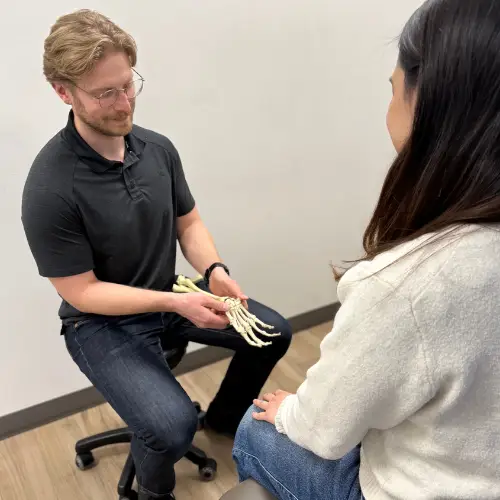
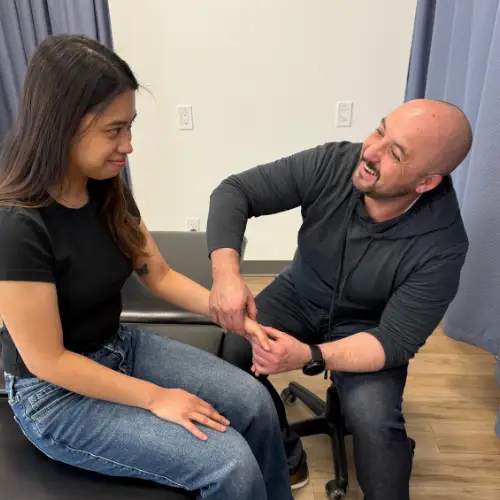
Helping Calgarians reduce wrist and hand pain, restore strength, and move with confidence.
At Avenue Physio in downtown Calgary (Stephen Avenue Place), our experienced physiotherapists provide one on one, evidence based physiotherapy to help reduce wrist and hand pain, restore function, and support long term recovery. For more than 40 years, we have helped people return to work, sport, and daily activities that require gripping, lifting, and fine hand control.
Wrist and hand pain can make everyday tasks like typing, gripping, lifting, or weight bearing uncomfortable or frustrating. Our goal is not only to reduce pain but also to restore strength, improve movement tolerance, and help you return to confident use of your hands.
Understanding Wrist and Hand Pain
Wrist and hand pain can develop in different ways. For some people, symptoms begin after a specific event such as a fall, strain, or sudden increase in load. For others, pain develops gradually over time with repeated use for work, sport, or daily activities.
The tissues in the wrist and hand are designed to tolerate load and fine movement. When the demands placed on them exceed what they are currently able to handle, they can become sensitive and painful. This does not automatically mean something is torn or permanently damaged. It often means the system needs the right balance of movement, strength, and recovery to adapt.
Symptoms can also be influenced by how the elbow, shoulder, and neck are functioning, as well as nerve sensitivity. That is why our physiotherapy assessment looks beyond the wrist or hand itself to identify all contributing factors.
Fast Facts About Wrist and Hand Pain
Wrist and hand pain can come from tendons, joints, ligaments, or nerves
Pain does not always mean tissue damage
Imaging findings often do not fully explain symptoms
Hands and wrists respond best to guided movement and progressive loading
Most conditions improve with physiotherapy without injections or surgery
Wrist and Hand Conditions We Commonly Treat
A detailed physiotherapy assessment helps identify what is truly driving your symptoms, so treatment is precise and effective.
A detailed physiotherapy assessment helps identify what is truly driving your symptoms, so treatment is precise and effective.
Common wrist and hand conditions we treat include:
Wrist sprain or ligament strain
De Quervain’s tenosynovitis
Carpal tunnel syndrome
Ulnar nerve irritation or handlebar palsy
Arthritis of the wrist or hand
Thumb pain or base of thumb arthritis (CMC joint)
Pain with gripping, lifting, or weight bearing through the hands
Stiffness or pain following immobilization
Recurrent or persistent wrist or hand pain
Learn more about specific wrist and hand conditions:
Wrist sprains commonly occur after a fall onto the hand, sudden twist, or forceful load through the wrist.
These injuries involve irritation or stretching of the ligaments that support the wrist joint. Symptoms may include pain, swelling, reduced grip strength, and discomfort when pushing through the hand.
Most wrist sprains improve with appropriate protection, gradual movement, and strengthening as the tissues recover.
Physiotherapy focuses on restoring wrist mobility, grip strength, and load tolerance so the wrist can safely return to daily activity.
If a more significant ligament injury is suspected, imaging or medical referral may be recommended.
Why Wrist and Hand Pain Happens
Wrist and hand pain is rarely caused by a single factor. It is often influenced by a combination of:
Sudden increases in gripping, lifting, or weight-bearing
Repetitive hand or wrist use without adequate recovery
Reduced strength or endurance of the forearm and hand muscles
Changes in workload, training, or daily demands
Nerve sensitivity or compression
Contribution from the elbow, shoulder, or neck
Stress, sleep, and overall recovery
Understanding which factors matter most for you allows physiotherapy to focus on restoring strength, tolerance, and confident hand use.
How Physiotherapy Helps Wrist and Hand Pain
Physiotherapy is one of the most effective ways to reduce wrist and hand pain, restore strength, and prevent recurrence. At Avenue Physio, every appointment is one on one with your physiotherapist and focused entirely on you.
Your personalized treatment plan may include:
A detailed one-on-one assessment of the wrist, hand, elbow, shoulder, and neck
Hands-on care to reduce irritation and improve movement
Progressive strengthening for the wrist, hand, and forearm
Nerve mobility and desensitization strategies when needed
Grip and load management tailored to work, sport, or daily tasks
Gradual return to gripping, lifting, and weight-bearing activities
Clear, practical education to help you understand your pain and move with confidence
If symptoms have been persistent or unpredictable, addressing nervous system sensitivity and movement confidence can be especially important.
In most cases, no. A detailed physiotherapy assessment often provides more useful information than imaging. Imaging is recommended only when it will meaningfully change your care.
Recovery varies depending on the condition and demands on the hand. Many people notice improvement within several weeks, while tendon or nerve related symptoms may take longer. Consistent rehabilitation supports lasting improvement
Complete rest is rarely helpful. Gentle, controlled use usually supports recovery. Movements that cause sharp or worsening pain should be modified. Your physiotherapist will guide you on appropriate activity levels.
Ready to Get Started
If wrist or hand pain is limiting your work, sport, or daily activities, we are here to help you find a clear plan forward.
Same week appointments available & Direct billing offered.
Located in Stephen Avenue Place, connected to Calgary’s Plus-15 network
Downtown Calgary | 100% One-on-One Care | Trusted since 1984

 Skip to content