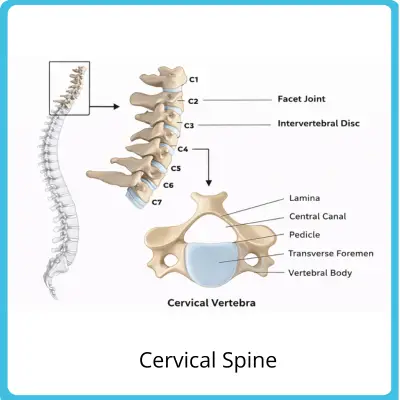
Your neck (cervical spine) is strong, adaptable, and built for smooth movement in all directions. It supports the weight of your head, protects the spinal cord and nerves, and plays an important role in balance, vision, and upper body movement. Over time, natural age-related changes can occur in the joints and discs of the neck. These changes are often labelled degenerative neck pain, neck arthritis, or cervical spondylosis.
While these terms can sound concerning, they rarely mean your neck is damaged or fragile. At Avenue Physio, our experienced downtown Calgary physiotherapists help people understand degenerative neck pain and recover through evidence-based treatment, education, and progressive movement strategies that restore confidence and control.
Degenerative neck pain does not always reflect injury. A one on one physiotherapy assessment can help clarify what is contributing to your symptoms and guide next steps.
Understanding Degenerative Neck Pain
Degenerative changes in the neck typically develop gradually over time and are considered a normal part of aging. These changes may include mild disc thinning, joint stiffness, or arthritic changes — all of which are extremely common, even in people without pain.
Importantly, degenerative findings on X-rays or MRIs do not reliably predict pain, stiffness, or function. Many people with visible arthritis on imaging feel completely normal.
Neck pain related to degeneration often reflects irritation or sensitivity, rather than structural damage. This sensitivity can be influenced by factors such as sustained postures, reduced movement, muscle tension, stress, poor sleep, or previous episodes of neck pain.
Common symptoms of neck and arm nerve pain may include:
Achy or stiff neck discomfort
Reduced ease turning the head or looking up or down
Symptoms worse after prolonged positions (desk work, driving)
Tension into the shoulders or upper back
Fluctuating symptoms that vary day to day
Degenerative neck pain is just one possible contributor to neck symptoms. Other conditions such as whiplash, cervicogenic headache, or nerve-related neck and arm pain can present in similar ways. A detailed physiotherapy assessment helps clarify what is truly driving your symptoms and guides the most effective treatment.
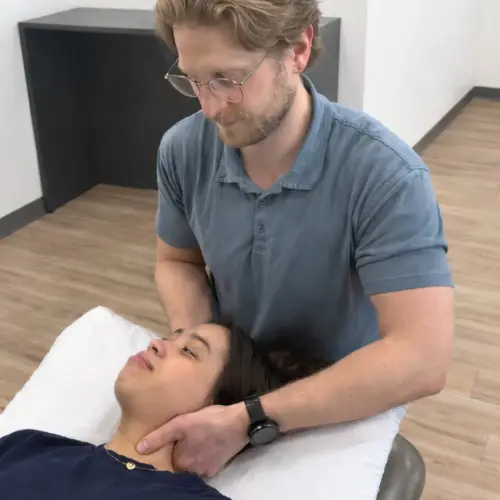
Your physiotherapist will perform a thorough one-on-one assessment to understand how your neck moves, which positions or activities aggravate or ease your symptoms, and whether nerves, joints, or surrounding muscles are contributing.
Your personalized treatment plan may include:
Education to help you understand degenerative changes and reduce fear
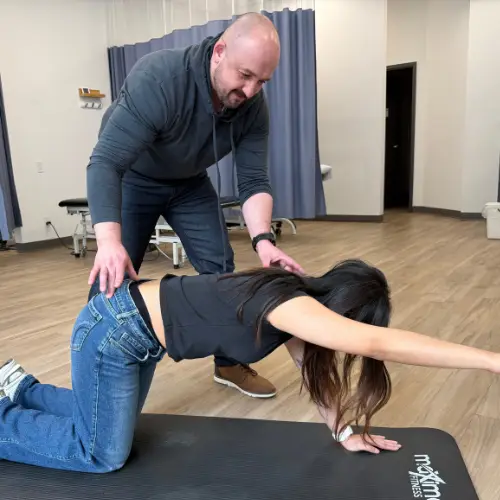
Gentle, progressive mobility exercises to restore comfortable movement
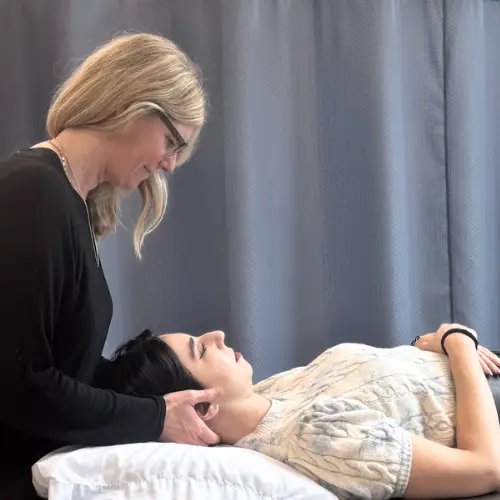
Manual therapy or soft tissue techniques to ease stiffness and tension
Gradual strengthening of the neck, shoulders, and upper back
Coaching on posture, pacing, and load management
Strategies to rebuild movement confidence and reduce flare-ups
Physiotherapy helps reduce sensitivity over time, restore normal movement patterns, and retrain the nervous system — all key components of long-term improvement.
Ready to Start Moving with Confidence Again?
If neck arthritis or degenerative changes are limiting your comfort, concentration, or daily activities, our downtown Calgary physiotherapists are here to help you find a clear plan forward.
Not usually. Imaging is recommended only if symptoms suggest significant nerve involvement or if you’re not improving as expected. Your physiotherapist will guide you.
They can, but education, movement variety, and strength training significantly reduce their frequency and intensity.
Our Additional Expertise
Our team has extensive experience in assessing and treating neck pain, degenerative conditions, nerve-related symptoms, and persistent pain presentations.
We use evidence-based treatment plans focused on education, progressive exercise, and self-management so you can take back control of your movement and recovery.
Your first step is a detailed one-on-one physiotherapy assessment to identify what’s contributing to your neck pain and create a clear plan for recovery.
Move with confidence, rebuild strength, and trust what your neck is capable of.
Located in Stephen Avenue Place, connected to Calgary’s Plus-15 network
Downtown Calgary | 100% One-on-One Care | Trusted since 1984

 Skip to content