Restore strength, improve hip control, and move with confidence.
At Avenue Physio in downtown Calgary, we provide one on one, evidence based physiotherapy for femoroacetabular impingement, often called FAI or hip impingement.
If hip or groin pain is limiting sitting, squatting, training, or sport, we help you understand what is contributing and guide you through a structured rehabilitation plan.
Many people improve significantly with progressive physiotherapy.
What Is Hip Impingement FAI
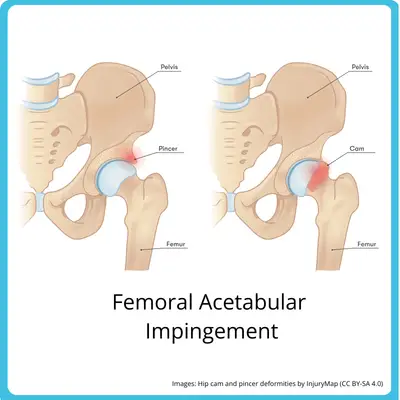
Femoroacetabular impingement refers to a variation in hip joint shape that can increase contact between the ball and socket during certain movements.
There are three common patterns.
Cam morphology occurs when the ball of the hip is slightly less round.
Pincer morphology occurs when the socket covers the ball slightly more than average.
Mixed morphology is a combination of both.
These variations are common and are frequently seen on imaging in people who have no hip pain.
This means the presence of cam or pincer features alone does not determine whether someone will develop symptoms.
Pain is usually related to how the hip joint is loaded and how well the surrounding muscles support the joint.
Common Symptoms Of Hip Impingement
Groin pain during deep hip flexion
Discomfort with squatting or lunging
Pain after prolonged sitting
Pinching sensation at the front of the hip
Pain with pivoting or cutting movements
Clicking or catching sensations
Symptoms often develop gradually and fluctuate depending on activity demands.
Why Hip Impingement Becomes Painful
The hip is designed to tolerate compression and load. Symptoms often develop when compressive forces within the hip joint exceed what the surrounding muscles are prepared to support.
Deep hip flexion positions combined with internal rotation or adduction can increase compression at the front of the joint.
Contributing factors may include:
Cam or pincer morphology
Reduced gluteal strength
Limited hip control during loaded movement
Rapid increases in training volume
Frequent deep squatting or lunging under load
Reduced recovery between training sessions
Improving strength and movement control helps distribute forces more effectively across the joint and often reduces irritation.
Important Facts About Hip Pain
The hip is a strong and stable joint designed to tolerate significant load.
Imaging findings such as labral tears, gluteal tendon changes, cam morphology, or osteoarthritis are common, even in people without pain. Scan results alone do not determine how your hip will feel or function.
Hip pain is often related to load sensitivity in muscles, tendons, bursae, or joint structures rather than structural damage.
Graduated movement and strengthening are safe and beneficial for most hip conditions. Appropriate loading helps the hip adapt and become more resilient.
Avoiding movement for long periods can reduce strength and increase sensitivity unless there has been a clear traumatic injury.
Clicking or noises around the hip are common and do not automatically indicate damage.
Education, strengthening, and progressive return to activity often reduce symptoms related to hip impingement.
Do I Need To Avoid Certain Movements
In the early stages, temporarily modifying certain movements can help reduce excessive compression in the hip joint.
Deep hip flexion under heavy load, aggressive pivoting, or repeated compression may increase symptoms for some people.
This does not mean these movements are permanently harmful.
Rehabilitation typically involves:
Temporarily reducing provocative ranges
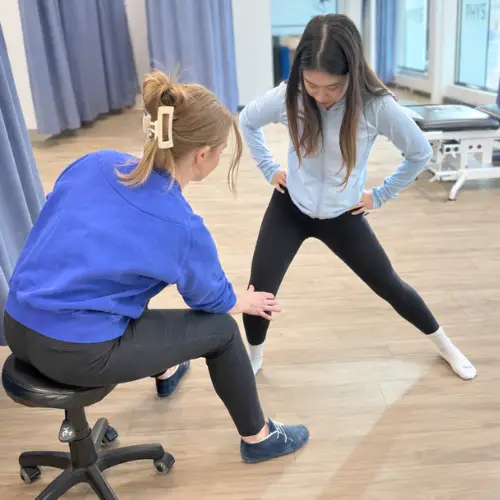
Adjusting squat depth or stance width
Modifying training volume
Gradually reintroducing deeper ranges as tolerance improves
Improving gluteal strength and pelvic control often allows people to return to these movements comfortably.
How Physiotherapy Helps Hip Impingement
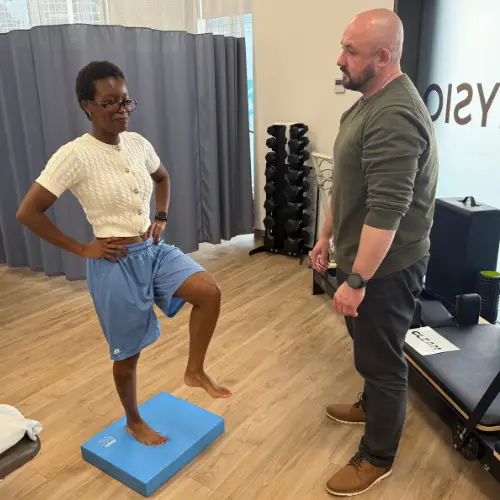
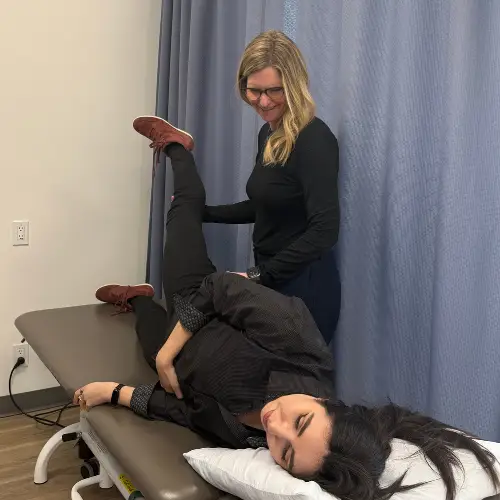
At Avenue Physio, every appointment is one-on-one and focused entirely on you.
Your treatment plan may include:
Detailed assessment of the hip, pelvis, and lower back
Progressive strengthening of the gluteal and hip muscles
Improving pelvic and trunk control during movement
Movement retraining for squats, lunges, and sport tasks
Strategies to reduce excessive joint compression
Gradual exposure to deeper hip flexion positions
Return to sport progression
If symptoms have been persistent or unpredictable, addressing nervous system sensitivity and confidence in movement can also be helpful.

 Skip to content