Restore strength, reduce irritation, and return to comfortable gripping.
At Avenue Physio in downtown Calgary, we provide one-on-one, evidence-based care for golfer’s elbow. Whether your pain developed gradually from repetitive gripping or lifting, or flared after sport or gym training, we help you understand what is driving it and guide you through a clear, progressive plan for recovery.
Golfer’s elbow is common. It responds well to structured rehabilitation. Most people improve without injections or surgery when the right loading approach is followed.
What Is Golfer’s Elbow
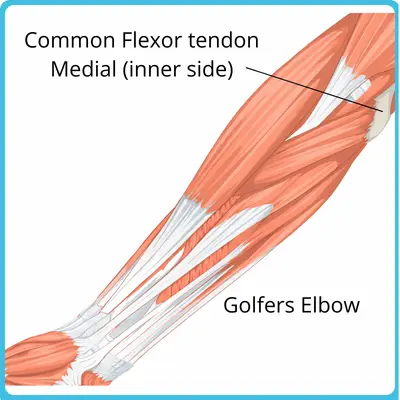
Golfer’s elbow, also called medial epicondylitis or medial elbow tendinopathy, refers to pain on the inside of the elbow where the forearm flexor tendons attach.
Despite the name, most people who develop golfer’s elbow do not play golf.
The condition develops when the total demand placed on the tendon exceeds what it is prepared to tolerate.
This demand may include:
Repetitive gripping or lifting
Heavy gym training, such as pull-ups or deadlifts
Manual work or tool use
Increased racquet or stick sport volume
Reduced forearm or shoulder strength
High stress levels
Poor sleep
Hormonal changes, such as perimenopause or menopause
Health factors such as diabetes or smoking
Tendons respond to both mechanical load and overall recovery. When stress is high or recovery is limited, the tissue can become sensitive. The solution is not complete rest. It is rebuilding load tolerance in a structured, progressive way.
Common Symptoms of Golfer’s Elbow
Pain on the inside of the elbow
Pain with gripping, lifting, or wrist flexion
Discomfort with pull-ups, rows, or racquet sports
Reduced grip strength
Tenderness along the inner elbow
Morning stiffness or aching after use
Symptoms often feel sharp with gripping and dull afterward.
Why Golfer’s Elbow Can Become Persistent
Medial elbow pain can linger when the tendon is repeatedly overloaded without adequate progression.
Contributing factors may include:
Rapid increases in training volume
Poor recovery between sessions
Shoulder weakness affecting load distribution
Altered wrist mechanics
Ongoing life stress
Sleep disruption
The nervous system can also become protective, making the area feel more sensitive than expected. Rehabilitation focuses on gradually restoring confidence in loading the arm.
A Clear Plan Makes a Difference
Medial elbow pain can feel frustrating because gripping tasks are hard to avoid.
With guided progression, most people can continue modified activity while rebuilding strength.
Knowing how much to load, how often, and how to progress reduces flare cycles and builds resilience.
The most effective treatment for golfer’s elbow is progressive, structured loading of the tendon. At Avenue Physio, every appointment is one on one and focused entirely on you.
Your plan may include:
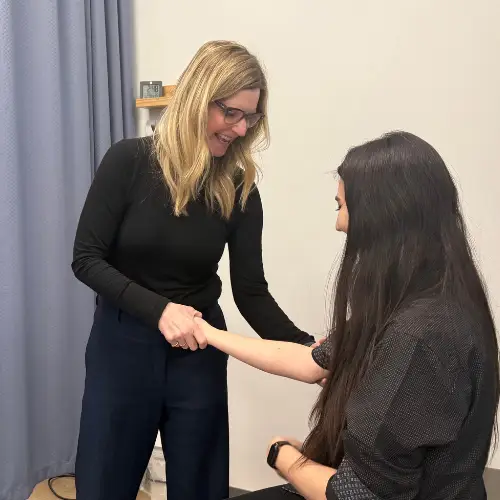
Detailed assessment of the elbow, wrist, shoulder, and neck
Education about tendon pain and load management
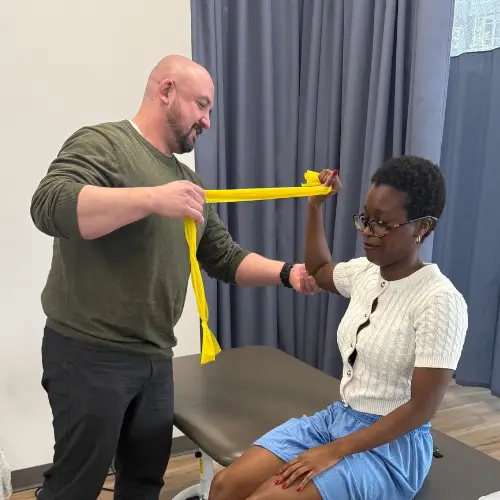
Isometric exercises to reduce sensitivity
Progressive forearm flexor strengthening
Grip retraining matched to your daily or sport demands
Shoulder strengthening to improve force distribution
Addressing cervical spine or nerve sensitivity if contributing
Gradual return to gym, work, or sport
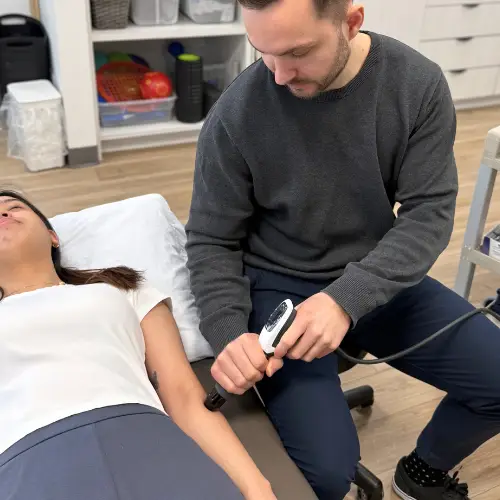
Manual therapy when appropriate for comfort
The nerves supplying the forearm originate in the neck. If cervical mobility or nerve sensitivity is present, it can influence medial elbow symptoms. Your assessment determines whether this needs to be addressed.
Recovery is gradual. Tendons respond best to steady progression over weeks, not sudden spikes in activity.
What About Injections
Corticosteroid injections may reduce pain in the short term. However, research consistently shows higher recurrence rates and poorer long term outcomes compared to structured exercise based rehabilitation.
For that reason, injections are not recommended as first line treatment for golfer’s elbow.
Long term improvement comes from restoring strength and load tolerance rather than temporarily suppressing pain.
How Long Does Recovery Take
Most people notice meaningful improvement within six to twelve weeks with consistent rehabilitation.
Longer standing cases may take more time depending on symptom duration and activity demands.
Yes, in some cases. The nerves supplying the forearm originate in the neck. Addressing cervical mobility or nerve sensitivity may be part of treatment.

 Skip to content