Restore stability, rebuild strength, and return to activity with confidence.
At Avenue Physio in downtown Calgary, we provide one-on-one physiotherapy for ankle sprains and ligament injuries. Our approach focuses on restoring strength, stability, and confidence in your ankle so you can safely return to walking, running, work, and sport.
Ankle sprains are one of the most common injuries affecting the foot and ankle. With the right rehabilitation, most people recover well and return to full activity. Physiotherapy helps guide recovery and reduces the risk of ongoing instability or repeated sprains.
What Is an Ankle Sprain
An ankle sprain occurs when the ligaments that support the ankle joint are stretched or injured.
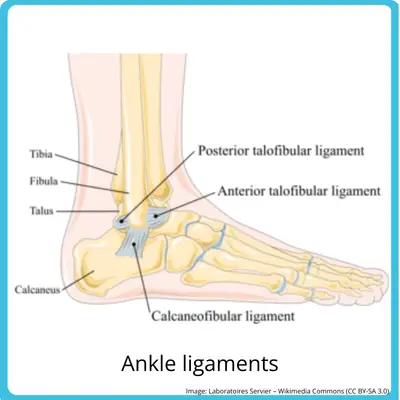
Most ankle sprains occur when the foot rolls inward, placing stress on the ligaments on the outside of the ankle. These ligaments help stabilize the joint and control movement during walking, running, and changes in direction.
Sprains can range from mild stretching of the ligament to partial or complete tears.
Even when ligaments are injured, the ankle joint often recovers very well with appropriate rehabilitation.
Severity of Ankle Sprains
Ankle sprains are often classified into three general categories depending on the degree of ligament injury.
Grade 1 Mild stretching of the ligament with minimal swelling and little loss of stability.
Grade 2 Partial ligament injury with moderate swelling, pain, and some difficulty walking.
Grade 3 More significant ligament injury with marked swelling, bruising, and instability.
Even more significant sprains can recover well with appropriate rehabilitation that restores strength, balance, and ankle control.
Early Movement Helps Recovery
After an ankle sprain, it is common to feel uncertain about moving the ankle. While a short period of protection may be helpful in the first few days, prolonged rest is rarely beneficial.
Research shows that gradual movement and progressive loading help the ligament and surrounding muscles recover more effectively than immobilization alone.
Early rehabilitation typically focuses on:
Restoring gentle ankle movement
Gradually increasing weight bearing
Rebuilding strength and balance
Restoring normal walking patterns
This approach helps the ankle regain stability and reduces the risk of ongoing stiffness or recurrent sprains.
Common Symptoms of an Ankle Sprain
Pain around the ankle after twisting or rolling the foot
Swelling around the ankle joint
Bruising or tenderness
Difficulty walking or putting weight on the foot
Feeling unstable or unsure on uneven ground
Symptoms can vary depending on the severity of the injury.
Why Proper Rehabilitation Matters
Many ankle sprains improve within a few weeks, but a large number of people continue to experience ongoing instability.
Research shows that up to 30 to 40 percent of people who sprain their ankle develop recurrent sprains or chronic ankle instability if rehabilitation is not completed.
This often happens because the muscles and balance systems around the ankle have not fully recovered.
Research also shows that balance and neuromuscular training significantly reduce the risk of recurrent ankle sprains.
Physiotherapy helps restore the strength, balance, and movement control needed to support the ankle during daily activities and sport.
Chronic Ankle Instability
Some people notice that their ankle continues to feel unstable or “gives way” after a previous sprain.
This is known as chronic ankle instability and often develops when the balance and control systems of the ankle have not fully recovered.
Symptoms may include:
Repeated ankle sprains
Feeling unstable on uneven ground
Discomfort during running or sport
Hesitation or lack of confidence in the ankle
Targeted rehabilitation focusing on strength and neuromuscular control can significantly improve stability and reduce the risk of future sprains.
How Physiotherapy Helps Ankle Sprains
At Avenue Physio, every appointment is one on one and focused entirely on you.
Your rehabilitation plan may include:
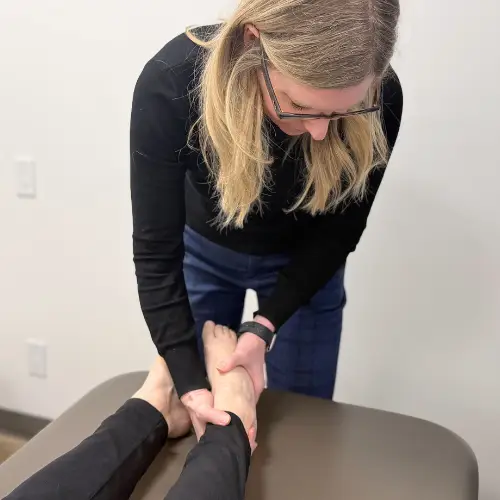
A detailed assessment of ankle stability and movement
Swelling and pain management strategies
Progressive strengthening for the ankle and lower leg
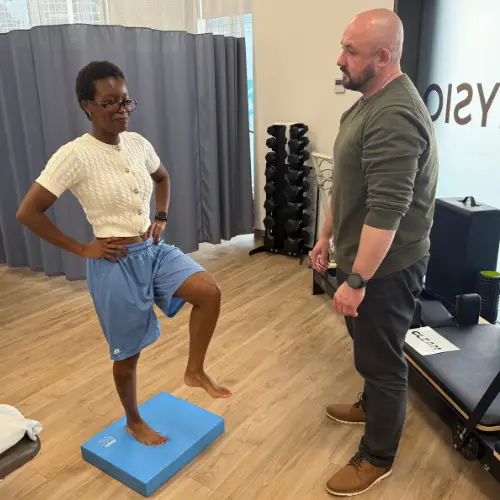
Balance and neuromuscular training
Gradual return to walking, running, and sport
Movement retraining to reduce reinjury risk
Balance and coordination training are particularly important after ankle sprains because they help retrain the body’s ability to react quickly and stabilize the joint.
Restoring Ankle Mobility
After an ankle sprain, it is common for the ankle to become stiff, particularly when bending the ankle upward (dorsiflexion).
Limited dorsiflexion can affect walking, squatting, running, and stair movement. It may also increase stress on other parts of the foot and lower limb.
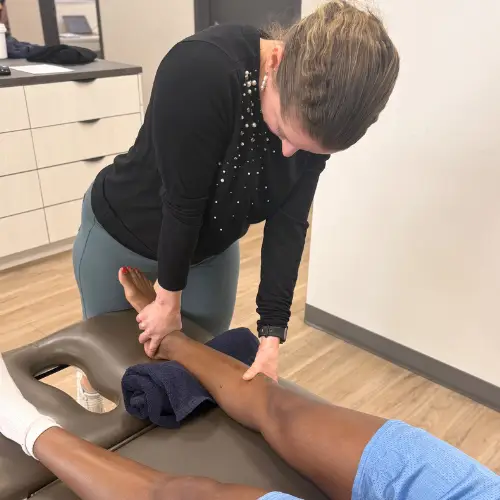
Physiotherapy often focuses on restoring normal ankle mobility through guided movement, joint mobilization, and progressive strengthening. Improving ankle motion helps the joint move more naturally and supports long term recovery.
How Long Does Recovery Take
Recovery timelines vary depending on the severity of the injury.
Mild ankle sprains often improve within a few weeks, while more significant ligament injuries may require several months of rehabilitation to fully restore strength and stability. Following a structured rehabilitation plan helps ensure the ankle recovers safely and reduces the risk of recurrent sprains.
Do I Need Imaging or Surgery
Most ankle sprains do not require imaging or surgery.
Your physiotherapist will assess your ankle and let you know if imaging is necessary. Imaging may be recommended if symptoms suggest a fracture, a significant ligament injury, or another structural concern.
Surgery is rarely required and is usually considered only in cases of severe ligament damage or persistent instability after rehabilitation.

 Skip to content