Regain control, strength, and confidence in your shoulder with one-on-one expert care at Avenue Physio in downtown Calgary.
Shoulder instability occurs when the ball of the shoulder does not stay securely centered in the socket. In some cases, the shoulder may partially or fully dislocate.
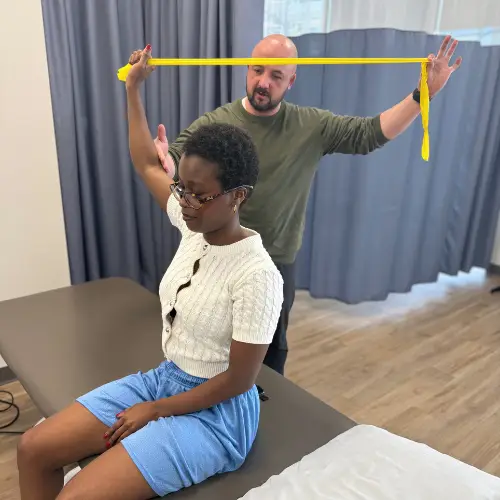
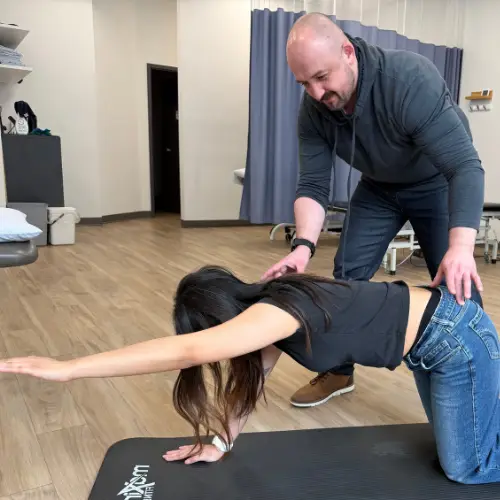
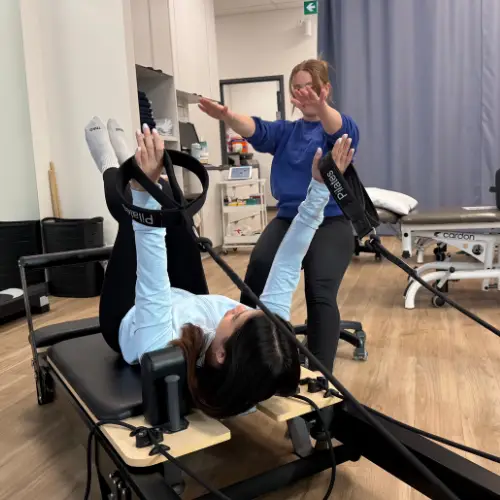
Many cases improve significantly with structured physiotherapy focused on restoring the shoulder control and stability.
At Avenue Physio in Calgary, we provide a detailed one-on-one assessment to determine the underlying cause of your symptoms and guide the most appropriate treatment plan.
What Is Shoulder Instability
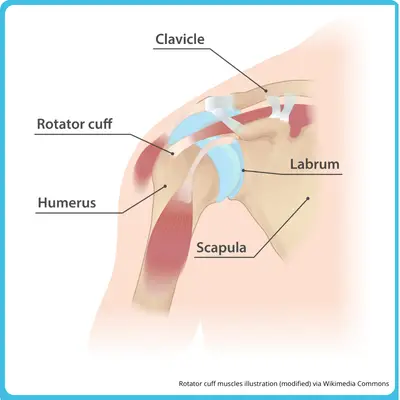
The shoulder is the most mobile joint in the body. Because the socket is shallow, stability depends heavily on muscles, ligaments, and the labrum.
Instability occurs when the structures that keep the shoulder centered are not providing enough support.
This can result in:
A feeling of looseness
Recurrent slipping
Partial dislocation
Full dislocation
Stability is not just structural. It is also neuromuscular.
Many people improve when strength and coordination are restored.
Types of Shoulder Instability
Traumatic Instability
This typically follows a clear injury, such as:
A fall onto an outstretched arm
A collision in a contact sport
A sudden overhead force
The shoulder may dislocate completely and require reduction.After a first dislocation, recurrence risk depends on age and activity level.
Atraumatic or Repetitive Instability
Some people develop instability gradually without a single traumatic event.This may occur with:
Overhead sports
Repetitive loading
Hypermobility
Poor neuromuscular control
In these cases, strengthening and coordination training are often highly effective.
Multidirectional Instability
In some individuals, looseness occurs in more than one direction.
This is more common in younger athletes and individuals with generalized joint laxity.
Rehabilitation is the primary treatment.
Not Sure If It’s True Instability?
Some shoulder pain feels unstable but is actually related to rotator cuff weakness or labral irritation.
A detailed assessment helps determine whether your symptoms reflect true structural instability or muscular control deficits.

 Skip to content