Your pelvis is built for strength and stability, connecting your spine to your legs through two sacroiliac (SI) joints. These joints help transfer load evenly through your body so you can move efficiently and comfortably. When an SI joint becomes irritated or strained, it can cause localized pain on one side of the lower back or buttock, often making walking, bending, standing, or turning in bed uncomfortable.
At Avenue Physio, our experienced Calgary physiotherapists take the time to understand where your pain is coming from, whether the SI joint itself is involved, or if nearby muscles, joints, or nerves are contributing. Through careful assessment and individualized care, we help you find clarity, relief, and confidence in how you move.
A one-on-one physiotherapy assessment can help determine whether the SI joint or surrounding structures are contributing to your pain.
Understanding Sacroiliac (SI) Joint Pain
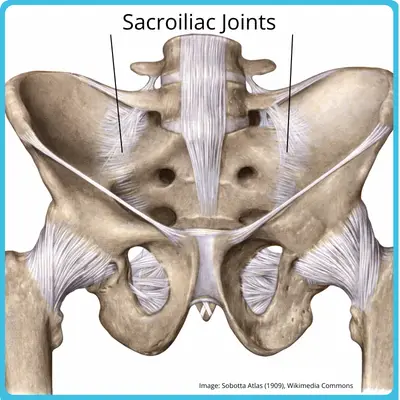
The sacroiliac (SI) joints connect the base of your spine (sacrum) to your pelvis. They are strong, supportive joints that transfer load between your upper body and legs. When irritated, these joints can cause localized pain near the buttock or pelvis, sometimes spreading into the thigh or groin.
SI joint pain is relatively common and is estimated to contribute to 10–20% of ongoing low back or pelvic pain. It can develop after a sudden movement, awkward lift, or fall onto one side of the pelvis. It is also common during and after pregnancy, when hormonal and postural changes temporarily increase joint mobility.
Pain may feel sharp, dull, or achy and is often aggravated by:
Single-leg movements
Stairs
Turning in bed
Standing up after sitting
Prolonged standing
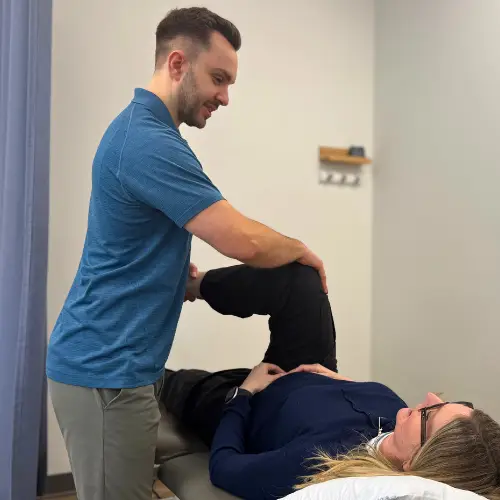
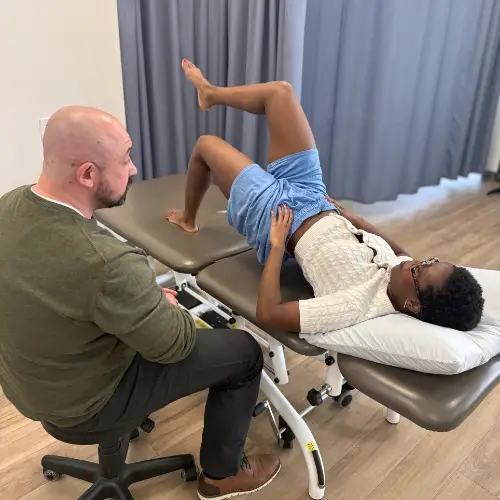
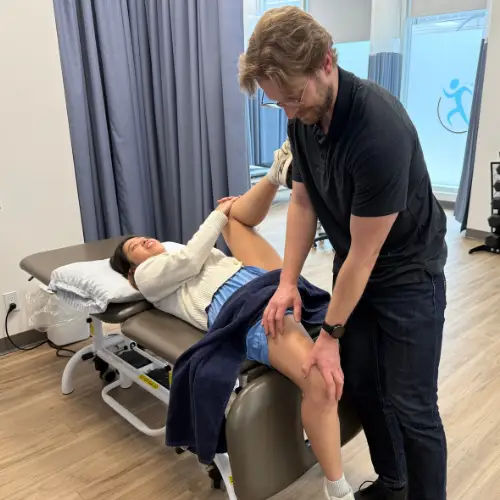
Because symptoms can overlap with disc-related pain, hip dysfunction, or muscle tension, accurate diagnosis is essential. At Avenue Physio, we use multiple movement and pressure-based tests along with your full clinical history to determine whether the SI joint is truly the source of your pain or if another structure is driving your symptoms. This ensures your treatment targets the real cause — not just the location of pain.
Once your physiotherapist confirms that the SI joint is involved, treatment focuses on restoring balance, control, and confidence in movement. Your plan is designed to reduce irritation, improve load tolerance, and retrain the muscles that support and stabilize your pelvis.
Your treatment may include:
Manual therapy or joint mobilization to restore motion and ease stiffness
Soft tissue release for the surrounding hip and gluteal muscles
Targeted strengthening of the core, hips, and pelvis
Education on posture, activity modification, and safe lifting
Movement retraining to restore symmetry and confidence
Gradual progression to higher-load activities as pain settles
Physiotherapy helps calm irritation, improve load tolerance, and restore movement confidence so you can return to daily life without hesitation.
Ready to Start Moving With Confidence Again?
If pain near your pelvis or lower back is limiting how you move, sleep, or stay active, our downtown Calgary physiotherapists are here to help you find a clear plan forward.
These joints are built to handle large forces through the pelvis. Pain in this area usually reflects irritation or sensitivity rather than true joint injury.
Accurate diagnosis requires more than one test.
Your physiotherapist combines multiple movement and pressure-based tests to accurately identify whether the SI joint is the source of your pain (Laslett et al., Spine, 2005).
Pregnancy and postpartum changes can affect the SI joints.
Hormonal and postural changes can temporarily increase joint mobility and sensitivity. These changes often improve with time, strength, and stability training. Our Pelvic Health Physiotherapy › team can support recovery during and after pregnancy.
The SI joint rarely acts alone.
It often interacts with nearby structures such as the lumbar spine, hips, and surrounding muscles. Addressing these areas together produces better, longer-lasting results.
Movement is key to recovery.
Avoiding activity can increase stiffness and sensitivity. Guided movement builds strength and helps your body regain trust in motion.
Your physiotherapist uses a combination of movement and pressure tests. When multiple tests reproduce your symptoms, it strongly suggests the SI joint is involved.
No, but symptoms can overlap. A skilled assessment determines whether your pain is coming from the SI joint, lumbar spine, hip, or a combination of these.
Mild cases may improve within a few weeks. More persistent cases may take longer as strength, coordination, and load tolerance improve. With consistent treatment, most people return to full activity.
Not when guided correctly. Your physiotherapist will choose movements that support the joint and reduce irritation as your strength improves.
Our Additional Expertise
Our physiotherapists have advanced training in spine, pelvis, and hip assessment, along with manual therapy and movement retraining. We’ve been helping Calgarians restore comfort and confidence in movement since 1984 through one-on-one, evidence-based care.

 Skip to content