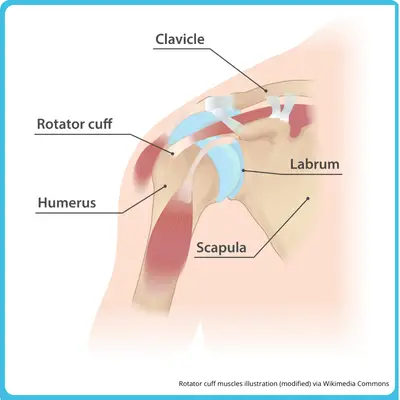
A labral tear refers to irritation or injury to the labrum, the ring of cartilage that surrounds the shoulder socket. The labrum helps support shoulder stability and control.
Being told you have a labral tear can sound serious, but many labral tears respond very well to physiotherapy and do not require surgery.
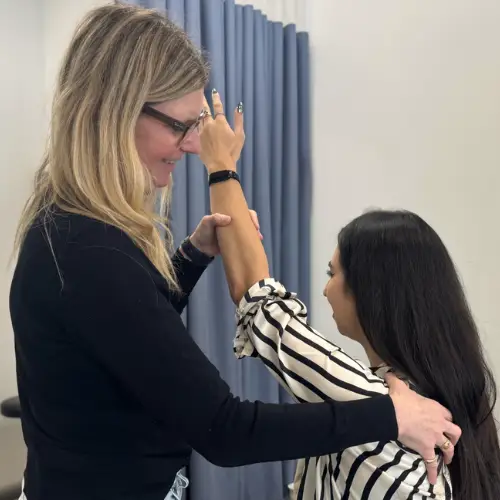
At Avenue Physio in Calgary, we provide a detailed one-on-one assessment to determine whether At Avenue Physio in Calgary, we provide detailed one-on-one assessment to determine whether your symptoms are truly related to the labrum and guide the most appropriate treatment plan.
What Is the Shoulder Labrum
The shoulder labrum is a ring of cartilage that surrounds the edge of the shoulder socket.
Its role is to:
Deepen the socket
Improve joint stability
Help anchor ligaments and the biceps tendon
Because the shoulder relies heavily on muscular control, labral injuries often occur alongside strength or coordination deficits.
Labral changes are also common on imaging, especially after age 35, even in people without pain.
Imaging findings alone do not determine whether surgery is needed.
How Do Labral Tears Happen
Labral tears can develop in several ways.
Traumatic Injury
A fall onto an outstretched arm, a sudden pull, or a shoulder dislocation can tear the labrum. These injuries are more common in contact sports and high-impact activities.
Repetitive Overhead Activity
Throwing athletes, swimmers, racquet sport players, and gym enthusiasts who perform frequent overhead lifting may develop gradual labral irritation over time.
Heavy Lifting or Traction
Sudden pulling movements, catching heavy objects, or lifting with the arm extended can stress the top portion of the labrum where the biceps tendon attaches.
Degenerative Changes
Over time, the labrum can show fraying or small tears without a single injury. These changes are common and do not always cause pain.
Often, symptoms develop when load exceeds the shoulder’s current stability capacity rather than from one catastrophic event.
Types of Labral Tears
Labral tears can occur in different regions of the shoulder.
SLAP Tear
A SLAP tear involves the top portion of the labrum where the biceps tendon attaches.
It is often associated with:
Overhead sports
Repetitive throwing
Sudden traction injuries
Heavy lifting
Bankart Lesion
A Bankart lesion involves the front lower portion of the labrum and is often associated with shoulder dislocation or instability.
Degenerative Labral Fraying
Over time, the labrum may show fraying or small tears on imaging without a major injury.
These changes are common and often respond well to rehabilitation.
Do Labral Tears Always Require Surgery
No.
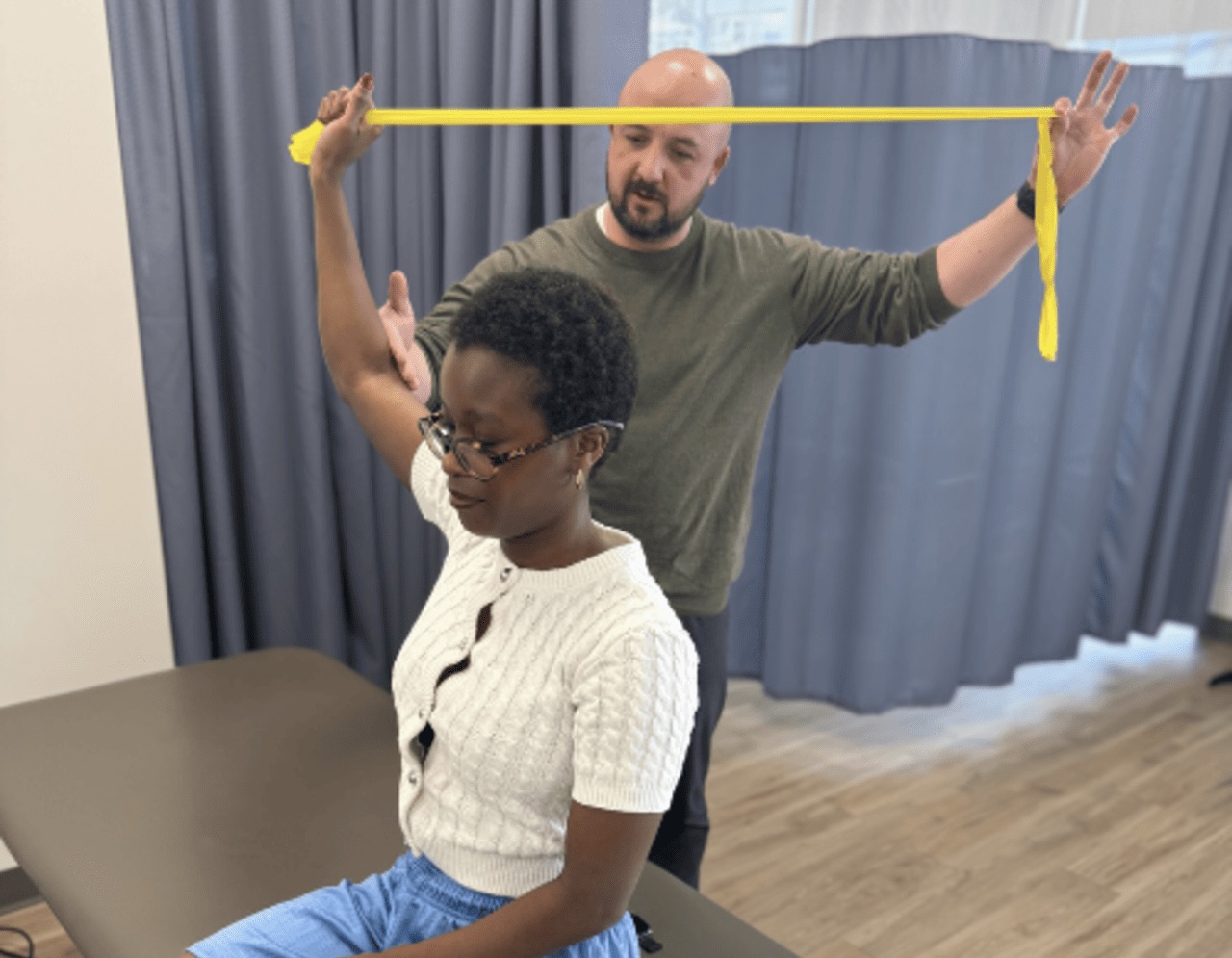
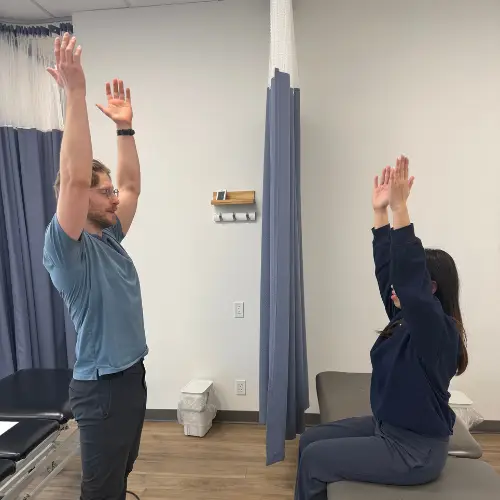
Many labral tears improve with structured physiotherapy, especially when shoulder stability and muscular control are restored.
Surgical consultation may be appropriate if:
There is a recurrent shoulder dislocation
There is significant mechanical instability
There is persistent weakness despite rehabilitation
There is an acute traumatic injury in a younger athlete
Research shows that many SLAP tears and degenerative labral findings respond well to progressive strengthening. Early surgery is not automatically required.
Told You Have a Labral Tear on Imaging?
Labral changes are common and do not automatically require surgery.
An expert one-on-one assessment can determine whether your symptoms are truly coming from the labrum or from strength and stability deficits that respond well to rehabilitation.
Some labral tears do not fully heal structurally, but symptoms can resolve with rehabilitation. Improving strength and stability often allows people to return to full function without surgery.

 Skip to content