Helping Calgarians reduce foot and ankle pain, restore strength, and move with confidence.
At Avenue Physio in downtown Calgary (Stephen Avenue Place), we provide one-on-one, evidence-based physiotherapy to help reduce foot and ankle pain, restore comfortable movement, and support long-term recovery. For more than 40 years, we have helped people return to walking, running, work, and daily activities with confidence through individualized physiotherapy care.
Foot and ankle pain can make every step uncomfortable, limit activity, and affect balance and confidence. Our goal is not just to reduce symptoms, but to help you understand what is contributing to your pain and rebuild strength and confidence in how your foot and ankle move.
Fast Facts About Foot and Ankle Pain
Foot and ankle pain can come from ligaments, tendons, joints, nerves, or bone
Some injuries involve tissue damage, while others involve irritation or sensitivity
Pain does not always reflect the severity of injury
Imaging findings do not always explain symptoms or guide recovery
Movement, strength, and load tolerance are key to recovery
Most people improve with physiotherapy and do not require injections or surgery
Understanding Foot and Ankle Pain
Foot and ankle pain can develop suddenly after an injury, such as an ankle sprain, or gradually over time due to changes in activity, workload, or recovery.
The foot and ankle are designed to absorb load, adapt to different surfaces, and support the entire body. The foot contains many joints, muscles, and ligaments that work together to absorb load and adjust to different surfaces during walking and running.
When tissues are overloaded, underprepared, or not given enough time to recover, pain can develop. This pain may reflect tissue healing, irritation, or increased sensitivity rather than ongoing damage.
The toes, particularly the big toe, also play an important role in balance and push off during walking and running. Reduced toe mobility or strength can influence how the foot and ankle are loaded during activity.
Foot and ankle symptoms are also influenced by how the knee, hip, and lower back move and load. That is why our assessment always considers the entire lower limb rather than focusing only on the painful area.
Foot and Ankle Conditions We Commonly Treat
A detailed physiotherapy assessment helps identify the primary contributors to your foot or ankle pain, so treatment is precise and effective.
Common foot and ankle conditions we treat include:
Ankle sprain or ligament injury
Achilles tendinopathy or tear
Plantar fasciitis or heel pain
Shin splints (medial tibial stress syndrome)
Hallux valgus (bunion-related pain)
Metatarsalgia (forefoot pain)
Morton’s neuroma
Tendon or muscle strain of the foot or ankle
Recurrent ankle sprains or ankle instability
Recurrent or persistent foot and ankle pain
Learn more about specific foot and ankle conditions
Foot and ankle pain can make everyday activities feel uncertain, especially when walking, running, or standing becomes uncomfortable.
Many people worry that ongoing pain means something is permanently damaged. In many cases, the tissues simply need the right balance of loading, recovery, and strengthening to adapt
With a structured rehabilitation plan, most people regain strength, improve tolerance for walking and activity, and return to the activities they enjoy.
Foot and ankle pain is rarely caused by a single factor. It often develops when the load placed on the tissues exceeds what they are currently able to tolerate.
Common contributing factors include:
Ankle sprains or previous injury
Sudden increases in walking, running, or jumping
Repetitive loading without adequate recovery
Reduced strength or endurance of the foot and ankle muscles
Changes in activity level or training load
Altered movement patterns from the knee, hip, or back
Nervous system sensitivity
Overall health and recovery also influence how tissues respond to load. Factors such as poor sleep, stress, hormonal changes, including menopause, smoking, and certain health conditions can increase sensitivity without causing permanent damage.
Understanding which of these factors matter most allows physiotherapy to focus on restoring strength, load tolerance, and confident movement.
How Physiotherapy Helps Foot and Ankle Pain
Physiotherapy is one of the most effective ways to reduce foot and ankle pain, restore movement, and prevent recurrence.
At Avenue Physio, every appointment is one-on-one and focused entirely on you.
Your treatment plan may include:
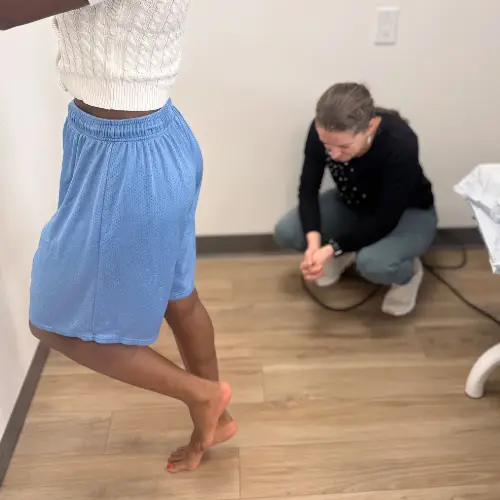
A detailed assessment of the foot, ankle, knee, hip, and walking or running mechanics
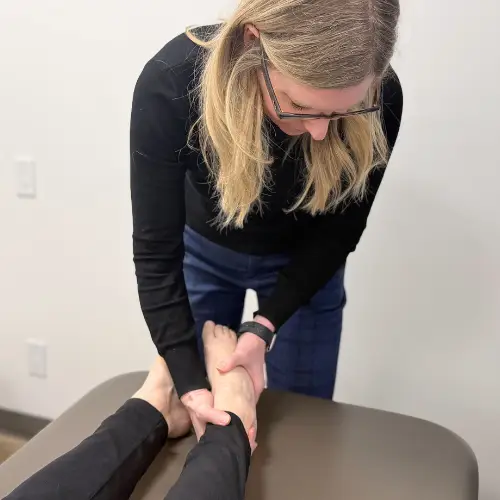
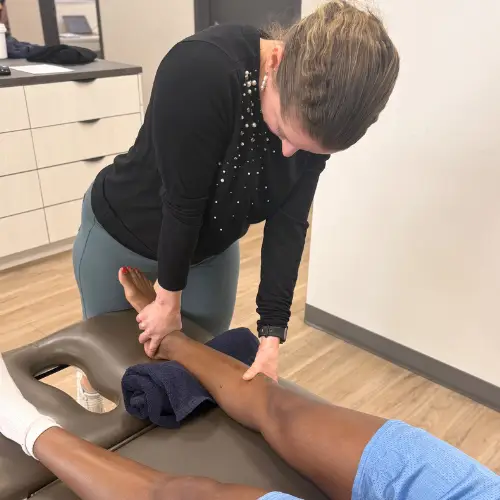
Hands-on care to reduce irritation and restore comfortable movement
Progressive strengthening for the foot, ankle, and lower limb
Tendon and ligament loading exercises to restore capacity and resilience
Balance and control training to reduce re-injury risk
Gradual return to walking, running, work, or sport
Clear practical education to help you understand your pain and move with confidence
Strengthening the small muscles of the foot can improve stability, balance, and load tolerance during walking and running.
If symptoms have been persistent or unpredictable, addressing nervous system sensitivity and confidence in loading the foot and ankle can be especially helpful.
Our Advanced Training in Foot and Ankle Rehabilitation
At Avenue Physio, our physiotherapists pursue ongoing post-graduate education to provide skilled, evidence-based care for foot and ankle conditions.
Our team has advanced training in:
Manual and manipulative physiotherapy, including FCAMPT level expertise
Foot and ankle rehabilitation and progressive load management
Tendon and ligament injury rehabilitation
Pain science and strategies for reducing sensitivity
Gunn IMS and dry needling for neuromuscular irritation
Acupuncture for pain modulation
We combine these skills with one-on-one care to help you return to comfortable, confident movement.
Not always. Many foot and ankle conditions can be assessed and treated effectively without imaging. Imaging is recommended only if it will meaningfully change your plan of care.
Recovery depends on the condition. Acute injuries such as ankle sprains often improve within weeks, while tendon related pain may take several months to fully settle.
Most cases improve with physiotherapy. Progressive strengthening, movement retraining, and education are highly effective. Injections or surgery are rarely required.
Ready to Get Started
If foot or ankle pain is limiting your walking, exercise, or daily activities, we are here to help you find a clear plan forward.
Same week appointments available & Direct billing offered.
Located in Stephen Avenue Place in downtown Calgary, connected to Calgary’s Plus 15 network.
Downtown Calgary | 100% One-on-One Care | Trusted since 1984

 Skip to content