Shoulder pain is one of the most common reasons people seek physiotherapy. It can affect sleep, exercise, work, lifting, reaching overhead, or even simple daily activities like getting dressed or washing your hair.
Sometimes shoulder pain settles relatively quickly. But many shoulder problems do not improve simply by resting completely. In fact, shoulders often become stiffer, weaker, and more sensitive when movement stops for too long.
Unlike some other areas of the body, the shoulder depends heavily on movement, muscle control, and gradual loading to stay healthy. This is one reason shoulder pain can become persistent when people avoid using the arm altogether.
One of the most common questions people ask is:
“Should I keep waiting, or should I get my shoulder assessed?”
The shoulder is a complex joint that relies on coordination between the rotator cuff, shoulder blade, upper back, and neck.
Pain may come from irritated tendons, stiffness, overload, bursitis, the labrum, surrounding muscles, or sometimes even referral from the neck. Some people develop symptoms suddenly after an injury, while others notice pain gradually building over time.
This is one reason a good assessment matters. Two people can both have “shoulder pain” but need very different treatment approaches.
The Shoulder and Neck Are Closely Connected
Shoulder pain is not always driven entirely by the shoulder itself.
The neck, upper back, and shoulder blade all influence how the shoulder moves and tolerates load. In some people, stiffness or irritation in the neck contributes to shoulder pain, upper arm aching, weakness, or painful lifting.
The shoulder also depends heavily on good movement through the upper back and shoulder blade. If the thoracic spine is stiff, the neck overloaded, or the shoulder blade not moving well, the shoulder often becomes more irritable over time.
This is why a good shoulder assessment should include the neck and upper back through a detailed Neck Pain Physiotherapy assessment rather than focusing only on the painful spot.
Signs It Is Worth Getting Assessed
One of the biggest signs is simply that the shoulder is not settling.
People often try resting completely because they are worried about making things worse. But prolonged rest can sometimes increase stiffness, weakness, and loss of confidence using the arm.
You may also notice:
pain reaching overhead
pain reaching behind your back
difficulty lifting weights
pain lying on the shoulder at night
aching into the upper arm
weakness or loss of strength
recurring flare ups with exercise or work
progressive loss of movement, sometimes seen with Frozen Shoulder
Shoulders that remain painful for too long often start to affect movement patterns through the neck and upper back as well.
If night pain is your main issue, you can also read:
Many people improve without stopping activity completely. The key is usually modifying load appropriately and gradually rebuilding strength and tolerance.
What Does Physiotherapy for Shoulder Pain Involve?
A good shoulder assessment looks beyond just the painful area.
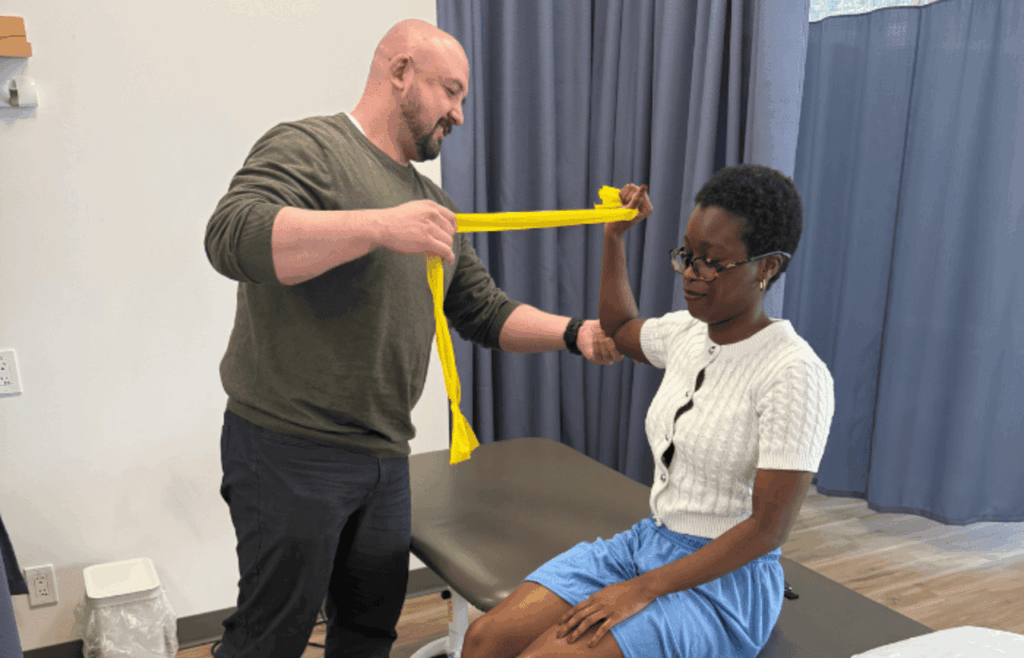
Your physiotherapist may assess shoulder mobility, rotator cuff strength, shoulder blade mechanics, neck mobility, upper back stiffness, exercise tolerance, and lifting patterns to better understand what is driving the pain.
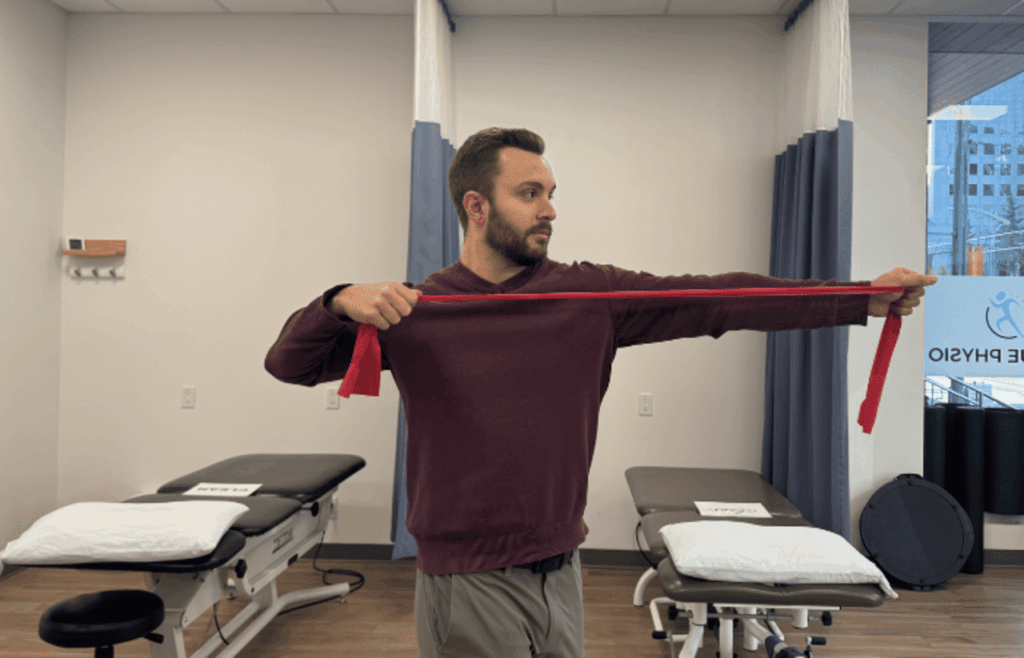
Treatment depends on the presentation, but may include:
The goal is not simply to stop pain temporarily. The goal is to help the shoulder move more comfortably, tolerate load better, and return to normal activities with more confidence.
Do You Always Need Imaging?
Not always.
Many shoulder problems can be assessed effectively through a thorough history and physical examination. Imaging findings such as rotator cuff tears, bursitis, or tendon changes are also common in people without pain.
Imaging can still be helpful in some situations, especially after significant trauma or when symptoms are not progressing as expected, but findings need to be interpreted alongside the clinical picture.
The Bottom Line
Shoulder pain is common, but persistent pain, stiffness, weakness, or difficulty using the arm normally should not simply be ignored.
In many cases, complete rest is not the answer. The shoulder often responds better to the right type of movement, loading, and rehabilitation rather than avoiding activity altogether.
Early assessment can often help prevent a temporary irritation from becoming a more persistent problem.
Need Help With Shoulder Pain?
At Avenue Physio, our physiotherapists assess the shoulder, neck, upper back, movement patterns, and loading factors that may be contributing to your symptoms.
We provide one-on-one physiotherapy focused on helping you move more comfortably, return to activity, and build a clear plan for recovery.




 Skip to content