Home/Physiotherapy/ Why Your Neck Pain Causes Headaches and What Helps
Why Your Neck Pain Causes Headaches and What Helps
Why Your Neck Pain Causes Headaches and What Helps
Headaches are incredibly common. Most people will experience headaches at some point in their lives, and for many people they become a recurring issue that affects work, sleep, exercise, concentration, and daily life.
Some headaches are primarily neurological, such as migraines. Others are more closely related to tension, neck irritation, jaw tension, posture, stress, sleep, or prolonged positions. In many cases, the neck is an important and often overlooked contributor.
This is especially common in peoplewho:
spend long hours at a computer
work at a desk or drive frequently
carry tension through the neck and shoulders
experience stress or poor sleep
have a history of whiplash or neck injury
clench their jaw or grind their teeth
notice headaches that worsen with neck stiffness or prolonged sitting
Not all headaches come from the neck, but certain types of headaches respond very well to physiotherapy, especially when the neck, muscles, posture, or movement patterns are involved.
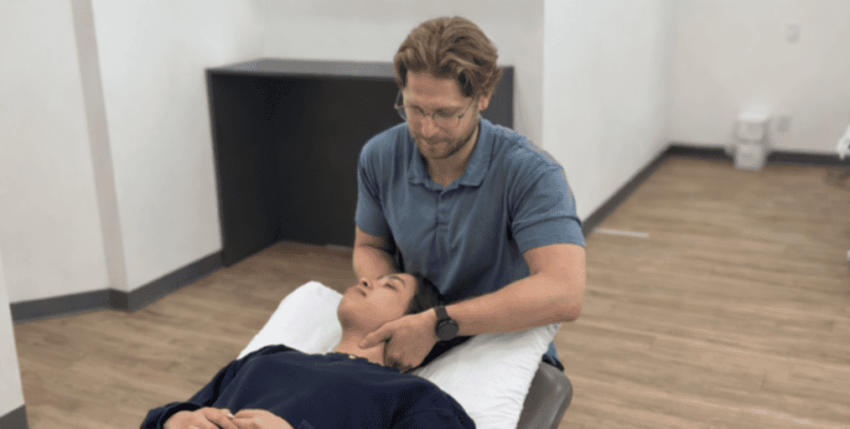
At Avenue Physio, we assess how the neck, jaw, shoulders, posture, breathing, and movement patterns may be contributing to headaches through our TMJ physiotherapy and neck pain physiotherapy assessments.
How the Neck Can Cause Headaches
The neck plays an important role in many headaches. Structures in the upper cervical spine, including joints, muscles, and nerves, can all contribute to pain felt in the head, temples, forehead, jaw, or behind the eyes.
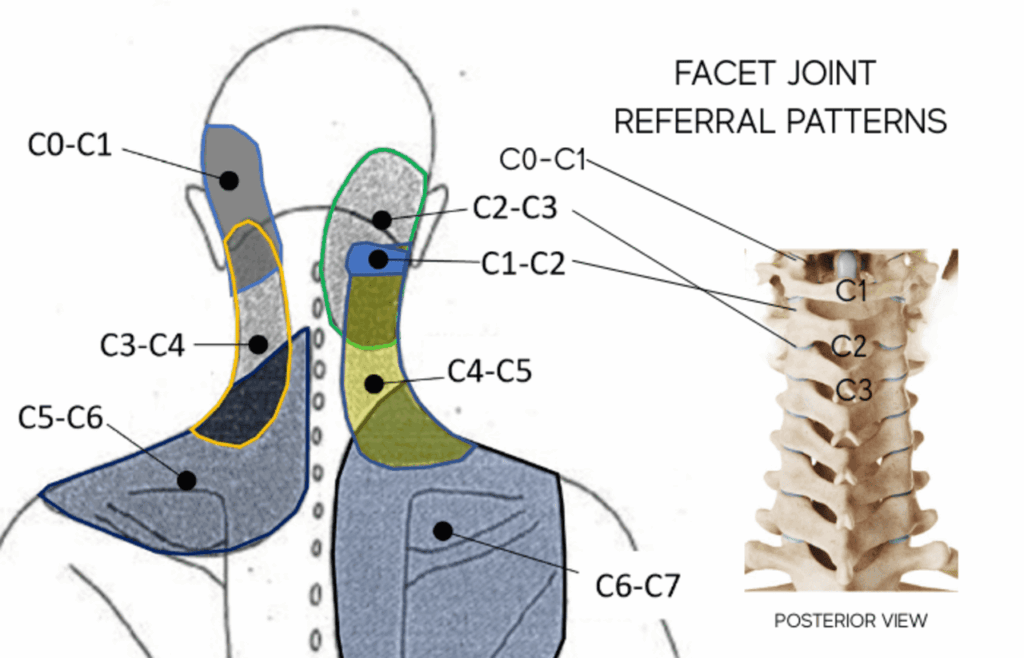
The upper neck has strong neurological and mechanical connections with the head, jaw, and face. Joints, muscles, and nerves in the upper cervical spine can all refer pain into the head.
Because these areas share overlapping nerve pathways, irritation in the neck can sometimes be felt as:
headaches at the base of the skull
temple pain
pressure behind the eyes
forehead pain
pain around the jaw or ear
tension through the scalp or face
This is one reason neck-related headaches can sometimes feel confusing. The source of the pain may be in the neck even though the symptoms are felt in the head.
Upper Neck Joints Can Refer Pain
Small joints in the upper neck, called facet joints, help guide movement and provide stability. The upper cervical joints, particularly around C1-C3, have strong connections with the nerves that supply the head and face.
When these joints become stiff, irritated, or sensitive, they can refer pain into the head.
Some people feel this as:
pain at the base of the skull
headaches that travel toward the temple
pain around or behind the eye
one-sided headaches
headaches associated with neck stiffness
These headaches are often aggravated by:
prolonged sitting
computer work
driving
sustained neck positions
poor sleep positions
previous neck injuries such as whiplash injuries
In some people, moving or holding the neck in certain positions can reproduce the headache.
Neck Muscles Can Refer Pain Too
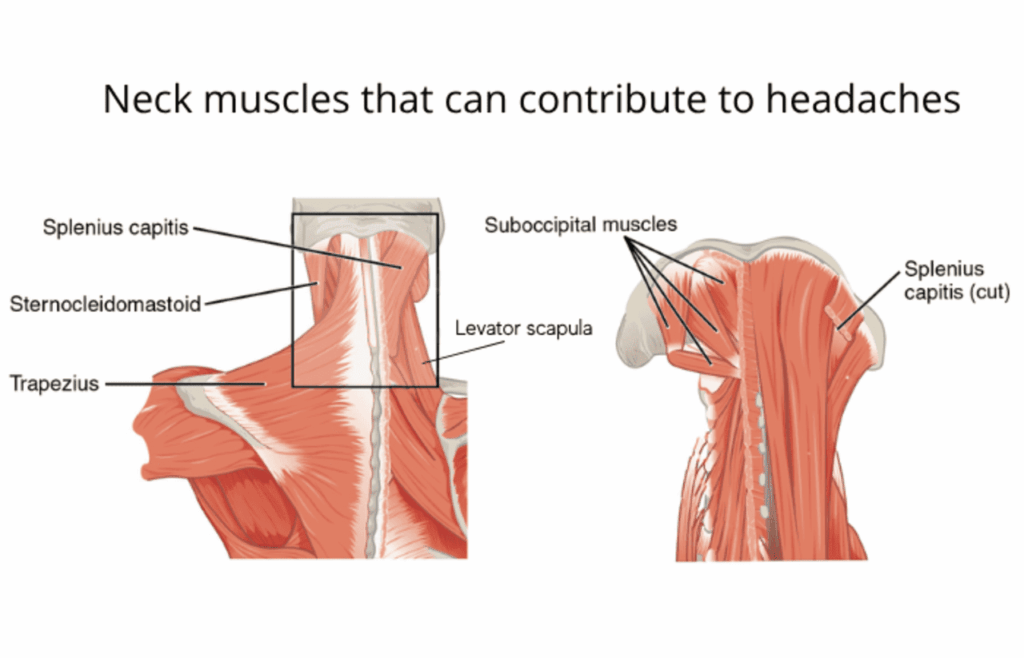
Muscles in the neck and shoulders can also refer pain into the head. Tight or overloaded muscles may contribute to headaches, pressure around the temples, pain behind the eyes, or tension through the jaw and forehead.
Some common contributors include:
Suboccipital Muscles
These small muscles sit at the base of the skull and help control head position. When overloaded, they may contribute to:
headaches at the base of the skull
pressure behind the eyes
headaches that worsen with prolonged sitting or screen time
Upper Trapezius
The upper trapezius connects the neck and shoulder. Increased tension here may contribute to:
temple headaches
side-of-head pain
shoulder and neck tightness
Sternocleidomastoid (SCM)
The SCM runs along the front and side of the neck. When sensitive, it can sometimes refer pain into:
the forehead
around the eye
the temple
the jaw or ear region
Some people also notice dizziness or a sense of head pressure associated with tension in this area.
Levator Scapulae
This muscle connects the neck and shoulder blade. It commonly contributes to:
stiffness along the side of the neck
pain at the base of the skull
tension between the neck and shoulder
These muscles often become overloaded from prolonged sitting, stress, jaw clenching, shallow breathing, poor sleep, or long periods without movement variation.
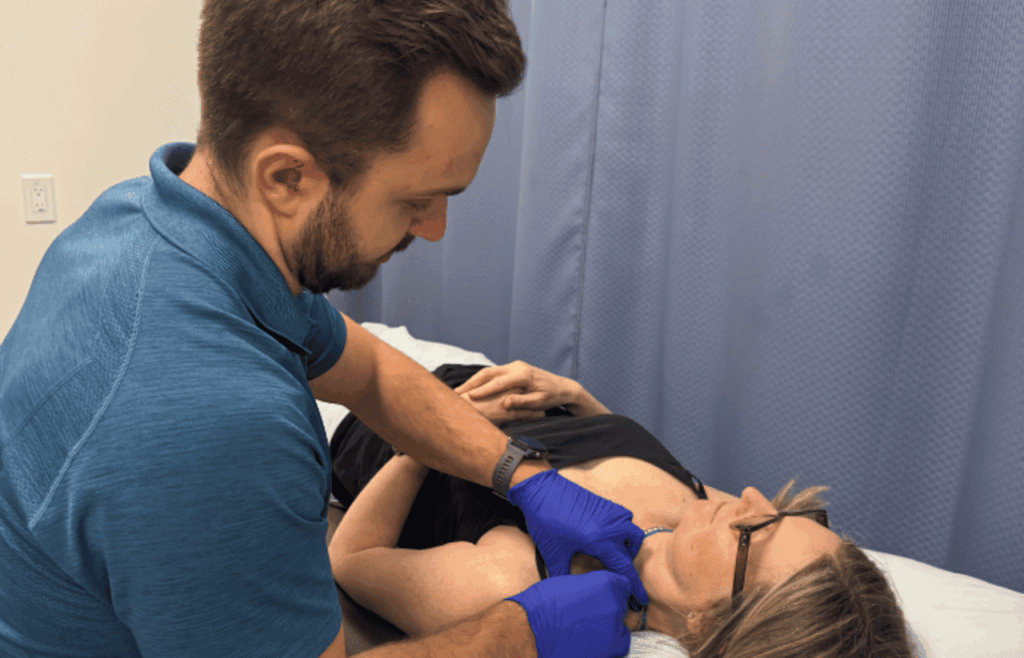
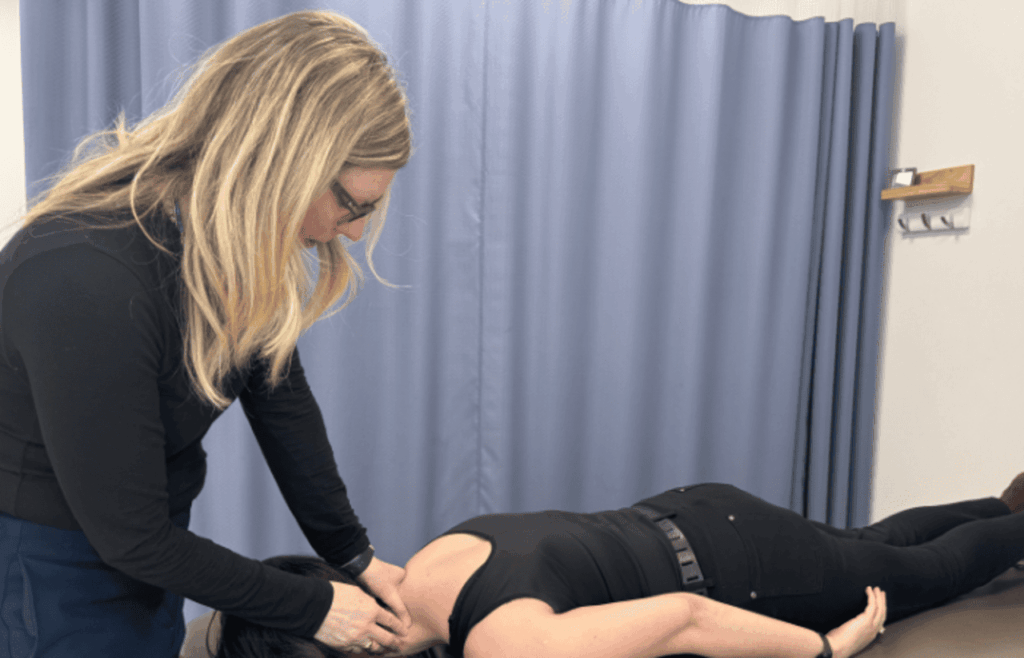
Treatment may include manual therapy, IMS/dry needling, exercises, and movement retraining depending on what is contributing to your symptoms.
Stress, Posture, and Load Matter
Headaches are often influenced by the total load on the neck and surrounding muscles.
That load may come from:
long hours at a computer
prolonged sitting
stress-related muscle tension
jaw clenching
poor sleep
sustained driving
lack of movement during the day
upper back stiffness
holding tension through the shoulders and neck
This does not mean the pain is “just stress.” It means the neck and surrounding muscles may be spending too much time under load without enough recovery.
For many people, headaches build gradually throughout the day as the neck, shoulders, jaw, and upper back become increasingly tense or fatigued.
Different Types of Headaches
There are many different types of headaches, and not all of them are treated the same way.
Tension-Type Headaches
Tension-type headaches are one of the most common headache types.
People often describe them as:
a dull ache
pressure around the head
tightness around the temples
heaviness in the forehead or scalp
Neck and shoulder tension commonly contribute to these headaches, and physiotherapy often helps when muscle tension, posture, or neck stiffness are part of the problem.
Cervicogenic Headaches
Cervicogenic headaches are headaches that come from structures in the neck.
These headaches are often:
one-sided
associated with neck pain or stiffness
aggravated by neck movement or sustained posture
felt around the base of the skull, temple, forehead, or eye
Cervicogenic headaches are also common after whiplash injuries and prolonged neck irritation.
Physiotherapy can be very effective for cervicogenic headaches because treatment focuses on the neck joints, muscles, mobility, posture, and movement control.
Migraine
Migraines are more neurological in nature and may involve:
throbbing pain
nausea
light sensitivity
sound sensitivity
visual symptoms
Physiotherapy is not a “cure” for migraine, but treatment may still help when neck tension, jaw tension, posture, or movement limitations are contributing to the overall picture.
When Medical Assessment Is Important
Seek medical attention promptly if you experience:
a sudden severe headache
new neurological symptoms
significant dizziness
weakness or numbness
fever
unexplained weight loss
changes in speech or vision
headaches after significant trauma
headaches that feel very different from usual
What Does Physiotherapy for Neck-Related Headaches Involve?
A good physiotherapy assessment looks beyond just the painful area.
Your physiotherapist may assess:
upper neck mobility
neck range of motion
headache triggers
jaw tension or clenching
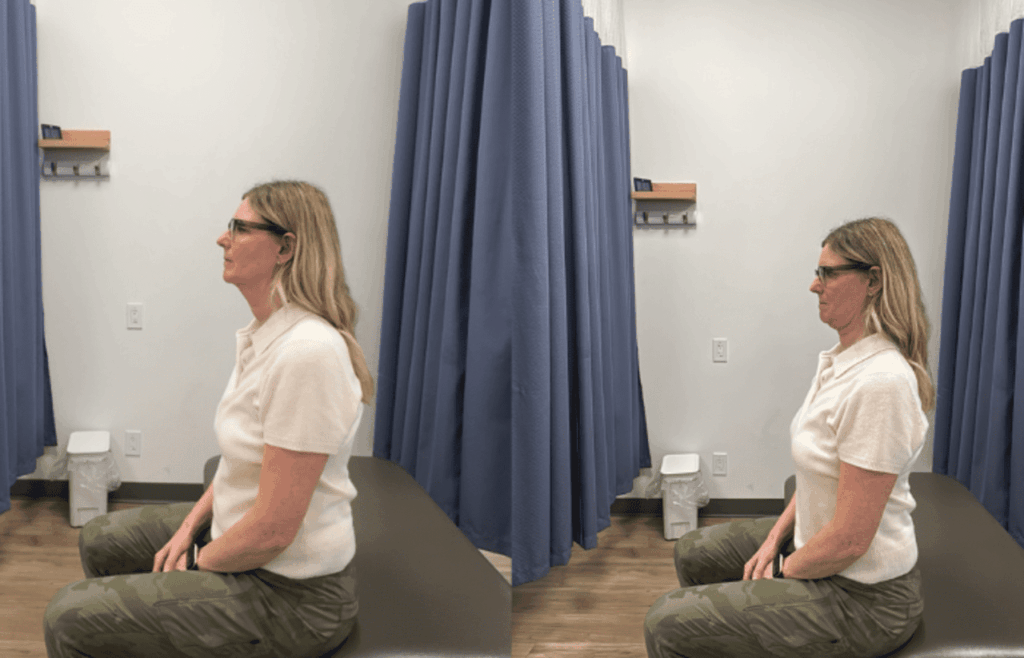
posture and head position
deep neck flexor control
upper back mobility
shoulder mechanics
breathing patterns
muscle tenderness and referral patterns
Treatment depends on what is contributing to your symptoms.
education around headache triggers and load management
The goal is not simply to “fix posture.” The goal is to improve movement, reduce unnecessary strain, improve tolerance, and help the neck function more comfortably.
Why the Deep Neck Muscles Matter
The deep muscles at the front of the neck help provide stability and control for the head and neck.
When these muscles are not providing enough support, larger muscles around the neck and shoulders may start working harder than they need to. Over time, this can contribute to tension, stiffness, fatigue, and headaches.
This is especially common in people who spend long hours sitting, working at a computer, driving, or carrying stress through the shoulders, jaw, and neck.
The Bottom Line
Not all headaches come from the neck, but the neck is often an overlooked contributor.
Upper neck joints, muscles, posture, jaw tension, stress, and sustained positions can all play a role in headaches. A good physiotherapy assessment helps determine whether the neck is contributing to your symptoms and what treatment approach is most appropriate.
If headaches are being influenced by neck tension, jaw clenching, posture, or upper cervical stiffness, physiotherapy may help.
Need Help With Neck Pain or Headaches?
At Avenue Physio, our physiotherapists assess the neck, jaw, posture, muscles, and movement patterns that may be contributing to headaches.
We take a one-on-one, whole-system approach to help you better understand your symptoms and build a clear treatment plan.
 Skip to content