Home/Physiotherapy/ How Stress Affects Pain, Tension, Sleep, and Recovery
How Stress Affects Pain, Tension, Sleep, and Recovery
How Stress Affects Pain, Tension, Sleep, and Recovery
Stress affects far more than mood or emotions. It can influence pain, muscle tension, sleep, breathing, energy levels, movement, and recovery.
Most people have experienced this in some way. During stressful periods, the body often feels tighter, more fatigued, less tolerant to activity, and slower to recover. Neck tension increases, headaches become more common, sleep becomes lighter, and old aches or injuries may flare up more easily.
This does not mean the pain is “just stress” or “all in your head.” The symptoms are real. Stress simply changes how the body and nervous system respond to load, recovery, and perceived threat.
At Avenue Physio, we often see this connection in people dealing with persistent neck pain, headaches, TMJ symptoms, shoulder tension, back pain, and ongoing musculoskeletal pain that feels difficult to fully settle.
The Body’s Stress Response Is Protective
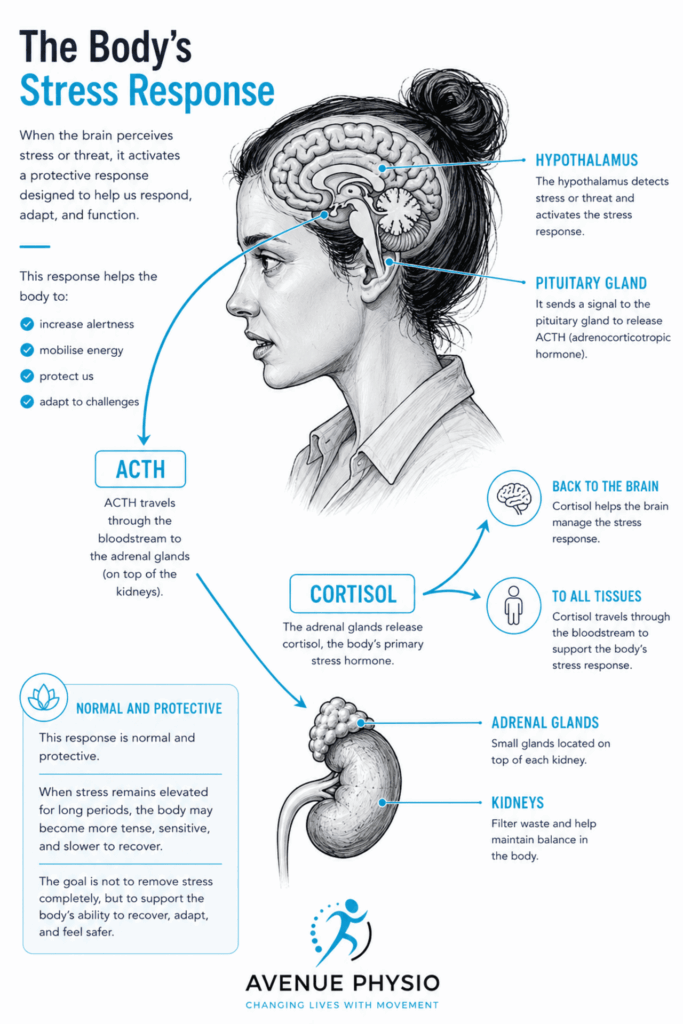
The stress response is not a flaw in the body. It is a protective system designed to help us respond to challenges.
When the brain perceives stress or threat, the body prepares for action:
muscles tighten
breathing changes
heart rate increases
attention becomes more focused
the body shifts toward protection and readiness
In the short term, this is useful and normal. The problem is that many modern stressors do not resolve quickly.
Work pressure, poor sleep, financial stress, persistent pain, long hours sitting, injury worries, caregiving demands, and ongoing tension can all keep the body in a more guarded and protective state for longer than it was designed for.
The Body Does Not Always Separate Physical and Emotional Stress
One of the most important things to understand is that the body responds to many different stressors through similar protective systems.
A difficult conversation, lack of sleep, persistent pain, work stress, or fear about an injury may all increase tension and sensitivity within the body.
This is not a weakness. It is simply how humans are wired.
During stressful periods, many people unconsciously:
clench their jaw
tense their shoulders
breathe more shallowly
move less
sleep less deeply
become more guarded with movement
Over time, this can increase stiffness, fatigue, muscle tension, and pain sensitivity.
When Stress Persists, the Body Can Stay More Sensitive
The body is designed to respond to short-term stress and then recover.
But when stress remains elevated for long periods, the system may stay in a more protective state. Muscles may remain tense, sleep quality may decline, recovery slows down, and the body can become more sensitive to physical and emotional load.
This is one reason pain often feels worse during stressful periods, even when imaging or tissue damage has not changed significantly, especially in people dealing with persistent pain conditions.
People commonly notice:
increased neck and shoulder tension
headaches
jaw clenching or TMJ symptoms
fatigue
feeling “tight” all the time
increased pain sensitivity
poorer sleep
flare ups with relatively small activities
difficulty relaxing muscles
Persistent stress can also affect confidence with movement. Some people begin avoiding activities because the body feels more reactive or unpredictable.
Stress Can Change How We Move
When people are stressed or in pain, movement patterns often change.
Some people brace through the neck, shoulders, jaw, or lower back without realizing it. Others hold their breath during movement, move more cautiously, or reduce normal movement variability throughout the day.
These protective strategies are understandable. In the short term, they may even feel helpful.
But over time, excessive guarding and reduced movement variation can increase fatigue, tension, stiffness, and load sensitivity.
This is one reason recovery is often not just about “fixing tissues.” It is also about helping the body feel safer moving again.
Sleep and Recovery Matter
Sleep is one of the body’s most important recovery tools.
When sleep becomes disrupted, the body often becomes:
more fatigued
less tolerant to stress
more sensitive to pain
slower to recover from physical activity
Unfortunately, stress and pain often disrupt sleep at the same time. Poor sleep increases sensitivity, and increased pain or tension then makes sleep more difficult again.
This cycle is extremely common with persistent pain conditions, headaches, TMJ symptoms, neck tension, and chronic stress states.
Improving recovery does not always mean “sleep perfectly.” Sometimes it starts with reducing overall load on the system, building more consistent routines, improving movement confidence, and creating opportunities for the body to settle.
Movement Is Still Important
When people are stressed or in pain, there is often a temptation to either:
stop moving completely or
push through aggressively
Usually, neither extreme is helpful.
In many cases, the body responds best to:
gradual movement
pacing
manageable exercise
movement variability
appropriate strength work
walking
breathing awareness
recovery time between stressors
The goal is not perfect posture or perfect movement. The goal is improving the body’s ability to tolerate load, recover well, and move with less protection and tension over time.
What Can Physiotherapy Help With?
Physiotherapy does not “treat stress” in isolation.
But physiotherapy can help people better understand how stress, tension, posture, movement habits, breathing patterns, sleep, and physical load may be interacting with pain and recovery.
strategies to reduce excessive muscle tension and guarding
For many people, understanding why the body feels tight, sensitive, or reactive is an important part of recovery.
The Bottom Line
Stress is not the enemy. It is a normal protective response built into the body.
But when stress remains elevated for long periods, the body can stay in a more guarded and sensitive state. This may affect pain, muscle tension, sleep, movement, energy, and recovery.
Understanding this connection does not mean symptoms are psychological or imagined. It simply helps explain why pain and tension are often influenced by more than just tissues alone.
For many people, recovery involves helping the body move, load, recover, and feel safe again — not simply trying to “fix” one isolated structure.
Need Help Understanding Persistent Pain or Tension?
At Avenue Physio, our physiotherapists take a whole-system approach to understanding pain, movement, tension, and recovery.
We assess how posture, movement patterns, sleep, stress, breathing, strength, and physical loading may all be contributing to ongoing symptoms.

 Skip to content