Skip to content

Osteoarthritis Isn’t the Same in Every Joint: What You Need to Know
If someone tells me, “I have osteoarthritis,” my next question is usually, “Where?”
That matters because osteoarthritis can look and feel very different depending on the joint involved.
A painful, stiff knee that is struggling with stairs is a very different problem from an arthritic thumb that hurts when opening a jar. Hip osteoarthritis may make it difficult to put on your shoes or get out of a car. And when someone has been told they have “arthritis” in their back or neck based on an X-ray, the relationship between those findings and their pain becomes even more complicated.
Osteoarthritis is common, particularly as we get older, but it does not affect everyone in the same way. Some people have significant changes on imaging and very little pain. Others have pain, stiffness or difficulty with everyday activities that have a much greater impact on their lives.
Understanding where the osteoarthritis is, how it is affecting you and what that particular joint needs is much more useful than simply knowing that arthritis is present.
What Is Osteoarthritis?
Osteoarthritis has traditionally been described as “wear and tear” of a joint. We now know that this is an outdated and overly simplistic way to describe it.
The phrase can also be misleading. It suggests that a joint has simply worn out because it has been used too much, much like a mechanical part that eventually needs replacing. That is not an accurate picture of osteoarthritis.
Osteoarthritis is a condition that affects the whole joint. Changes can occur in the cartilage, bone, joint lining and other tissues surrounding the joint. Its development is influenced by a combination of factors including age, genetics, previous injury, joint health and the way the joint has been loaded over time.
Importantly, osteoarthritis is not simply a process of cartilage gradually wearing away. Our joints are living, adaptable structures, and having osteoarthritis does not mean a joint is worn out, fragile or that using it will inevitably cause further damage.
That distinction matters because believing a joint is “worn out” can understandably make people afraid to use it.
For most people with osteoarthritis, movement and exercise are not something to avoid. They are an important part of treatment. Exercise can improve strength, function and the joint’s ability to manage the demands of everyday life.
What that rehabilitation looks like, however, depends greatly on which joint we are talking about.
Hip and Knee Osteoarthritis: Joints Designed to Carry Load
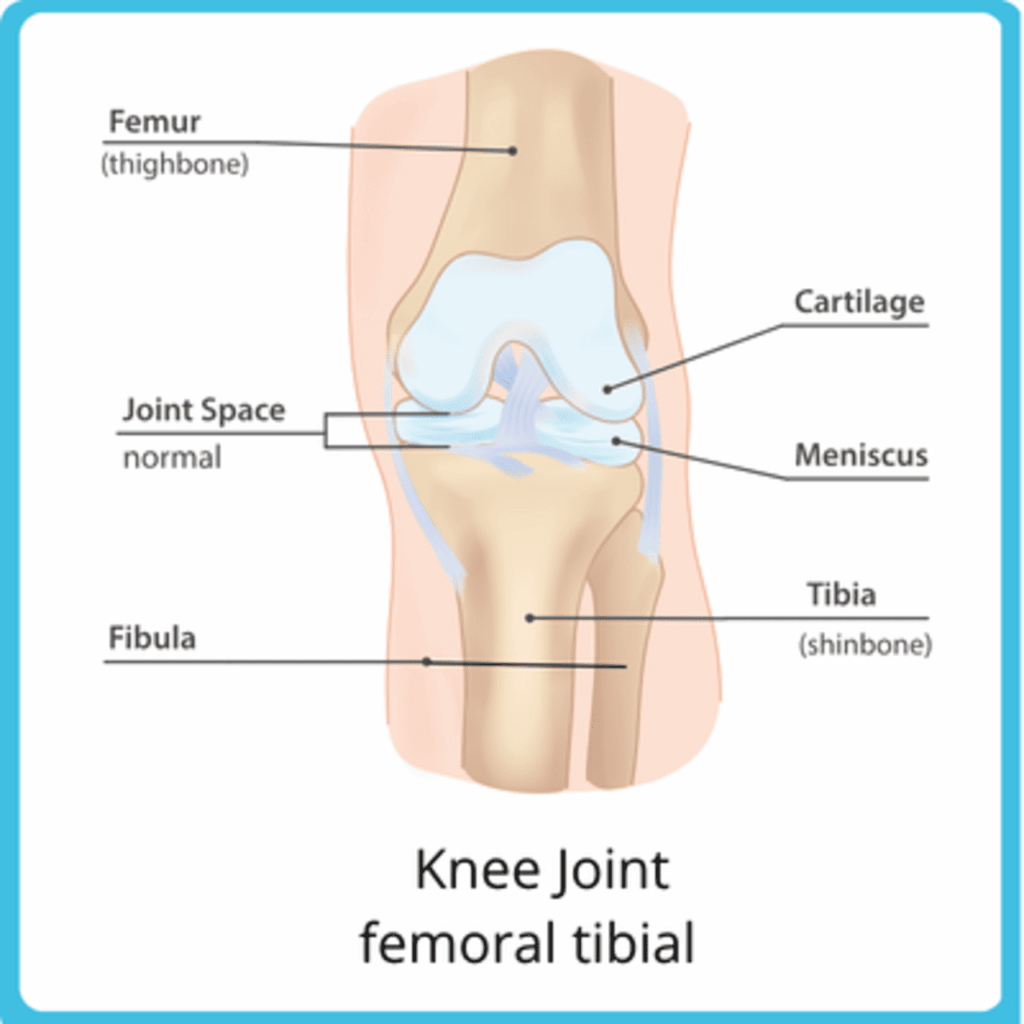
The hip and knee are large weight-bearing joints that manage considerable forces during everyday activities such as walking, climbing stairs, getting out of a chair, carrying groceries and exercising. When osteoarthritis affects these joints, people may notice pain and stiffness, but often what matters most is the gradual change in what they can comfortably do.
Knee Osteoarthritis
Knee osteoarthritis can present with pain, stiffness, swelling and changes in movement or strength. Stairs, squatting, walking longer distances and getting up from a lower chair may become more difficult. Some people lose some of their ability to fully straighten or bend the knee, while others notice that the leg feels weaker or that activities they previously managed easily now cause a flare in symptoms.
An important part of understanding knee osteoarthritis is looking at what the knee is currently being asked to do compared with what it can tolerate. Someone whose knee becomes painful after suddenly increasing from 5,000 to 15,000 steps a day may have a very different problem from someone who has gradually become less active, lost strength and now finds everyday activities increasingly difficult.
That difference matters because treatment isn’t simply about reducing pain. We want to help the knee regain the strength and capacity needed for the activities the person wants to do.
Hip Osteoarthritis
Hip osteoarthritis often presents differently. Pain is commonly felt in the groin or front of the hip, although it can also be felt in the thigh and sometimes around the knee. People may notice increasing stiffness and difficulty with activities such as putting on shoes and socks, getting in and out of a car or walking longer distances.
Loss of hip movement, particularly rotation, can be an important finding, but once again we are interested in more than the joint itself. We want to understand how the hip is affecting walking, strength, mobility and everyday activities and whether someone has begun avoiding things because of pain or stiffness.
These differences between hip and knee osteoarthritis are a good example of why the diagnosis alone doesn’t determine the rehabilitation plan. We need to understand how the condition is affecting that particular person and what they need to get back to doing.
Exercise Is Treatment for Hip and Knee Osteoarthritis
People with hip or knee osteoarthritis are sometimes concerned that exercise will cause further damage to the joint. This is one reason moving away from the idea of osteoarthritis as simple “wear and tear” is so important. If you believe a joint is wearing out, doing less with it can seem like the safest option.
In fact, exercise is one of the core treatments for hip and knee osteoarthritis. Strengthening the muscles around the joint, maintaining mobility and gradually improving physical capacity can help reduce symptoms and make everyday activities easier.
The key is finding the appropriate dose. Doing more and more activity through increasing pain isn’t necessarily helpful, but avoiding activity altogether isn’t the answer either. We want to establish what your hip or knee can manage now and progressively build strength and tolerance from that starting point.
This is one of the principles behind GLA:D® Hip & Knee, which combines education and supervised exercise to help people better understand osteoarthritis, build strength and improve their ability to manage everyday activities.
Hand and Thumb Osteoarthritis: Same Condition, Different Demands
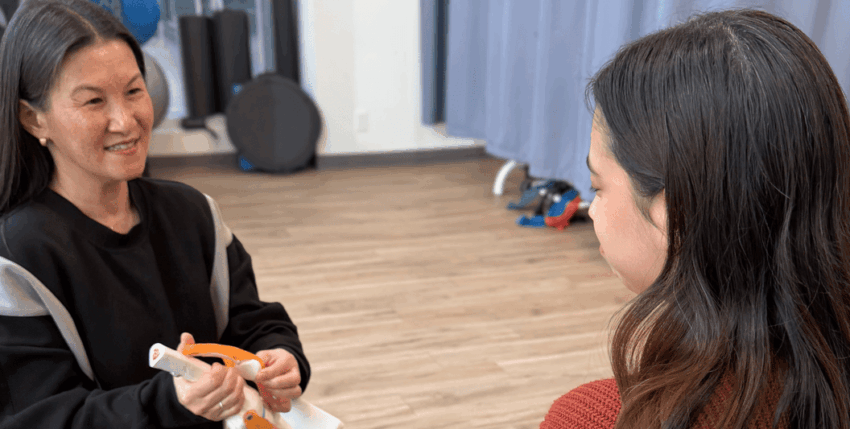
Hand and thumb osteoarthritis illustrate just how different the demands on an osteoarthritic joint can be. A thumb isn’t supporting your body weight as you climb stairs, but we rely on it constantly for gripping, pinching, turning keys, opening jars, using a phone and countless other everyday tasks.
Rehabilitation therefore looks different. Treatment may focus on maintaining movement and strength, improving grip and hand function, modifying particularly aggravating activities and, when appropriate, using a brace or splint to help manage symptoms.
The underlying principle hasn’t changed. We still want to maintain function and build the person’s ability to use the joint. What changes is how we do that, because the demands placed on a thumb are very different from the demands placed on a hip or knee.
What About “Arthritis” in the Back and Neck?
Osteoarthritis in the hip or knee is relatively easy to picture because we are talking about a joint that has to tolerate load during activities such as walking, climbing stairs and getting out of a chair. When we start talking about “arthritis” in the back or neck, the relationship between structural changes and pain becomes more complicated.
Many people have an X-ray or MRI and are told they have arthritis or degeneration in their spine. The report may describe degenerative changes, osteophytes, disc degeneration or changes in the facet joints. These findings can sound alarming, particularly when words such as “degeneration” are used.
However, age-related changes in the spine are extremely common, including in people who have no back or neck pain at all. This does not mean imaging findings are unimportant. It means they need to be interpreted alongside the person’s symptoms and clinical presentation rather than assumed to be the cause of pain simply because they appear on a scan.
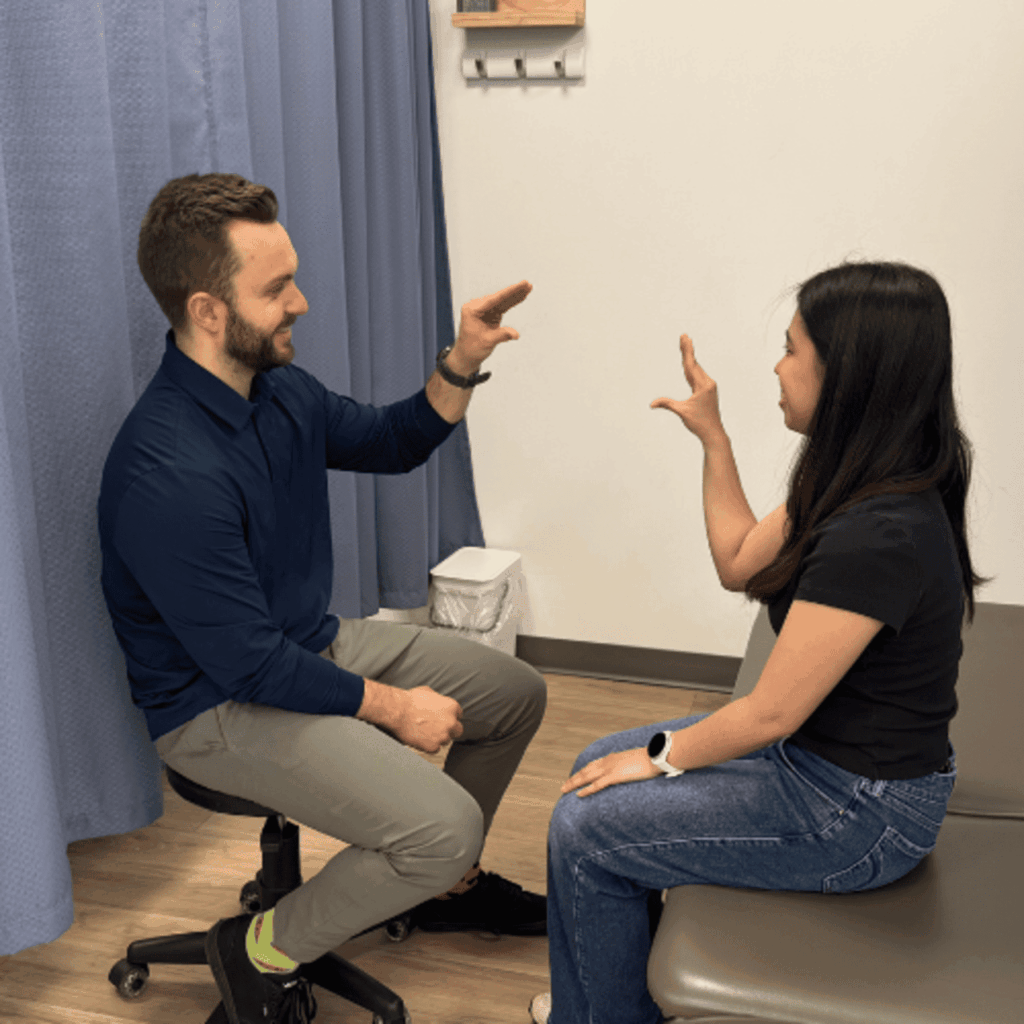
When assessing someone with back or neck pain, we therefore want to know much more than what appears on their imaging. We look at how they move, which movements or positions affect their symptoms, how long they can sit or walk, and whether they can bend, lift and perform the activities that matter to them. We also screen for symptoms such as pain travelling into an arm or leg, changes in strength or sensation, or other findings that may indicate involvement of the nervous system.
We also want to understand how the problem is affecting the person more broadly. What activities have become difficult? What have they stopped doing because of pain? Are they worried that movement could be causing further damage? With persistent spinal pain in particular, physical, psychological and social factors can all influence pain and recovery.
Imaging can provide useful information about the structures of the spine, but it cannot tell us the whole story. The scan needs to make sense in the context of the person, their symptoms and what they can actually do.
Why Your X-Ray Doesn't Tell Us How Much Pain You Should Have
Imaging and clinical assessment give us different types of information. An X-ray can show structural changes within a joint, such as joint space narrowing or changes in the bone, but it cannot tell us exactly how much pain you are experiencing, how strong you are, how far you can walk or how easily you can manage the activities that are important to you.
Two people can have very similar findings on a knee X-ray and have completely different experiences. One may walk several kilometres every day with minimal difficulty, while another may struggle with stairs or getting out of a chair. The same is true of the spine. Someone can have significant degenerative changes on imaging and relatively little pain, while another person can experience substantial back pain without dramatic findings on their scan.
This doesn’t mean imaging isn’t useful. It means that what we see on an X-ray and how someone is functioning don’t always match. Imaging gives us information about structure, while a clinical assessment helps us understand pain, movement, strength, physical capacity and the impact the problem is having on someone’s life. That is why we don’t make treatment decisions based on an X-ray alone. We put the imaging together with the person’s symptoms and assessment findings to determine what is most likely to help them.
How Do We Assess Osteoarthritis?
There isn’t one standard assessment for osteoarthritis because the demands placed on a knee, hip, hand or spine are very different. A good assessment considers the joint involved, your symptoms, how the problem is affecting your life and what you need that joint to be able to do.
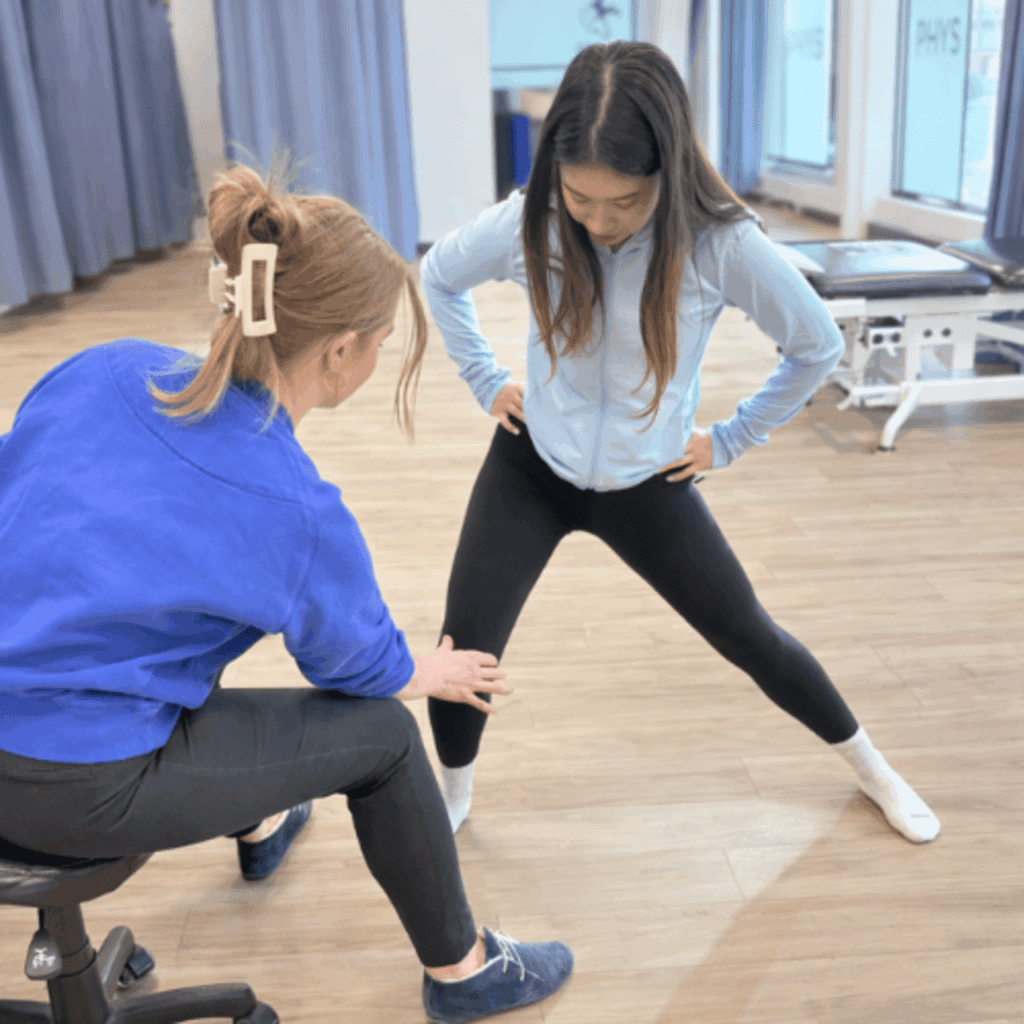
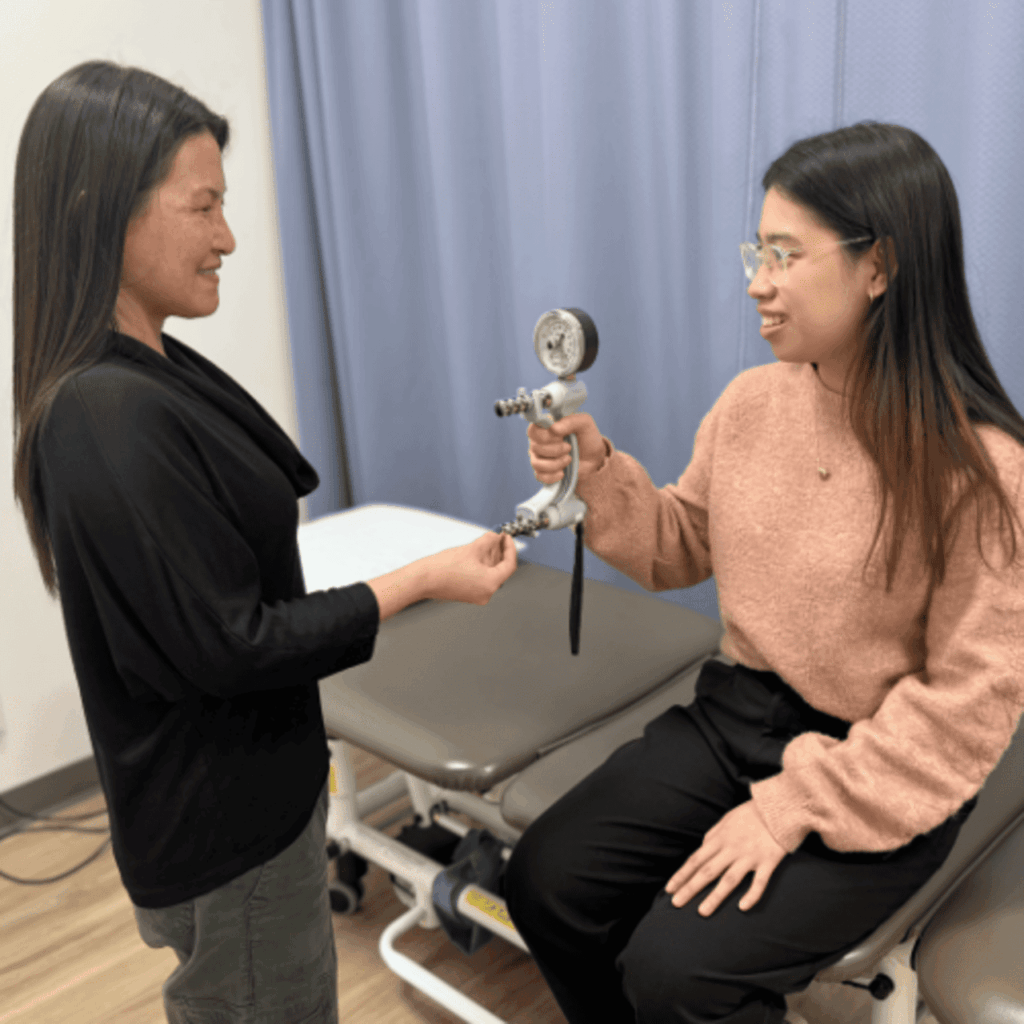
For knee osteoarthritis, we may assess joint movement, swelling, quadriceps and hip strength, balance, walking, stairs and your ability to squat or get up from a chair. With hip osteoarthritis, hip movement and particularly rotation may be important, along with strength, walking tolerance and functional mobility. For hand or thumb osteoarthritis, grip, pinch and the everyday tasks that are difficult become much more relevant. With spinal pain and degenerative changes, we may assess movement, strength, neurological function and your ability to sit, walk, bend, lift or participate in your usual activities.
But measurements of strength and movement are only part of the assessment. We also want to understand what you want to be able to do. Someone who wants to walk comfortably to work has different demands than someone trying to return to skiing. Gardening requires something different from running a marathon, just as picking up a grandchild requires something different from returning to competitive sport.
This is why the diagnosis is only the starting point. The diagnosis tells us what condition we may be dealing with. The assessment helps us understand how it is affecting you and what we need to work on to help you move and function better.
Does Treatment Change Depending on Where the Osteoarthritis Is?
Yes. Although there are principles that apply across many types of osteoarthritis, including education, staying active, exercise, maintaining strength and mobility, and gradually building physical capacity, how we apply those principles depends on both the joint involved and the person.
For someone with knee osteoarthritis, treatment may focus on improving quadriceps and hip strength and gradually building capacity for activities such as walking, stairs and squatting. With hip osteoarthritis, we may place greater emphasis on hip strength and mobility as well as walking and activity tolerance. For hand or thumb osteoarthritis, the focus shifts to grip, pinch and hand function, along with strategies to make everyday tasks more comfortable.
Spinal pain with degenerative changes is different again. Rather than trying to correct every structural finding described on an X-ray or MRI, rehabilitation may focus on improving movement, strength and physical capacity, while also helping someone feel more confident using their back or neck.
The principles may be similar, but the treatment needs to match the joint, the problems it is creating and the activities the person wants to return to. There isn’t one osteoarthritis exercise program that is right for everybody.
Osteoarthritis Doesn’t Mean Stop Using the Joint
Being told you have osteoarthritis can understandably change how you think about your joint. If you believe the joint is damaged or deteriorating, it can seem logical to protect it by doing less. But over time, avoiding movement can have unintended consequences. Strength and physical capacity can decrease, everyday activities can become harder, and people may gradually lose confidence in what their joint can safely do.
For most people with osteoarthritis, reducing activity isn’t the answer. Appropriate movement and exercise are an important part of treatment. The challenge is finding the right starting point. That doesn’t mean ignoring pain or pushing through activities that repeatedly flare your symptoms. It means understanding what your body can comfortably manage now and gradually building strength, tolerance and capacity from there.
The starting point will be different for everyone. Someone who has been inactive for several months may begin very differently from someone who is still walking, cycling or going to the gym regularly. The goal is not simply to protect the joint. It is to help you continue using it and build the capacity to do more.
Is It Osteoarthritis or Something Else?
Not every painful or swollen joint is caused by osteoarthritis, which is another reason a thorough assessment matters. Inflammatory conditions such as rheumatoid arthritis are different diseases and require different investigation and medical management.
Certain symptoms may suggest that further medical assessment is appropriate. A joint that becomes suddenly hot, red or significantly swollen, unexplained pain involving several joints, prolonged morning stiffness, fever or feeling generally unwell don’t necessarily fit the typical pattern of osteoarthritis. Significant trauma, a sudden inability to bear weight or symptoms that are unusual or changing unexpectedly may also require further investigation.
A good physiotherapy assessment isn’t simply about recognizing the signs that fit osteoarthritis. It is also about recognizing when the presentation doesn’t fit and knowing when someone should be referred for further medical assessment.
The Avenue Perspective
Osteoarthritis doesn’t affect every joint in the same way. A knee, hip, thumb and spine have very different jobs, experience different loads and can affect someone’s life in very different ways. It makes sense that the way we assess and rehabilitate them should be different too.
Imaging can provide useful information about structural changes, but it is only one part of understanding someone’s osteoarthritis. We also need to understand your symptoms, how you move, your strength and physical capacity, what your body currently tolerates and, importantly, what you want to be able to do.
The diagnosis gives us a starting point. The assessment helps us understand how osteoarthritis is affecting you. From there, we can develop a treatment plan that helps you stay active, build strength and confidence, and continue doing the activities that matter to you.
I especially prefer that new Avenue ending. “Your assessment tells us what your joint needs” sounded good initially, but after developing the article, it actually undersells your point. You’re not treating a joint; you’re working out how OA is affecting this particular person and what they need to get back to.