Skip to content


Why Do You Wake Up With Neck Pain When You Haven't Injured Yourself?
The Short Answer
Waking up with a painful, stiff neck doesn’t necessarily mean you slept incorrectly or injured something overnight. Neck pain can develop without an obvious injury, and the moment you first notice pain isn’t always the moment the problem began.
Neck pain is rarely explained by one position, one pillow or one activity. Understanding why someone develops neck pain means looking at their physical health, recent activities, sleep, recovery, previous experiences and how their symptoms behave.
For most people, the more useful question isn’t “What did I do to my neck last night?” but “What might have contributed to my neck becoming painful in the first place?”
Did You Really Injure Your Neck While Sleeping?
It’s a familiar experience. You go to bed feeling perfectly fine, but when you wake up the next morning, your neck is stiff, painful and difficult to turn. Perhaps looking over your shoulder is uncomfortable, or you find yourself turning your entire body rather than moving your head.
Your first thought is probably that you slept in an awkward position. Maybe your pillow is too high, your mattress needs replacing or you spent too long sleeping on your stomach.
But think about this: you’ve probably slept in similar positions hundreds of times without experiencing neck pain. You’ve used the same pillow for months or years, yet suddenly one morning your neck hurts.
So what changed?
Sometimes there is a recognizable event, such as an unfamiliar physical activity, an unusually demanding week or a previous episode of neck pain. Other times, there is no obvious explanation.
In many cases, there is no evidence that a structure in the neck was injured during sleep. What we know is that the neck has become painful and sensitive to movement. That is not necessarily the same thing as tissue damage.
This distinction matters because believing you’ve injured your neck can make ordinary movements seem dangerous, even when gentle movement may be an important part of recovery.
Why Can Neck Pain Develop Without an Injury?
We often think of pain as a direct response to something being damaged. If you cut your finger or sprain your ankle, there is an identifiable injury that helps explain the pain.
But many episodes of neck pain don’t follow this pattern.
Pain is a protective experience produced by the nervous system in response to information from the body and its environment. Tissue irritation or injury can certainly contribute, but pain is also influenced by previous experiences, expectations, sleep, stress, health and the sensitivity of the nervous system.
This doesn’t mean neck pain is psychological or that the pain isn’t real. It means that pain is a biological experience influenced by more than the physical condition of the tissues alone.
The Bone and Joint Decade Task Force on Neck Pain described neck pain as a complex condition involving multiple interacting factors rather than a problem that can always be traced to a single structural cause.
For someone who wakes up with a stiff neck, this helps explain why there may be significant pain and restricted movement without a clear injury.
The neck may be temporarily more sensitive to movement, and the surrounding muscles may respond by limiting movement or increasing their activity. That response can be uncomfortable, but it doesn’t automatically mean something has been damaged or moved out of place.

What Was Happening Before Your Neck Started Hurting?
When assessing someone who has developed neck pain, one of the most useful things we can do is look beyond the morning the symptoms appeared.
What was happening in the days or weeks beforehand?
Perhaps you’ve recently returned to the gym, spent more time cycling, started a new exercise program or taken on an unfamiliar physical task. You may have been working longer hours, travelling, sleeping poorly or managing an unusually demanding period of life.
None of these factors automatically causes neck pain. But changes in activity, physical demands and recovery can help us understand why symptoms may have developed.
Consider someone who regularly works at a desk without difficulty. During a particularly busy week, they work longer hours, reduce their usual exercise, sleep less and experience more stress. They wake up on Friday morning with neck pain and immediately blame their pillow.
The pillow may be exactly the same one they’ve used comfortably for years.
It’s possible that several factors have influenced their symptoms rather than one particular sleeping position. It’s also possible that the episode developed without any clearly identifiable trigger.
This is why we look for patterns rather than assuming that the last activity before pain appeared must have caused it.
Is Your Pillow Really Causing Your Neck Pain?
Pillows and mattresses are frequently blamed for neck pain, particularly when symptoms are most noticeable in the morning. Yet the evidence supporting this assumption is surprisingly limited.
Researchers have investigated whether different pillow designs can improve symptoms in people who already have neck pain. A systematic review and meta-analysis of pillow design found that certain pillow types were associated with improvements in neck pain and morning symptoms, although findings varied across studies.
But there is an important distinction between finding a pillow that makes an already painful neck more comfortable and demonstrating that a pillow caused the pain in the first place.
We have much less evidence that a particular pillow, mattress or sleeping position prevents neck pain or that ordinary sleeping positions cause cervical injury.
If your neck is acutely painful, finding a comfortable position with enough support may help you sleep. You might temporarily prefer a different pillow height or find it easier to sleep on one side.
That is sensible symptom management, not evidence that your previous pillow was damaging your neck.
For someone who is otherwise comfortable and sleeping well, there is little reason to continually change pillows or try to maintain one supposedly ideal sleeping position.
The goal is comfortable, restorative sleep, not achieving a perfect alignment of the cervical spine.
How Do Sleep and Recovery Influence Neck Pain?
Sleep deserves attention in a discussion about neck pain, but not simply because of the position of your head on a pillow.
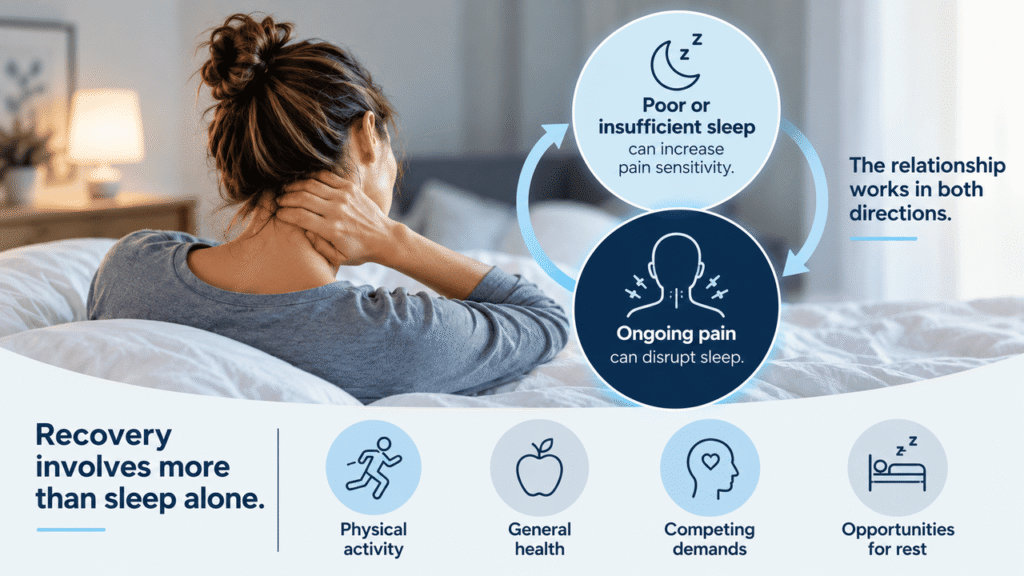
Sleep plays an important role in how we experience pain. Poor or insufficient sleep can increase pain sensitivity, while ongoing pain can disrupt sleep. The relationship works in both directions.
This means someone who has experienced several nights of poor sleep may be more sensitive to discomfort, even without a corresponding change in tissue damage.
Research examining the relationship between sleep disturbance and pain provides further context for this connection.
Recovery also involves more than sleep alone. Physical activity, general health, competing demands and opportunities for rest all influence how well someone feels and functions.
When we ask about sleep during a physiotherapy assessment, we’re not simply interested in which position someone sleeps in. We want to understand whether sleep quality may be contributing to their pain experience or making recovery more difficult.
What Role Does Stress Play in Neck Pain?
Stress is another factor that deserves a more thoughtful explanation than simply saying that people carry tension in their shoulders.
Periods of increased stress can influence sleep, muscle activity, attention, pain sensitivity and how people respond to physical symptoms. Someone managing significant demands at work or home may experience neck pain differently from someone who is well rested and feeling physically and emotionally well.
Stress doesn’t have to be the cause of someone’s pain to influence how strongly they experience it or how quickly they recover.
And it is important not to assume that everyone with neck pain is stressed or that stress explains symptoms when an appropriate physical assessment has not been completed.
For some patients, stress and sleep are highly relevant. For others, changes in activity, a specific musculoskeletal condition or neurological symptoms may be more important.
Understanding these differences is part of good clinical reasoning.
Is Poor Posture Responsible for Your Neck Pain?
Posture is another explanation that often receives more attention than the evidence justifies.
People are frequently told that their neck pain is caused by forward head posture, rounded shoulders or looking down at their phones. These explanations can make ordinary positions seem harmful and encourage people to constantly monitor how they sit, stand or move.
But there is no single ideal posture that prevents neck pain.
Different positions place different demands on the muscles and joints of the neck, and a position may be uncomfortable when symptoms are already present. However, discomfort in a particular posture does not necessarily mean that posture is causing tissue damage.
For some people, changing position, adjusting their workstation or taking movement breaks improves comfort. These are reasonable strategies, particularly when symptoms are aggravated by prolonged activities.
The important distinction is that we are helping someone find more comfortable and sustainable ways to work and move, not correcting a defective posture.
Rather than teaching people to hold their heads in one supposedly correct position all day, we generally want them to feel confident moving through a variety of positions.
Why Does Your Neck Feel So Stiff in the Morning?
One of the most concerning parts of waking with neck pain can be the sudden loss of movement.
You may find that turning your head in one direction is particularly painful, or that your neck feels as though it is locked.
Acute neck pain can be accompanied by increased muscle activity, movement sensitivity and a temporary reduction in the range of motion you’re comfortable using. In some presentations, commonly described as acute torticollis or a wry neck, the restriction can be quite pronounced.
Although these symptoms can be alarming, they don’t necessarily indicate a serious injury or that a vertebra has moved out of place.
We also cannot determine the precise tissue responsible simply because the neck feels locked or because one direction of movement is painful.
During an assessment, we consider how the symptoms began, whether there is a history of trauma, the pattern of movement restriction and whether there are associated headaches, arm symptoms or neurological findings.
For uncomplicated acute neck pain, maintaining comfortable movement and gradually returning to usual activities is often more helpful than prolonged immobilization.
However, not every painful, stiff neck is a routine musculoskeletal episode. Fever with significant neck stiffness, sudden severe unusual headache, new neurological symptoms or neck pain following significant trauma requires prompt medical assessment.
What Makes Neck Pain Persist or Keep Coming Back?
The factors that contribute to the beginning of an episode of neck pain aren’t necessarily the same factors that keep it going.
Someone may initially develop pain after an unfamiliar activity but continue to experience symptoms because they have become worried about moving their neck. Another person may have recurring episodes associated with changes in physical activity, poor sleep or difficulties returning to their usual exercise.
Previous episodes of neck pain are also relevant. A person who has experienced recurrent neck pain may recognize certain symptom patterns, but previous experiences can also influence their expectations and confidence in recovery.
When pain persists, the nervous system can become more sensitive, and activities that were previously comfortable may become more provocative.
This doesn’t mean the symptoms are permanent or that the neck is becoming progressively damaged.
It does mean that treatment may need to address more than the original symptom trigger.
For some people, the priority is improving neck strength, movement and physical capacity. Others may need help gradually returning to activities they’ve avoided, improving sleep or understanding why pain doesn’t necessarily indicate harm.
The appropriate approach depends on the individual.

How Can Physiotherapy Help You Understand Your Neck Pain?
At Avenue Physio, we don’t assume that everyone with neck pain has the same problem or needs the same treatment. Neck symptoms can arise from different conditions, including muscle and joint-related pain, nerve irritation and headaches. You can explore the different conditions we treat to understand why identifying the nature of your symptoms matters.
A thorough assessment begins with understanding the history of the symptoms. When did they start? What were you doing in the preceding days or weeks? Have you experienced similar episodes before? What movements or activities aggravate your symptoms, and what helps?
We also want to understand how your neck pain is affecting your life. Perhaps you cannot turn your head comfortably while driving, have difficulty concentrating at work, experience headaches or have stopped exercising because you’re worried about making things worse.
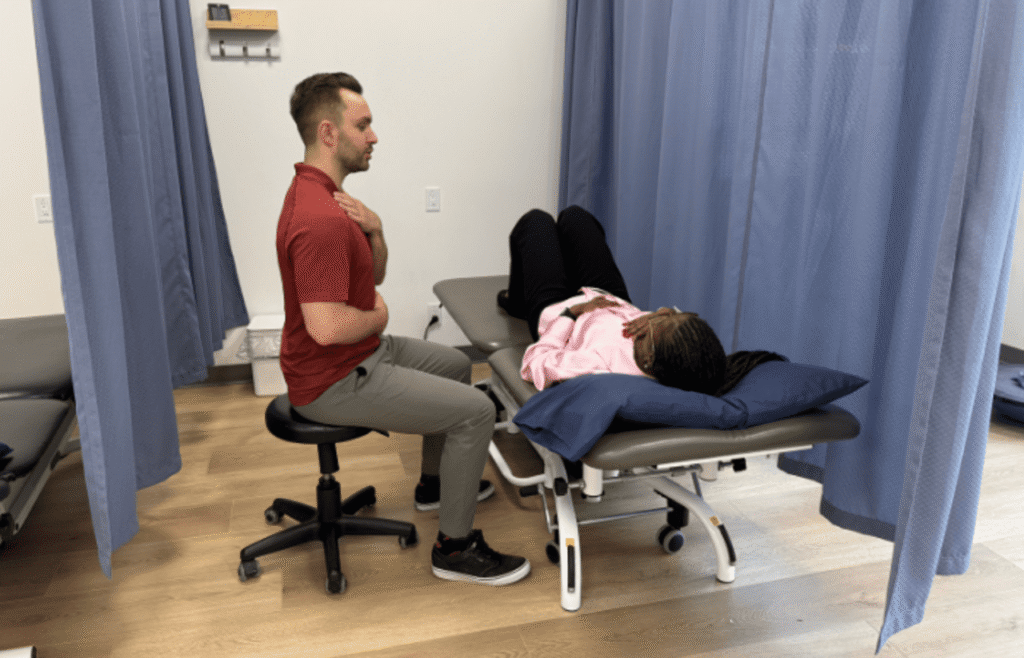
The physical assessment may include cervical movement, muscle strength and endurance, upper back and shoulder function, and neurological testing when indicated. We also consider whether symptoms suggest a condition that requires medical investigation rather than routine physiotherapy management.
From there, treatment is individualized. It may include education, manual therapy for short-term symptom relief, exercises to restore comfortable movement, progressive strengthening and a plan for returning to your usual activities.
The clinical practice guideline for neck pain supports approaches that combine appropriate assessment, education, exercise and selected manual therapy interventions, depending on the presentation.
Our approach to neck pain physiotherapy in Calgary combines individualized assessment, treatment and progressive rehabilitation. The goal isn’t simply to make your neck feel better during an appointment. It’s to help you understand your symptoms, restore your confidence in movement and develop the capacity to do the activities that matter to you.
The Avenue Perspective
When someone tells us they woke up with neck pain, we don’t immediately ask what pillow they’re using.
We want to understand the bigger picture.
Neck pain is a real physical experience, but it isn’t always the result of a specific injury, poor posture or an uncomfortable sleeping position. It can reflect a combination of physical, neurological, behavioural and contextual factors, and the importance of each will vary from person to person.
Sometimes an episode settles quickly with reassurance, comfortable movement and time. Other times, a more detailed assessment and rehabilitation program are needed.
What matters is identifying the factors that are relevant to you rather than assuming your neck needs protecting from ordinary activities.
Your neck is designed to move, adapt and tolerate a wide range of positions. Understanding that is often an important first step toward feeling more comfortable and confident again.
Frequently Asked Questions
Can you really injure your neck while sleeping?
An injury during sleep is possible, but most people who wake up with neck pain cannot identify a specific injury. Waking with pain does not establish that a sleeping position damaged the neck. Symptoms may reflect temporary movement sensitivity, a musculoskeletal condition or several interacting factors.
Should I buy a special pillow for neck pain?
Not necessarily. Some research suggests certain pillow designs may improve comfort and symptoms for people who already have neck pain, but there is no strong evidence that everyone needs a special pillow to prevent neck problems. If your neck is acutely painful, choose the support that allows you to rest comfortably.
Why does my neck hurt when I wake up but improve as I move?
Some people experience temporary stiffness and movement sensitivity after being relatively still overnight. Gentle movement may improve comfort as they begin their day. However, the pattern alone does not identify the cause. Persistent or prolonged morning stiffness, particularly with other systemic symptoms, may warrant further assessment.
When should I see a physiotherapist for neck pain?
Consider physiotherapy if your neck pain is not improving, keeps recurring, significantly restricts movement or interferes with sleep, work or everyday activities. Symptoms extending into the arm, persistent headaches or uncertainty about what is safe to do may also justify assessment. New or progressive neurological symptoms, fever with marked neck stiffness or sudden severe unusual headache require urgent medical evaluation.