Skip to content


How Do You Know If Physiotherapy Is Working? 6 Signs of Progress Beyond Pain Relief
The Short Answer
How do you know if physiotherapy is working when you’re still experiencing pain?
It’s a question worth asking, particularly when your symptoms haven’t completely resolved or progress seems slower than you expected.
Pain reduction is certainly one way we measure improvement, but it isn’t the only one. Changes in strength, movement, activity tolerance and confidence can all tell us whether rehabilitation is moving in the right direction.
At Avenue Physio, we look at how your symptoms are changing alongside what you’re becoming more capable of doing. We also revisit your goals, repeat relevant physical tests and adjust your treatment based on how you’re progressing.
Here are six signs that physiotherapy may be helping, even if you’re still experiencing some pain.
1. Everyday Activities Are Becoming Easier
One of the most meaningful signs of progress is being able to do more of the things that matter to you.
For someone with knee osteoarthritis, that might mean climbing stairs without needing to use the railing. A person with persistent back pain may be able to sit through a two-hour meeting without constantly changing positions. Someone recovering from a shoulder injury may find it easier to reach into an overhead cupboard or lift a suitcase.
These improvements tell us something important about how your condition is affecting your daily life.
During your initial assessment, we ask which activities are difficult and what you’d like to return to doing. As treatment progresses, we revisit those activities to see what’s changing.
You may still experience some discomfort, but if you’re gradually returning to activities that were previously difficult, that’s meaningful progress.
2. Your Strength and Movement Are Improving
Sometimes we can identify improvements during reassessment before you notice a significant change in your symptoms.
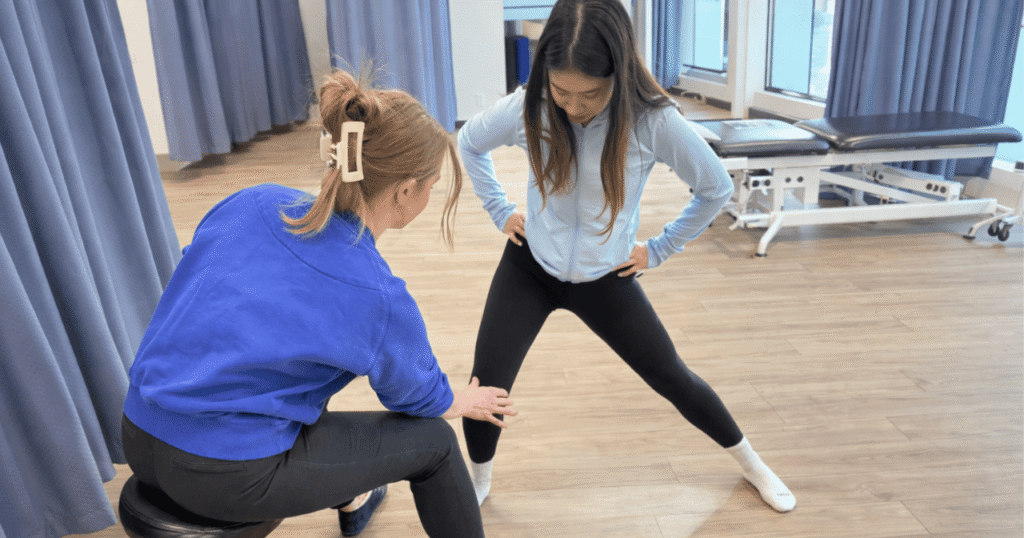
Depending on your condition, we may measure joint range of motion, muscle strength, balance, walking ability or how you perform a particular movement.
For example, someone with shoulder pain may initially have difficulty rotating their arm outward or lifting against resistance. Several weeks later, we may find that their shoulder rotation has improved and they’re able to generate more force, even though some pain remains.
For someone recovering from a knee injury, we might see improved quadriceps strength or better control during a single-leg squat.
These are measurable changes that help us evaluate whether rehabilitation is improving your physical abilities.
We don’t need to repeat every test at every appointment. We select the measures that are relevant to your condition and goals, then reassess them as treatment progresses.
3. You Can Tolerate More Activity
There’s an important difference between being able to perform a movement and having the capacity to repeat it or sustain it.
You may be able to walk for 10 minutes without much difficulty but develop symptoms after 20 minutes. Or you may be able to lift an object once but struggle when you need to repeat the task throughout your workday.
As rehabilitation progresses, we look for improvements in how much activity you can tolerate.
For example, someone recovering from an Achilles tendon injury may gradually increase their walking distance, complete more calf raises or return to longer periods of standing.
A patient with persistent back pain may progress from lifting light objects occasionally to managing the repeated lifting demands of their job.
We use progressive exercise to build strength, endurance and tolerance for activity. The challenge needs to be appropriate for your current abilities while gradually preparing you for what you want to return to doing.
Research supports exercise as an important component of rehabilitation for persistent low back pain. A 2021 Cochrane systematic review of exercise therapy for chronic low back pain found that exercise can improve pain and function, although the average benefits vary and are often modest.
Progress isn’t simply performing a harder exercise in the clinic. It’s developing the capacity to manage the demands of everyday life.
4. Flare-Ups Are Becoming Less Frequent or Easier to Manage
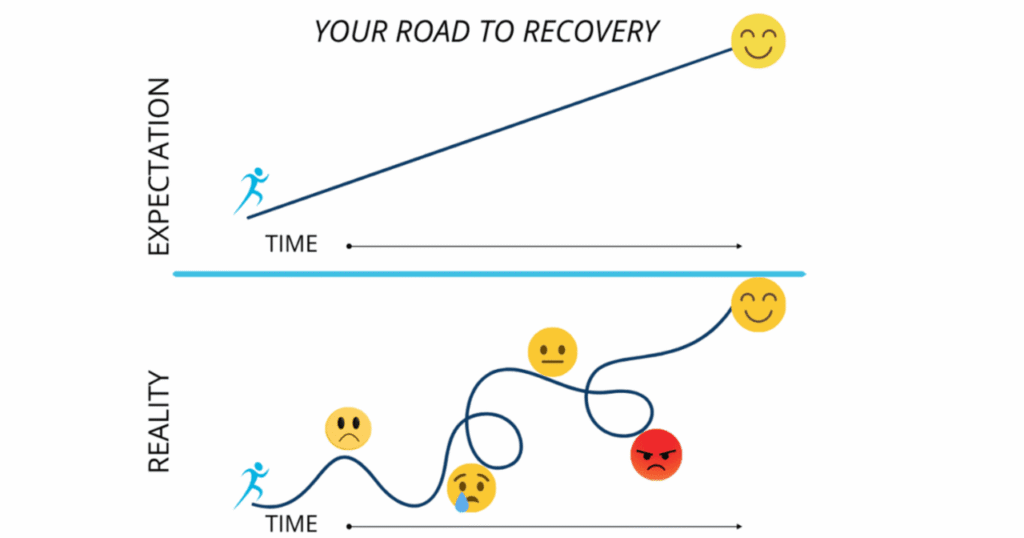
Progress doesn’t always mean that pain disappears or steadily decreases every week.
For some conditions, particularly persistent pain, osteoarthritis or recurring back problems, symptoms may fluctuate during recovery.
What we look for is whether the overall pattern is changing.
Perhaps gardening used to leave you with back pain for three days, but now your symptoms settle by the following morning. Or you can walk farther before your hip becomes uncomfortable.
You might also notice that flare-ups are less intense, happen less frequently or interfere less with your usual activities.
These changes can indicate that your tolerance for activity is improving.
We ask about what happened before a flare-up, how your symptoms behaved and how long they took to settle. This information helps us determine whether your activity levels and exercise program need adjusting.
5. You're Becoming More Confident With Movement
Pain can influence not only what we’re physically able to do, but also what we feel comfortable attempting.
After an episode of back pain, you may become hesitant to bend or lift. Following a knee injury, you might avoid uneven ground or stairs because you’re concerned about aggravating your symptoms.
Over time, you may notice that you’re moving more naturally and worrying less about activities that previously felt threatening.
For example, someone who initially avoids bending to pick something up may gradually become comfortable lifting objects from the floor again. A patient recovering from an ankle injury may regain the confidence to walk on uneven trails.
We work with patients to understand which movements they’re concerned about and gradually reintroduce those activities in a way that builds both physical capacity and confidence.
Research has explored how exercise and rehabilitation can influence fear of movement. A systematic review examining exercise training and fear-avoidance found evidence that exercise may help reduce movement-related fear, particularly in people with low back pain, although the certainty of the evidence was limited.
For some patients, becoming less fearful of movement is one of the most important changes during rehabilitation.

6. You're Getting Closer to Your Personal Goals
Not everyone comes to physiotherapy with the same expectations.
One person wants to return to running. Another wants to sleep comfortably, play with their grandchildren or complete a full workday without significant discomfort.
These goals help guide our assessment and treatment decisions.
For example, improving knee strength may be important, but if your goal is to return to hiking, we also need to consider walking endurance, balance, uneven terrain and your ability to manage hills.
Similarly, someone returning to a physically demanding job may need more than improved range of motion. They may need sufficient strength and endurance to lift, carry or repeat movements throughout their shift.
As you improve, we revisit your goals and may establish new ones.
Sometimes a patient who initially wanted to walk without pain progresses to wanting to return to pickleball or skiing. Their rehabilitation program needs to evolve with those goals.
How Do We Actually Measure Progress in Physiotherapy?
We combine what you tell us about your symptoms and daily activities with findings from your physical assessment.
Different conditions require different measures, and we select tests that help us understand your particular limitations.
What we’re assessing | How we measure it | What improvement might look like |
Pain and symptoms | Intensity, frequency, symptom behaviour and recovery after activity | Less frequent pain or symptoms that settle more quickly |
Joint movement | Range-of-motion measurements | Improved shoulder rotation or knee bending |
Muscle strength | Resistance testing, dynamometry or functional strength tests | Greater force production or improved ability to lift |
Balance and control | Single-leg balance, stepping or other balance tests | Better stability on one leg or uneven ground |
Activity tolerance | Walking distance, exercise repetitions or duration | Walking farther, standing longer or managing more repetitions |
Daily function | Functional activities and patient-reported outcome questionnaires | Less difficulty with stairs, dressing, work or recreation |
We may also use standardized questionnaires that ask how your condition affects everyday activities. These provide another way to measure changes over time.
A study published in Physiotherapy on patient-reported outcome measures examined how questionnaires can be used to monitor patient goals and outcomes in physiotherapy. It reinforces the value of considering what matters to the patient alongside clinical measures.
The important part is interpreting these findings together.
For example, someone with knee pain may report that their symptoms haven’t changed very much, but reassessment shows improved quadriceps strength, better knee movement and greater walking tolerance.
Those improvements matter. However, if pain continues to significantly limit their activities, we still need to understand why.
No single test or pain score tells us everything about your recovery. We look at the overall picture to decide whether treatment is helping you move toward your goals.
Why Isn't Progress Always a Straight Line?
It’s common to have periods of improvement followed by a temporary increase in symptoms.
You may have been progressing well for several weeks, then experience more back pain after a weekend of gardening or notice increased knee discomfort after a longer hike.
A flare-up doesn’t necessarily mean you’ve lost the progress you’ve made.
We look at what may have contributed to the increase in symptoms. Was the activity longer or more demanding than usual? Have your symptoms changed in a way we didn’t anticipate? Are you still able to perform activities that were difficult earlier in your rehabilitation?
We also consider how quickly symptoms settle and whether the overall trend remains positive.
For example, if you can now walk five kilometres instead of one, a temporary increase in soreness after a longer walk doesn’t automatically mean your rehabilitation is going backwards.
However, if symptoms are repeatedly worsening or your ability to function is declining, we need to reassess.
The goal isn’t to avoid every fluctuation in symptoms. It’s to understand how you’re responding and adjust the plan when necessary.
What If You're Not Making Progress With Physiotherapy?
If you’re attending physiotherapy but aren’t seeing the improvements you expected, we want to understand what’s getting in the way.
We start by reviewing your symptoms, your response to treatment and the goals we established together. We also talk about your exercise program. Are you completing your exercises regularly? Are they manageable? Is something making it difficult to fit them into your day?
We may repeat physical tests, reassess which movements or activities remain difficult, and look at whether your exercise program is providing the right amount of challenge.
We also look at the bigger picture. Sometimes there are barriers to movement and recovery that aren’t immediately obvious. These might include fear of aggravating an injury, difficulty managing work or daily activities, poor sleep, or uncertainty about how much activity is appropriate. We work with you to identify these barriers and develop practical strategies to address them.
Depending on what we find, we may adjust your exercises, change our treatment approach or focus on different aspects of your rehabilitation.
If progress remains limited, or our reassessment suggests further investigation is needed, we can communicate with your physician and recommend additional assessment. This may include diagnostic imaging or referral to a sports medicine physician, physiatrist (a physician specializing in physical medicine and rehabilitation), or another appropriate specialist.
Our approach is to continually reassess your progress, understand what’s limiting your recovery and work with you to determine the next steps.
The Avenue Perspective
At Avenue Physio, our one-on-one appointments give us time to understand how you’re progressing, not just how you’re feeling on the day of your appointment.
We want to know what’s changing between visits. Are you walking farther? Sleeping better? Finding it easier to get through your workday? Are you returning to activities you’ve been avoiding?
We also want to know what’s still difficult.
By combining your feedback with reassessment of your movement, strength and function, we can make informed decisions about your treatment.
Sometimes that means progressing your exercises. Sometimes it means changing our approach or reconsidering what’s contributing to your symptoms.
And sometimes it means recognizing that you’ve achieved your goals and no longer need regular physiotherapy appointments.
Our aim is to help you make meaningful progress toward the activities that matter to you, with a treatment plan that changes as your needs change.
Learn more about our approach to physiotherapy at Avenue Physio.
Frequently Asked Questions
How long does it take to see results from physiotherapy?
It depends on your condition, how long you’ve had symptoms, your starting level of function and your rehabilitation goals. Some people notice improvements early, while others need several weeks or longer to see meaningful changes. We discuss anticipated timelines and reassess your progress throughout treatment.
Can physiotherapy be working even if I still have pain?
Yes. Improvements in strength, movement, activity tolerance and daily function can occur before pain has fully settled. We consider these changes alongside your symptoms to determine whether treatment is helping.
How do I know if my physiotherapy exercises are working?
You may notice that exercises become easier, you can complete more repetitions or use greater resistance, or activities outside the clinic become more manageable. We also reassess relevant physical measures to determine whether your program is helping you progress toward your goals.
What should I do if physiotherapy doesn't seem to be helping?
Talk with your physiotherapist about your concerns. We want to know if you’re not noticing the progress you expected. We can reassess your symptoms and physical findings, review your goals and determine whether your treatment plan needs to change or whether further medical assessment is appropriate.