Home/Physiotherapy/ The Real Timeline of Healing for Plantar Fasciitis
The Real Timeline of Healing for Plantar Fasciitis
The Real Timeline of Healing for Plantar Fasciitis
One of the most common questions we hear from people with plantar fasciitis is:
“How long is this going to take?”
Unfortunately, there is no simple answer.
Some people improve within a few months. Others take six months, twelve months, or occasionally longer before symptoms fully settle. This can be frustrating, especially when you are doing your exercises, wearing supportive shoes, and trying to do all the right things.
The good news is that most people improve. The challenge is that recovery is often slower and less predictable than people expect.
Why Does Plantar Fasciitis Take So Long to Improve?
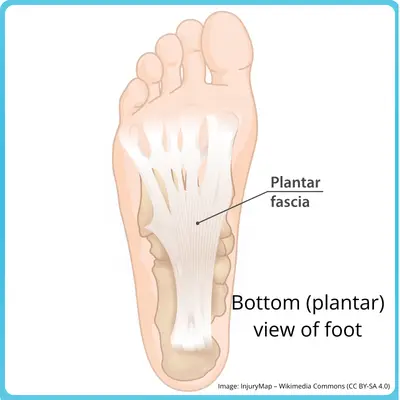
The plantar fascia is a strong band of connective tissue that runs along the bottom of the foot. It helps support the arch and stores energy every time we walk, run, climb stairs, or stand.
When symptoms develop, many people assume the answer is complete rest. While reducing aggravating activities can be helpful initially, plantar heel pain often does not respond well to long-term avoidance.
Like other load-sensitive tissues in the body, the plantar fascia generally improves when load is managed appropriately and capacity is gradually rebuilt.
This means recovery is often less about finding the perfect stretch or treatment and more about helping the foot gradually tolerate the demands being placed on it.
Many patients are surprised to learn that recovery is often measured in months rather than weeks.
What Does Progress Actually Look Like?
Many people judge recovery using one simple question:
“Does it still hurt?”
While understandable, pain is not always the best measure of progress.
A better question might be:
“Is my foot becoming more tolerant?”
Often the first signs of improvement include:
Morning pain settles more quickly.
Walking becomes easier.
Standing is tolerated longer.
Flare-ups become less intense.
Recovery after activity is faster.
Confidence improves.
Many people are surprised to learn that function and capacity often improve before pain disappears completely.
The early phase of treatment is usually focused on understanding what is driving symptoms and identifying activities that are consistently aggravating the foot.
For some people, this may involve temporarily reducing walking volume, modifying running, improving footwear, or introducing exercises to begin rebuilding strength.
The goal is not necessarily to eliminate all pain immediately.
Instead, the goal is to reduce excessive irritation while beginning to restore the foot’s ability to tolerate load.
Many people notice small improvements during this phase, but symptoms are often still present.
Morning pain may continue.
Long walks may still provoke symptoms.
Standing for extended periods may remain uncomfortable.
This is normal.
Months One to Three: Building Capacity
This is often where recovery starts to feel frustrating.
Many patients expect to be pain-free by this stage. Instead, what often happens is that symptoms become less intense and less frequent, but they are not gone.
The foot may feel better on most days but still react to longer walks, busy weekends, travel, standing for prolonged periods, or sudden increases in activity.
This phase is usually about consistency.
The people who do well are rarely the people who do the most. They are often the people who steadily build capacity over time without repeatedly pushing into large flare-ups.
During this stage, strength, calf capacity, foot capacity, and overall activity tolerance gradually improve.
This is where our Plantar Fasciitis Physiotherapy programs often focus on progressive strengthening, activity modification, and helping patients confidently return to walking, running, and exercise.
Months Three to Six: Progress Becomes Less Obvious
By this point, many people are functioning much better than they were initially.
The problem is that progress can become harder to notice.
The pain is no longer dominating every day, but symptoms may still appear after a busy day, a vacation, a hike, or an increase in activity.
This is often when people wonder whether they have plateaued.
In reality, recovery is often still happening.
One useful way to measure progress is to compare how a flare-up behaves.
Six months ago, a long walk may have resulted in several painful days.
Now the same activity might create soreness that settles within a few hours or by the following morning.
That is still progress.
Recovery Is Rarely Linear
This may be the most important thing to understand.
Most people imagine recovery as a steady climb toward being pain free.
Real recovery rarely works that way.
Most people experience periods of improvement, occasional flare-ups, good weeks, setbacks, and then further improvement.
A temporary increase in symptoms does not automatically mean damage has occurred.
In many cases, it simply means the tissue was exposed to more load than it was ready for at that point in time.
Learning to interpret these fluctuations appropriately is often an important part of recovery.
Why Recovery Time Varies So Much
One of the reasons plantar fasciitis can be so frustrating is that recovery timelines vary significantly from person to person.
Two people may have very similar symptoms but recover at very different rates.
Several factors can influence how quickly the foot settles, including symptom duration, daily walking and standing demands, occupation, running or sport participation, calf strength, footwear, recovery habits, and overall health.
For example, someone who developed symptoms six weeks ago and works at a desk may have a very different recovery journey than someone who has been dealing with heel pain for a year while standing on concrete floors all day.
This is one reason it can be unhelpful to compare your recovery to someone else’s.
The more useful question is not:
“How quickly did someone else get better?”
Instead ask:
“Is my foot becoming more tolerant than it was a month ago?”
In many cases, meaningful progress occurs long before symptoms disappear completely. Walking distances improve, flare-ups become shorter, confidence returns, and activities gradually become easier to tolerate.
Those changes are often signs that recovery is already happening.
Why Some People Stay Stuck
One of the most common patterns we see is a boom-and-bust cycle.
The foot starts feeling better.
People return immediately to long walks, running, hiking, travel, or other activities they have been avoiding.
The symptoms flare.
Activity stops completely.
The cycle repeats.
Recovery tends to be smoother when activity is progressed gradually rather than in large jumps.
Another common issue is focusing exclusively on short-term pain relief.
Supportive shoes, taping, massage, stretching, orthotics, and other treatments can all play a role. However, long-term improvement usually requires improving the foot’s ability to tolerate load rather than simply reducing symptoms temporarily.
The strongest recovery plans usually include a combination of education, appropriate load management, progressive strengthening, calf strengthening, gradual return to walking or sport, and addressing footwear when appropriate.
There is rarely one magic exercise, one perfect shoe, or one treatment that fixes everything.
Recovery is usually the result of many small improvements accumulated over time.
Many patients also benefit from addressing strength and mobility elsewhere in the kinetic chain, particularly through the calves, ankles, hips, and lower limbs.
What We Tell Patients at Avenue Physio
When someone is committed to treatment, doing their exercises, managing load appropriately, and progressing activity gradually, we generally expect improvement.
We also expect occasional setbacks, fluctuations in symptoms, periods where progress feels slow, and days where the foot feels surprisingly sore despite doing everything right.
This does not mean treatment is failing.
It usually means recovery is unfolding the way recovery often does.
The goal is not simply reducing pain.
The goal is helping the foot tolerate walking, work, exercise, travel, and daily life again with confidence.
The Bottom Line
Plantar fasciitis rarely follows a straight line.
Most people improve, but recovery often takes longer than expected.
The people who tend to do best are not necessarily the people who recover the fastest. They are often the people who stay consistent, continue loading appropriately, and understand that temporary flare-ups are often part of the process rather than a sign of failure.
Recovery is usually measured in months, not weeks.
With patience, consistency, and the right plan, most people gradually return to the activities that matter most to them.
Need Help With Plantar Fasciitis?
At Avenue Physio, our physiotherapists provide one-on-one assessment and treatment for plantar heel pain, helping patients understand their symptoms, improve load tolerance, and gradually return to walking, exercise, sport, and daily activities.

 Skip to content