Skip to content

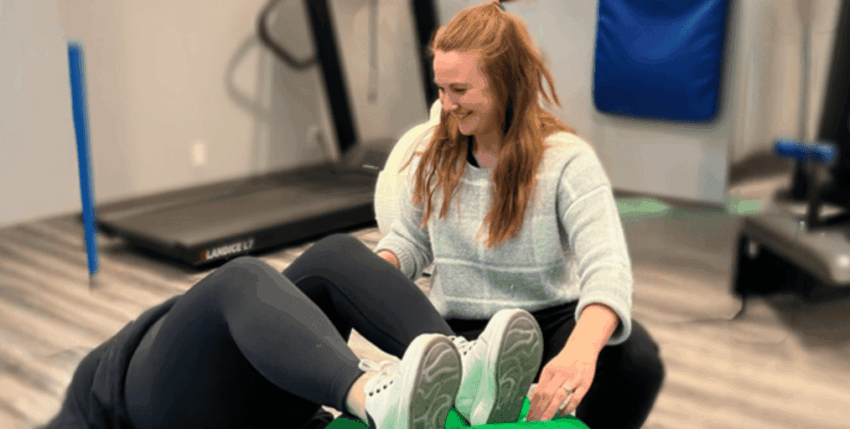
What Are the Different Types of Physiotherapy Treatment? What the Evidence Says
Ask a physiotherapist what sounds like a simple question:
“How long will my Achilles tendon take to get better?”
There is a good chance the answer will begin with two words:
“It depends.”
It depends on how long you’ve had pain, how irritable the tendon is, how much load it can currently tolerate, your calf strength, ankle mobility, foot control, hip strength and control, your activity level, whether you’ve recently increased your running or walking, and what you’re hoping to return to. Someone who developed Achilles pain after suddenly increasing their running mileage may have a very different recovery journey from someone who has had tendon pain for two years.
But those aren’t the only things we consider.
We also want to understand the person experiencing the injury. Your general health, sleep, stress, previous injuries, work and family demands, activity levels and what is happening in the rest of your life can all influence recovery. So can how you understand your pain and how it has changed the way you move. Are you worried that activity is causing more damage? Have you started avoiding things you previously enjoyed? Have months of pain made you less confident in your body? And realistically, how much time and energy do you have right now to dedicate to rehabilitation?
These aren’t separate from the physical problem. They are part of the recovery picture. Pain can change the way we move, behave and participate in life, just as our physical capacity, health and environment can influence pain and recovery.
That is why two people can walk into a physiotherapy clinic with the same diagnosis and leave with very different treatment plans.
Then comes the next question:
“What treatment is going to get me better fastest?”
That answer is also: it depends.
Physiotherapy has a large treatment toolbox. Exercise, education, progressive loading, manual therapy, dry needling or IMS, acupuncture, shockwave therapy, taping, bracing, heat, ice, electrical stimulation, ultrasound and other treatments may all fall under the umbrella of physiotherapy.
But they don’t all do the same thing, and the evidence supporting them isn’t equal.
So rather than dividing physiotherapy into “active” treatments that are good and “passive” treatments that are bad, there is a much more useful question to ask:
What does the evidence tell us actually drives recovery, and where do all the other treatments fit?
There Is No Single “Best” Physiotherapy Treatment
This is probably the most important place to start.
There isn’t one physiotherapy treatment that works best for every condition or every person. The strongest treatment plan depends on what your assessment tells us needs to change.
If someone has an Achilles tendon that has lost its ability to tolerate running, progressively loading that tendon is likely to be an important part of rehabilitation. Current clinical guidelines identify tendon-loading exercise as a first-line treatment for midportion Achilles tendinopathy.
But consider someone who arrives with acute neck pain, significant muscle guarding and difficulty turning their head far enough to drive comfortably. Reducing pain and restoring comfortable movement may be the immediate priority before progressing into strengthening and returning to normal activity.
Or consider someone recovering from persistent back pain who has become afraid to bend, lift or exercise. Their rehabilitation may need to focus not only on physical capacity, but also on understanding pain, gradually restoring movement and rebuilding confidence in what their body can do.
The diagnosis matters.
But so does the person who has the diagnosis.
What Actually Drives Recovery?
Across many areas of musculoskeletal physiotherapy, several themes appear consistently in the evidence.
Education matters.
Movement matters.
Exercise and appropriate loading matter.
Gradually rebuilding the body’s capacity to tolerate the demands of work, sport and everyday life matters.
But recovery is not simply about fixing a painful body part. For some people, the biggest barrier may be weakness or reduced load tolerance. For others, it may be fear of movement, poor sleep, stress, loss of confidence or avoiding activities because they believe pain means they are causing damage. Often it is a combination of factors.
Modern rehabilitation recognizes that physical, psychological and social factors can all influence someone’s pain experience and recovery.
Good physiotherapy identifies which of these factors are actually relevant to you. Treatment can then focus on changing the things that are changeable rather than trying to find one structure, posture, movement pattern or “fault” to blame.
This is where physiotherapy becomes much more than a collection of treatments.
A good physiotherapist isn’t simply deciding whether you need manual therapy, IMS, shockwave or an exercise program. We are trying to understand what needs to change for you to recover and then choosing the treatments that can help us get there.
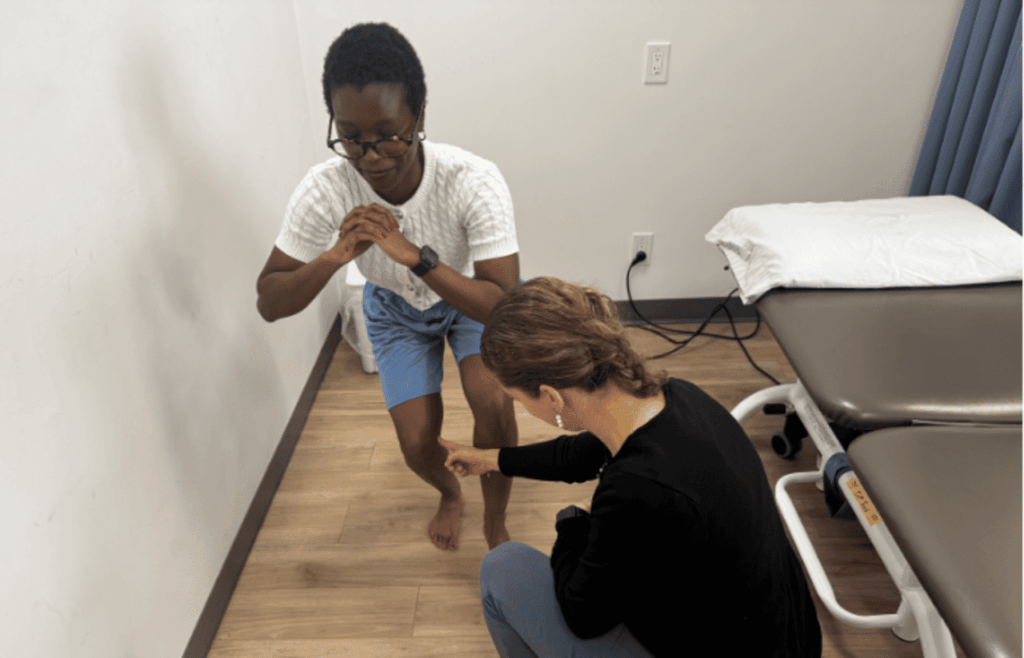
Exercise and Progressive Loading: Building Capacity
Exercise is one of the most consistently supported treatments across musculoskeletal rehabilitation, but “exercise” is an enormous category.
It might mean restoring calf strength after Achilles tendinopathy, progressively loading the rotator cuff for shoulder pain, improving quadriceps strength with knee osteoarthritis, retraining balance after an ankle injury or gradually returning someone with back pain to lifting.
The principle underneath all of these is adaptation.
The human body responds to the demands placed upon it. Muscles can become stronger. Tendons can adapt to load. Balance can improve. Movement can become easier. Physical capacity can be rebuilt.
The challenge is finding the appropriate starting point and then providing enough stimulus for the body to adapt without repeatedly exceeding its current capacity.
Achilles tendinopathy is a great example. Research supports progressive tendon loading, but there isn’t one universally superior exercise program. Different loading approaches can be effective, which means the program needs to be matched and progressed according to the individual.
Exercise isn’t simply something we give you to do at home.
It is one of the ways we help your body become capable of doing more.
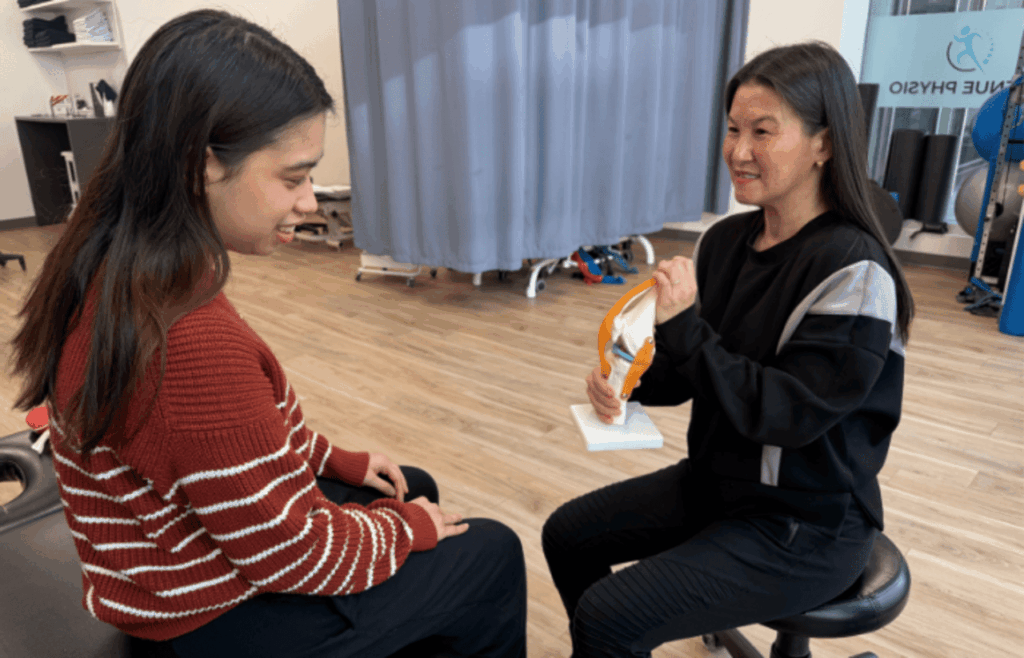
Education: One of the Most Important Treatments We Provide
Education can sound like the least sophisticated part of physiotherapy.
It isn’t.
Understanding what is happening, what is safe, what you can continue doing, what may need to be temporarily modified, how long recovery may take and what to do when symptoms flare can fundamentally change the way someone approaches an injury.
For someone with Achilles pain, education may include understanding how to modify running without completely resting the tendon.
For someone with back pain, it may involve understanding that pain does not necessarily mean their back is being damaged and that gradually returning to movement is usually important.
For someone with osteoarthritis, it may mean understanding that exercise is safe for the joint and that becoming stronger can improve function rather than “wearing the joint out.”
Good education also helps you understand the inevitable ups and downs of recovery. An increase in symptoms does not always mean you’ve caused new damage or that rehabilitation isn’t working. Sometimes it means the load needs to be adjusted, the plan needs to progress differently or your body simply needs time to adapt.
Patient education is an important part of helping people understand and self-manage their health.
Good education gives you a framework for making decisions when your physiotherapist isn’t standing beside you.
And that matters because most recovery happens outside the physiotherapy clinic.
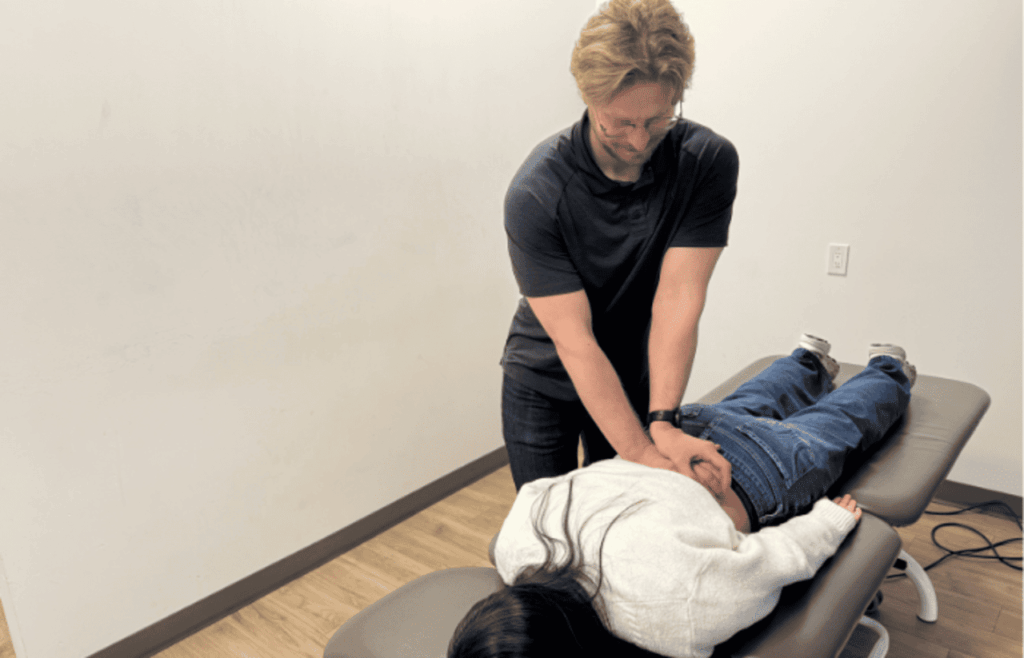
Where Does Manual Therapy Fit?
Hands-on treatment can be extremely useful.
Manual Therapy may help reduce pain, improve movement and make an area feel easier or more comfortable to move. For someone who arrives in significant pain, that change can be meaningful.
The important question is what we do with that change.
If manual therapy helps you turn your neck more comfortably, we can use that opportunity to restore movement and begin rebuilding strength. If it reduces pain enough that you can squat, walk, reach or exercise more comfortably, it can help move rehabilitation forward.
Manual therapy doesn’t have to compete with exercise.
Often they serve different purposes within the same treatment plan.
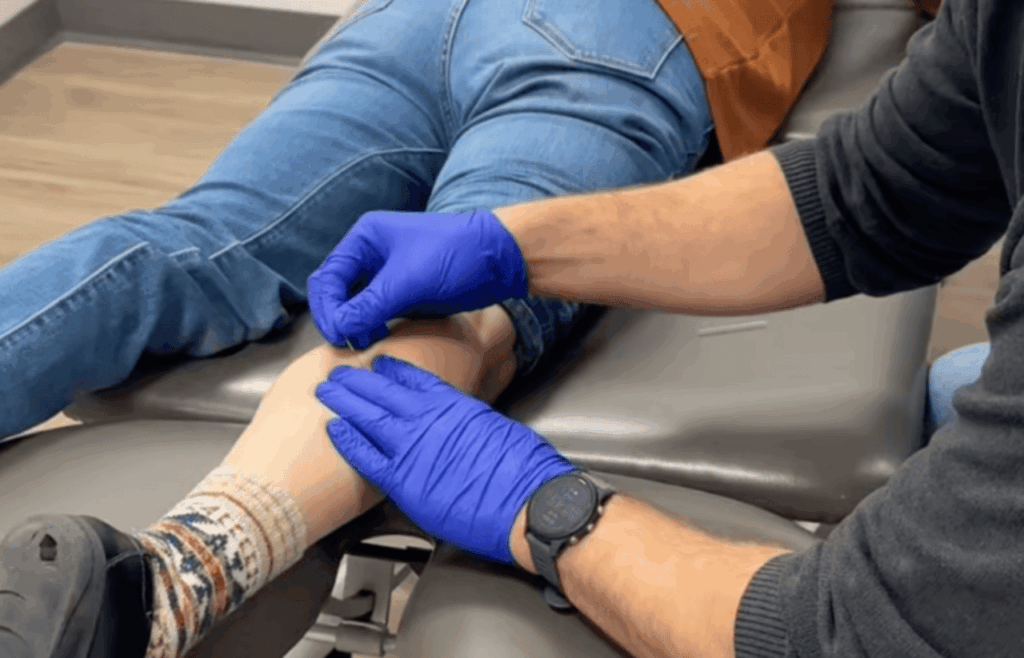
What About Dry Needling and IMS?
Dry Needling / IMS is another treatment that can be useful for some people, particularly when pain, muscle guarding or sensitivity is making movement difficult.
For some patients, dry needling can produce a meaningful reduction in pain during or shortly after treatment. That matters.
If pain is preventing someone from moving comfortably, sleeping, exercising or participating in their rehabilitation, reducing that pain can be an important treatment goal.
But reducing pain today and building capacity for tomorrow aren’t necessarily the same thing.
Dry needling may help create a window in which movement is more comfortable. Exercise, progressive loading, education and gradually returning to activity can then use that window to work toward longer-term change.
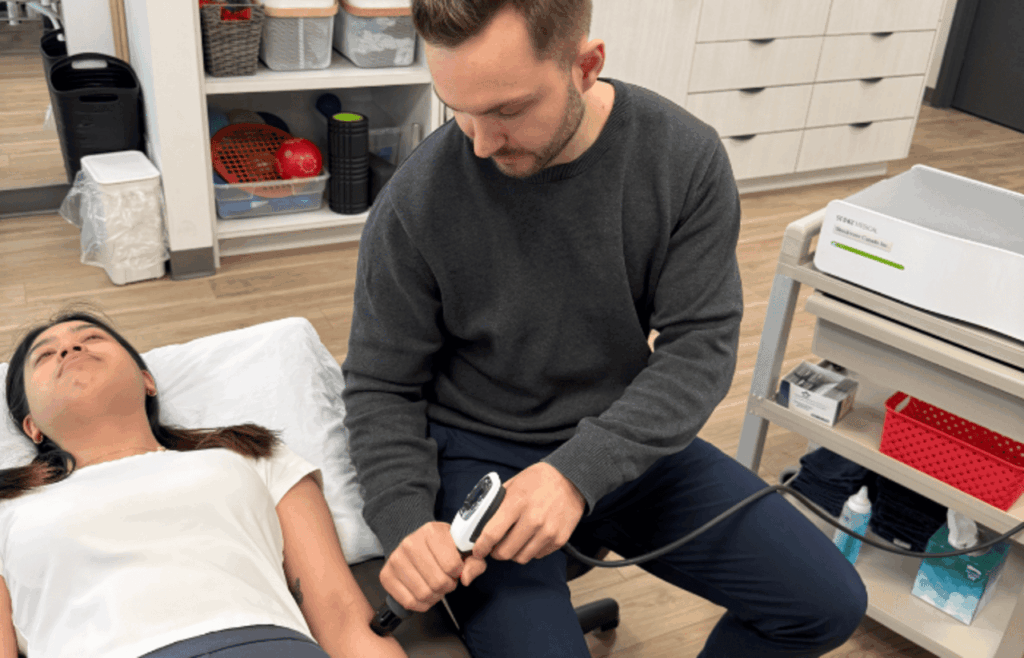
Where Does Shockwave Therapy Fit?
Shockwave Therapy is a good example of why it’s too simplistic to say that “passive treatments don’t work.”
It isn’t appropriate for every injury, and it doesn’t replace rehabilitation, but for the right person and the right condition it may be a useful addition to treatment.
That distinction is important.
We shouldn’t choose a treatment simply because a clinic owns the equipment.
But we also shouldn’t dismiss a treatment simply because the patient isn’t actively exercising while it is being delivered.
The better question is:
Does this treatment have evidence for this condition, and what role will it play in this person’s recovery?
What About Ultrasound, TENS, Heat, Ice and Other Modalities?
This is where the evidence becomes more condition-specific and, for many traditional modalities, less compelling.
Heat, ice and electrical stimulation may help some people manage symptoms temporarily. Other modalities, such as therapeutic ultrasound, have limited evidence for improving meaningful long-term outcomes across many common musculoskeletal conditions.
That doesn’t mean every treatment that provides short-term relief is useless.
Pain relief can be valuable.
But if the goal is returning to hiking, running, working, lifting your child, playing golf or simply moving through your day without constantly thinking about your injury, symptom relief alone usually isn’t enough.
This is one reason we don’t build our treatment plans around machines or modalities.
What Does Good Physiotherapy Actually Look Like?
The best physiotherapy isn’t defined by how many treatments are used during an appointment.
It’s defined by whether those treatments make sense for the person in front of us.
A strong treatment plan starts with understanding what is contributing to the problem. It gives you a clear explanation of what we think is happening and what recovery is likely to involve. It identifies the things that need to change and gives you a plan for changing them.
That might involve reducing pain first.
It might involve restoring movement.
It might involve getting stronger.
It might involve gradually exposing a tendon to more load.
It might involve rebuilding confidence after months or years of avoiding movement.
And quite often, it involves several of these things at different stages of recovery.
Treatment should also change as you change.
What you need during your first few appointments may be very different from what you need six weeks later.
So, Which Physiotherapy Treatment Is Best?
There isn’t one.
Exercise isn’t competing with manual therapy. Manual therapy isn’t competing with dry needling. Shockwave isn’t competing with education.
They do different things.
The skill is knowing which treatment has evidence for your condition, what problem we are trying to solve with it and when it should be used.
Sometimes our first priority really is reducing pain.
Sometimes it’s restoring movement.
Sometimes it’s building strength or load tolerance.
And sometimes the most important thing we can give someone is a better understanding of what is happening and the confidence to start moving again.
The goal isn’t to use the most treatments.
It is to use the right treatments, for the right reasons, at the right stage of your recovery.
Frequently Asked Questions
What is the most effective type of physiotherapy treatment?
There isn’t one treatment that is best for every condition or every person. Exercise and progressive loading are strongly supported for many musculoskeletal conditions, but education, manual therapy, dry needling, shockwave therapy and other treatments may also have a role. The most effective approach depends on your condition, your assessment findings, your goals and what is limiting your recovery.
Is exercise the most important part of physiotherapy?
Exercise is an important part of rehabilitation for many musculoskeletal conditions because it can build strength, improve mobility and gradually increase your body’s capacity to tolerate activity. But exercise is not the entire treatment plan. Education, pain management, hands-on treatment and other treatments may help at different stages of recovery.
Are hands-on physiotherapy treatments still effective?
They can be. Manual therapy and other hands-on treatments may help reduce pain or improve movement for some people. They are often most useful when combined with a broader rehabilitation plan that addresses strength, movement, function and the factors contributing to your symptoms.
How does a physiotherapist decide which treatment I need?
It starts with your assessment. Your physiotherapist considers your symptoms and diagnosis, but also your strength, mobility, movement, previous injuries, general health, activity demands, goals and other factors that may be affecting your recovery. From there, treatment can be individualized and adjusted as you progress.