Whether you’re recovering from back pain, plantar fasciitis, a shoulder injury, Achilles tendinopathy, TMJ pain, or recovering after surgery, one thing surprises almost everyone: recovery rarely follows the path we expect.
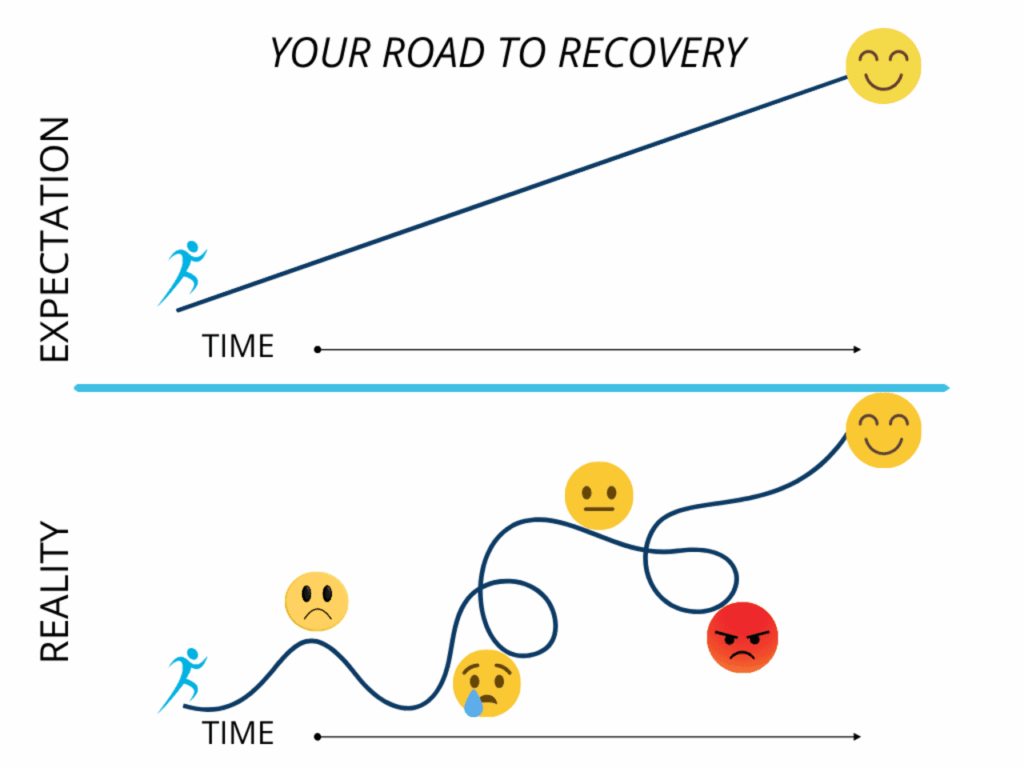
Most of us imagine healing looks like a linear line. The pain gradually disappears, strength returns, and life gets back to normal. Instead, recovery often feels unpredictable. There are good days and bad days. Weeks where you feel like you’re making great progress, followed by days where symptoms suddenly return for no obvious reason.
For many people, these setbacks become the most frustrating part of recovery. They begin asking themselves:
Did I damage something again?
Is my treatment working?
Why was I feeling better yesterday?
Will I ever get back to normal?
The reassuring news is that for many injuries and pain conditions, this pattern is completely normal. Recovery is rarely a straight line.
The Body Is Designed to Heal
One of the most reassuring things to know is that your body is remarkably good at healing.
Every day your body repairs damaged tissues, replaces old cells, remodels bone, strengthens muscles, and adapts to the demands you place upon it. Cuts heal. Broken bones mend. Muscles become stronger after exercise. Tendons adapt to gradually increasing load. Even after surgery, the healing process begins almost immediately. This remarkable ability to repair and adapt is one of the defining characteristics of the human body.
Different tissues heal at different rates, and healing is rarely instantaneous. But in most cases, the body wants to recover. Where recovery becomes more complicated is that healing at the tissue level is only one part of the story.
For many musculoskeletal conditions, especially when symptoms have been present for weeks or months, recovery also involves rebuilding strength, restoring movement, improving endurance, regaining confidence, and helping the nervous system become less protective. Healing and recovery are closely related, but they are not exactly the same thing.
Healing and Recovery Are Not the Same Thing
Healing refers to the biological repair of tissues.
Recovery is about returning to life. It includes rebuilding strength, mobility, endurance, balance, coordination, confidence, fitness, and the physical capacity needed for work, recreation, and everyday activities.
This is why two people with the same diagnosis can have very different recovery journeys. One person may return to activity relatively quickly, while another may require several months to rebuild confidence and physical capacity. Neither journey is necessarily wrong. Recovery is personal, and successful rehabilitation is about helping you return to the activities that matter most to you.
The Body Is Always Adapting
One of the most remarkable things about the human body is that it is constantly adapting.
When you begin a strengthening program, your muscles become stronger. As you start walking more, your heart, lungs, bones, tendons, and muscles gradually adapt to tolerate the increased demands. When you practise balance exercises, your nervous system becomes more efficient.
The same process happens when you become less active because of pain. Muscles lose strength, joints become stiffer, fitness declines, movement often becomes more cautious, and confidence can gradually decrease.
The encouraging news is that adaptation works both ways. Just as the body can become less tolerant when activity decreases, it can also become stronger, more resilient, and more capable when activity and load are increased gradually and appropriately.
Much of physiotherapy is built around helping your body adapt again. Rather than trying to avoid every painful movement, we help you progressively rebuild the strength, movement, and confidence needed to return to the activities that matter most to you.
Although tissues heal remarkably well, recovery is influenced by much more than the injured tissue.
As strength improves, activity naturally increases, placing new demands on the body. Sometimes those demands exceed what the body is ready for, and symptoms may temporarily increase. This does not necessarily mean new damage has occurred. More often, it reflects your body adapting to a new level of activity.
Recovery is rarely a straight line. It usually involves periods of improvement, occasional setbacks, and gradual progress over time. The goal is not to avoid every difficult day, but to continue moving in the right direction.
What Influences Recovery?
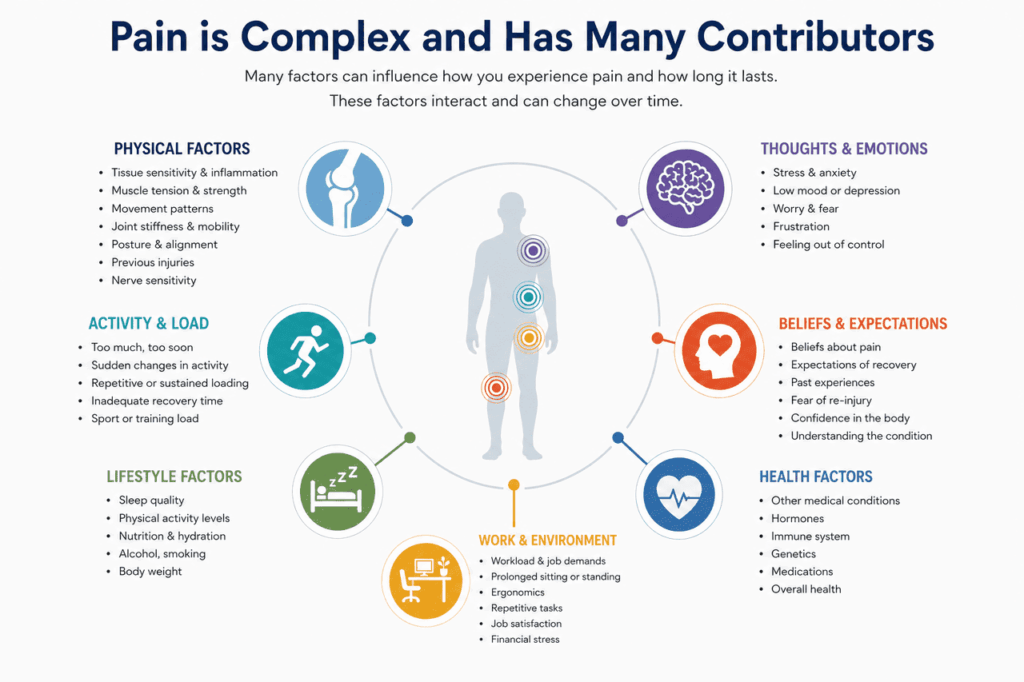
One of the biggest changes in healthcare over the past two decades has been recognizing that recovery is influenced by many interacting factors rather than a single problem.
These factors may include:
The type of injury
How long symptoms have been present
Sleep quality
Stress
Work demands
Physical activity
Strength and fitness
Previous injuries
Confidence with movement
Other medical conditions
Recovery expectations
Family and social support
Every person has a unique combination of factors influencing their recovery. This is why two people with the same injury or diagnosis can recover very differently, and why comparing your progress to someone else’s is rarely helpful.
Life Doesn't Pause While You're Recovering
Most people are not recovering in ideal conditions. They’re balancing work, children, deadlines, travel, exercise, family responsibilities, aging parents, and everything else life brings.
We commonly see symptoms increase after:
Poor sleep
Stressful weeks
Illness
Vacations
Long drives
Moving house
Increased work demands
Returning to sport
Doing much more activity than usual
This doesn’t necessarily mean the injury has worsened. Often it simply reflects the body’s response to the total demands being placed upon it. Recovery is influenced by the whole person, not just one tissue.
One of the biggest fears patients have is that pain returning means damage has returned. Sometimes this is true, particularly after a new injury. Much more commonly, a flare-up simply means the body has temporarily become more sensitive.
A flare-up may be influenced by changes in activity, stress, fatigue, poor sleep, illness, or simply asking your body to do more than it was ready for that day. A flare-up does not erase the progress you’ve already made. Learning to understand these fluctuations rather than fearing them is often one of the biggest turning points in recovery.
Progress Is Measured by More Than Pain
Many people judge recovery by asking one question: “Does it still hurt?”
Pain matters, but it is not the only measure of progress. Recovery often begins with small improvements that are easy to overlook. You may notice that you:
Walk farther
Recover faster after activity
Sleep better
Feel stronger
Return to hobbies
Worry less about your symptoms
Trust your body again
These are all meaningful signs that recovery is happening. Often, these improvements occur before pain has completely settled and are important indicators that your body is becoming stronger, more capable, and more resilient.
The Goal Isn't to Avoid Every Flare-Up
Successful recovery does not mean you will never have another sore day. Most people experience occasional flare-ups as they return to normal life. Over time, however, flare-ups usually become:
Less frequent
Less intense
Shorter
Easier to understand
Easier to manage
That is what progress often looks like. Recovery is about becoming more resilient, not becoming perfect.
How Physiotherapy Can Help
At Avenue Physio, our role is not simply to treat an injury. Our role is to help you understand your recovery.
Together, we identify the factors influencing your symptoms, develop a plan that fits your goals, and adjust that plan as your body adapts. Depending on your condition, treatment may include:
Education and guidance to help you confidently return to work, recreation, and sport.
Our goal is always the same: helping you build confidence, resilience, and the capacity to return to the activities that matter most.
What Recovery Has Taught Us at Avenue Physio
After working with thousands of people recovering from injury and pain, we’ve noticed something interesting.
The people who recover best are rarely the ones who never experience setbacks. They are usually the people who begin to understand their body, stay engaged in the process, adapt when life gets in the way, and continue moving forward even when recovery isn’t progressing exactly as planned.
They don’t judge recovery by one painful day or one difficult week. Instead, they gradually notice that they’re walking farther, moving more freely, sleeping better, returning to activities they enjoy, and thinking less about their pain. That is what lasting recovery often looks like.
The Bottom Line
Recovery rarely follows a perfectly straight line. There will almost always be good days, frustrating days, unexpected setbacks, and moments where you question whether you’re making progress.
That doesn’t mean you’re failing. More often, it simply means you’re recovering.
Recovery isn’t measured by having a perfect week. It’s measured by looking back a few months and realizing you can do more, worry less, and enjoy life again.
 Skip to content